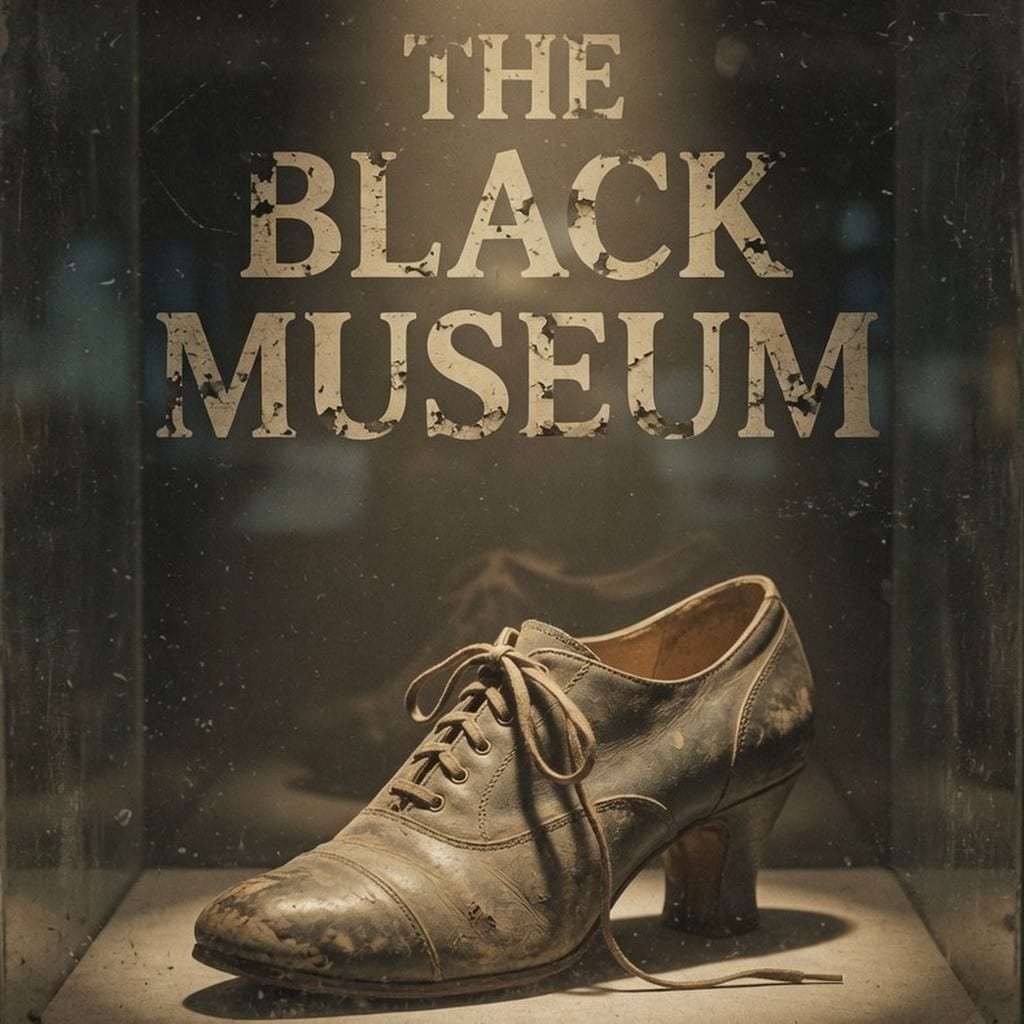
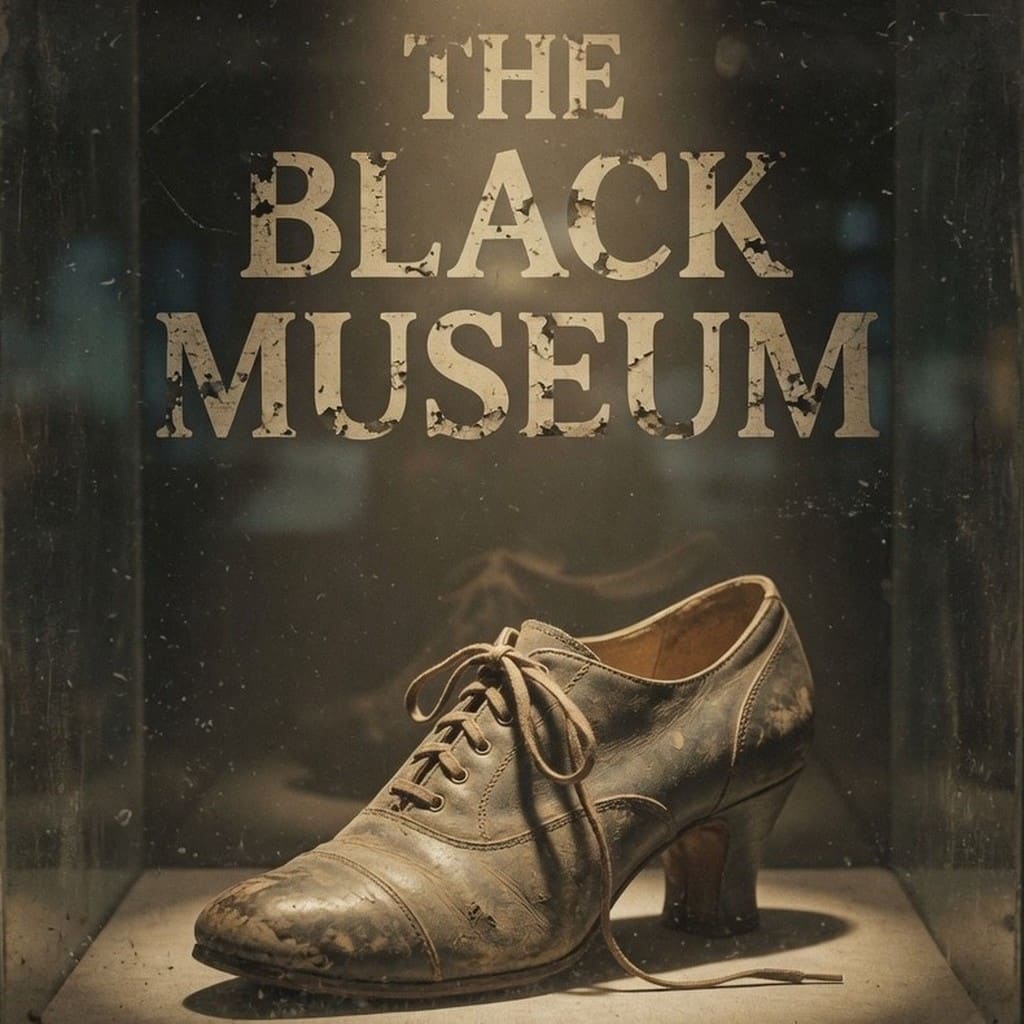
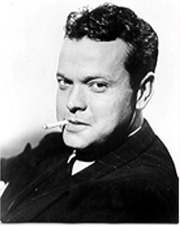
...speaking from London. The Black Museum, a repository of death. Here in the grimstone structure on the Thames, which houses Scotland Yard, is a warehouse of homicide, where everyday objects, a crumpled newspaper, a tin can of lighter fluid, a small radio, all are touched by murder. A mandolin string. Familiar objects. I'm told, Inspector, that mandolins are mighty popular with young folk these days. Popular? Yes, they are. I'm rather happy to say their popularity is confined to music, not to murder. Today this mandolin string can be found in the Black Museum. From the annals of the Criminal Investigation Department of the London Police, we bring you the dramatic stories of the crimes recorded by the objects in Scotland Yard's gallery of death. The Black Museum. In just a moment you will hear The Black Museum starring Orson Welles. Music. Music. Music. Now The Black Museum starring Orson Welles. Well, here we are in The Black Museum, Scotland Yard's Museum of Murder. Here lies Death, arranged neatly on the shelves and tables open to your view. Here's a spoon. It's a simple household spoon. Our murderer was meticulous. With this he measured out a careful dose of poison. That oar up there on the wall, that was used by the stroke of a famous rowing aid at Henley. Later it was used in anger, swung at a man who stood on the edge of a pier, stunning him. The man drowned in the Thames very quickly. Aye, the mandolin string. Just a coil of rust spotted wire now. String from a mandolin. A relic of another era. An era of polished carriages, well-groomed horses, simple sedate living, Edwardian England and Louise Evans. Louise, my dear. Stuart, darling, I'm playing for you. In more ways than one, she's playing for you, Stuart. Louise, you've got to listen. Go ahead, son. She'll listen. Just say the right words. Louise, I love you. You're adorable. You're getting closer, Stuart. You're doing better now. Louise, my darling, will you marry me? At last. That's the way, Stuart. You see? I told you she was playing for you. The church organ, not Louise's mandolin, played them up the aisle at June. They were quite happy, quite domestic, particularly on the quiet winter evenings. You're looking very well tonight, Louise. Thank you, dear. Anything of interest in the newspaper, Stuart? No. Nothing you'd want to know about. Stuart, darling, I wonder if you'd mind... Something you want, sweet? Well, Maisie's gone to her room. I hate to disturb her. Let me get it for you, whatever it is. Thank you, dear. It's just that... Yes? Well, you may think it's a little odd, but... Come now. I have this funny little desire for a glass of wine. Don't apologise, darling. There's nothing wrong in a glass of wine. Is there any in the pantry? No, dear, that's just it. A trip down to the cellar. Not another word. My pleasure is to serve you, my dear. The husband gets up. He puts his newspaper aside and leaves the room where his pretty young wife sits by the fireside. Walks down the hallway to the cellar entrance, pausing on the way to pick up a candle from the table by the stairs. Lights the candle, opens the little doorway. The candle flickers, casting a fitful yellow light, darkening the shadows where its beams fail to penetrate. Stuart Mason starts down the stairs. Stuart! Stuart! Stuart, answer me! Maisie! Maisie, help me! Help! What is it, madam? What is it? Oh, quickly! Run for Dr Lipton. Mr Mason's fallen down the cellar stairs. He's... he's hurt! I'm afraid... I'm afraid he's badly hurt. It must be a terrible shock, Mrs Mason. I know. If you take a sleeping powder... No, doctor. No, it was my fault. My silly wish for a glass of wine. If I hadn't asked him... No, doctor, the least I can do is to face my grief. That's the least I can do for poor Stuart. If you wish, Mrs Mason, I understand. Death is a terrible thing. When it comes so suddenly to one so young, it's his most terrible of all. Yes, it is terrible. A broken neck, falling down the cellar stairs by flickering candlelight and hardly necessary errands. My dear, as a close friend of both your late husband and yourself, I feel justified in asking you to contain your grief. After all, you're young. And if I may say so, pretty. Nelson, you are sweet. I simply do not know how I would have lived through these long, long months without poor dear Stuart's friends, particularly you. This brings me to a point, my dear. I've meant to discuss it with you. I begin to feel something slightly more than respect for you, Louise. If I may take the liberty... Nelson, watch your words. Look out, Nelson. A pretty blonde widow with wide blue eyes, so delicate and fragile. Watch your step. My lone men in this house. At night the floors creak. They seem to try to speak with me. Maisie does her best, but it's still so... so... Well, you know. You're lonely too, aren't you? I must confess, Louise, that I am. Now see here, young lady, we're going to start a new life for you. Oh, Nelson. Some cream for Mrs. Church, Maisie. Yes, madam. Oh, thank you. You know, Louise, this is the nicest idea. Having coffee with our menfolk, I mean. I always hated the idea of the ladies withdrawing while the men had their port alone after dinner. Well, I can't say I mind when our hostess is as lovely a bride as Louise. Hey, Nelson, do you agree, old man? Of course I agree. After all, I married her. How you men do go on. Don't they, Alice? Let them, dear. It's one of their few pleasures. I have another pleasure I want to share with you, Alice. Friend? Yes, Nelson? Louise's absolute talent with the mandolin. Oh, Nelson, please. The mandolin, yes. I seem to remember you played very well, Louise. Oh, do, Louise. Please. Well, really, I... My talent is so small. Oh, we won't take no for an answer, darling. Here it is. Now, what shall your first selection be? Oh, dear. One of the strings is missing. Missing? Well, I was... tuning it yesterday. One of the strings broke. And I didn't get downtown to buy a new one. Oh, I am sorry. Truly, I am. Perhaps next time you'll hear. Too bad. Really too bad. It would have been so nice. Recently married young lady with a gaily-beriven mandolin and a lap in a lamplit room. It would have been so nice. In fact, as they prepared for sleep, Nelson Carter said just that. Too bad about your mandolin string, dear. It would have been so nice to hear you play tonight. Ooh. What is it, dear? Oh, the sheets are icy. It must be really cold outside. Fred Church said it was. And you were so susceptible to colds. Darling, we've got to have a hot water bottle. Well, ring for Maisie. Why don't you? Well, she was exhausted, poor dear. She worked so hard cooking and serving dinner. It seems unfair to disturb her. All right. I'll get it. Do you know where it is? In the kitchen cabinet, dear. Right in front. All right. I'd better take a candle. And use the back stairs, darling. It's shorter that way. Once again, a young man lights his way through a dark house toward a steep stairway by the flickering flame of a candle. Once again, the young man makes his way along a carpeted hallway, starts a hurried descent of wooden stairs. Ah! Nelson! Nelson! What happened? Ah! All right, Maisie. Your mistress will rest now. I gave her a sedative. Oh, oh, poor woman. Oh, poor, poor child. Poor? This will be the second fortune she inherits. Hardly poor. Oh, poor, poor child. This will be the second fortune she inherits. Hardly poor. Two accidents like that? Oh, doctor, it's like the poor girl was accursed. Aye, it is. Well, things like this happen. As you say, two accidents and so much alike. I shall probably recommend that your mistress builds herself a new house with no cellar and all on one floor. Whatever for, sir? No stairs, my girl. No stairs for anyone to fall down and break his neck. Well, I'm on my way. No visitors and no stairs in a new house. Well, perhaps, certainly for another year, at least the mandolin will be silent. I think that that may be counted upon. That and the widow's weeds and the tearful glances from wide blue eyes. Of course, there was one item that no one counted on. You sent for me, Inspector? Aye, dear Peck, what do you think of this? Anonymous, sir. Yes. Read it, will you? Inspector Higley, don't file this letter in the waste paper basket. I am not writing it without due thought and consideration. I cannot let you have my name as yet. But think of this. Two young men of wealth and standing in the community have died via falls downstairs with broken necks as the consequences. Don't you think at least a perfunctory investigation is called for? Don't you think so? It signed an anxious friend. Yes. Well, Sergeant? Well, someone with an education, don't they? Someone who hints he or she will come forward if we find anything. I cannot let you have my name yet. Yes, I noticed that, sir. Well, Sergeant, wear your best suit tomorrow. You and I are going calling on a young widow on Oxford Street. I understand she plays the mandolin rather well, in fact. Rather well. Yes, she played rather well. And a string of that mandolin on which she played can be seen today in the Black Museum. In just a moment, we will continue with the Black Museum starring Orson Welles. And now we continue with the Black Museum starring Orson Welles. Two young men dead with broken necks, both cases certified, accidental death, and then an anonymous letter from the White House. Inspector Higley and Sergeant Peck paid their call. In fact, they paid two calls, the first on Dr Lipton. I'm rather glad you dropped in, Inspector. I know there's been whispering. Two unfortunate accidents like this, it would lead to rumours. Rumours? I see. Such as... The usual thing that Stuart Evans and Nelson Carter may have been helped to fall down the stairs. You mean pushed? Something of the sort. And your opinion, Doctor? My opinion is certified on the death certificate, sir. Accidental deaths, both of them. I see. Oh, thank you, Doctor. I'm glad you're so certain. Yes, the good Doctor appears quite certain. Nonetheless, Inspector Higley and Sergeant Peck made their second visits. Oh, I'm so glad you came to see me, Inspector. Thank you. It's not too often that the police are welcome. No, I suppose not. I suppose not? But... Well, I... I can't help hearing about the things that people are saying. Maisie brings home so many odd tales. I was wondering, Mrs... Sergeant, interested in music? Eh, quite a good-looking instrument, ma'am. I shall never play it again. Oh, why not? Both Nelson and Stuart loved the music. I... I cannot get over the fact that I took a mean excuse and refused to play the night that... that Nelson died. Oh, an excuse? Yes. You see, the churches, Alice and Fred, were here. I see. Nelson was pressing me to play. I... I refused. Mm-hm. I... I used a missing string as an excuse when I had a stock of strings on hand and could have replaced the missing one. I refused Nelson that last pleasure. Domi, do you always keep a stock of mandolin strings on hand, ma'am? Yes, in the cold weather, I do. I see. When the temperature drops, the strings seem to get brittle. Quiet. They break quite easily. And where do you buy your mandolin strings, Mrs Carter? At Murchison's Music Shop on the High Street. Oh, Inspector. Yes? Sergeant, I appeal to you as men of the world. Can't you help me scotch these dreadful things that people are saying? Can you? Would you? Please? The inspector and the sergeant said they'd try, and they did. Their business was facts. One fact turned up immediately upon their contact with Mr Murchison at the music shop on High Street. He showed me the bill of sale, Inspector. Uh-huh. She bought the strings, sent the maid for him with a written order three days after this Carter fellow was buried. Hmm. Interesting. Now, why would a woman who says she had a stock of strings on hand the night her husband died and says further that she'll never play again buy mandolin strings shortly after the funeral? An interesting contradiction in dates and actions. A further interesting contradiction came to light some three months later. Another of those anonymous letters, Sergeant. Just, she's playing that mandolin again. I seem to remember, Sergeant, that Mrs Carter told us she'd never touch the instrument again. Such contradictory behaviour seemed to indicate another call. The inspector dropped in on Louise Evans Carter to mandolin. BAND PLAYING Inspector Higley. How nice. All right, Macy? Yes, madam. Uh, Inspector, my friend Clifford West. How do you do? Inspector, I'm here to see you. How do you do, sir? Inspector, I'm afraid you've caught me in a fib. Is that very bad? A fib? Well, it couldn't be bad. Not from you, Louise. I don't quite follow, Mrs Carter. I told you some time ago I'd never play my mandolin again. And you've heard me playing. Yes, so you did. And so I have. But there must be a good reason, I assume. Oh, but there is. You tell him, Clifford dear. As it happens, sir, we are both very, very happy. And music seemed extremely apropos. You see, sir, Mrs Carter, Louise, has just done me the honour to consent to be my wife. BAND PLAYING Number three. The inspector sensed the tension in Midhaven. He waited. All of Midhaven seemed to be waiting with him. The first action came from an unexpected quarter. Inspector Hagley, I demand you trace this letter for me at once. May I see your letter, sir? Here. I see. Mr West, two men have died with broken necks. Are you the third? Are you entering the den of the Tigris? Tracing a letter like this is not the easiest. There was no question in the inspector's mind that the author of Clifford West's letter was the same party who'd written the two notes addressed to the inspector himself. A brief comparison of the handwriting removed what little doubt the inspector had. And Sergeant Peck dropped in on the small Midhaven post office. This your postmark? That's right, sir. Of course it is. Ever see this envelope before? Maybe. Maybe not. I've seen hundreds like it. You can buy that cheap kind in any stationary shop in Midhaven. Blank, Inspector. Nothing. I expect it as much. Do you think that West fellow will be scared, also? I doubt it. Sergeant, take this copy over to the Midhaven Gazette, will you? I want it run in every edition for a week. Eh. Think you'll get an answer, sir? Well, remember the first letter. I cannot let you have my name as yet. Uh-huh. Perhaps the party concerned will feel now is the time to reveal himself or herself, as the case may be. That promise of absolute privacy may do the trick. I saw your advertisement, Inspector. I came. I hope you can protect me if I'm wrong. I hope I'm wrong. I sincerely do hope so. Your confidence will be respected, Mrs Church. Thank you, sir. I... I trust you don't feel as any jealousy involved of any kind. My job is facts, ma'am. Do you have any? I don't know. You see, Stuart and Nelson, both were young men of whom my husband and I were very fond. Uh-huh. And I... Well, I remember so distinctly how disturbed Louis seemed when we asked her to play that night. She seemed upset over our discovery of the missing string on that mandolin. I... I guess that's all, Inspector. It's not very much, is it? No. No, it's not. But it seems so peculiar. And the mandolin, always that mandolin. Inspector, how could a mandolin be used to kill anyone? I don't know yet, even if anyone was killed. However, I'd like to find out. Mrs Church, have you any idea of Mrs Carter's social engagements? I mean, when, for instance, is she probably out of her house for a length of time? You can advise us as to any such matter. It seems Mrs Carter attended the ladies' auxiliary of the local church each Wednesday afternoon. An activity a respectable young widow would be expected to enjoy. And it was Wednesday afternoon when the inspector and the sergeant called. The mistress isn't in, sir. I doubt if she'll be too long. May we wait? If you wish to, sir. The inspector went into the sitting room. The sergeant drifted toward the kitchen. Naisy, safely occupied by the good sergeant, Inspector Higley swiftly found the cellar stairs, carefully moved down, examining each step, each lift and tread, each section of the baseboard, halfway down. Well, interesting to say the least. Upstairs now to the backstairway. Again the careful examination. Again about halfway down. They'll do it every time, every single time. Then quietly into the kitchen. Sergeant. Yes, sir. I don't think we'll wait any longer. I'm sorry, sir. The mistress went along to the vestry and she ought to be... Oh, that's all right. Just tell her we called, will you? Go on, sergeant. We'll drop back another time. And the two policemen left the house to return to the inspector's office. It's something, sergeant. Not much, but something. It convinces me, sir. And me. But how about a jury? I don't know, sir. Of course, if we had a bit more, the nails themselves, sir. Yes. And then there's the business of buying that stock of mandolin strings. Sergeant, we'll drop in on Mrs. Carter this evening. Do you by any chance play the mandolin? It was nice of you to come back so soon, inspector. I do hope you've been able to help me with all that mean whispering I told you about. I wish we could, ma'am. I wish we could. Did I tell you that Sergeant Peck is interested in the mandolin? Why, no, you didn't. May I, ma'am? Certainly. Yes, lovely tell, ma'am. Yes, it has. Quite a romantic instrument, I believe. It goes back to the troubadours in France, centuries ago. Yes, I've heard. It certainly had its place in your life, Mrs. Carter. Yes, I... I dare say it has. I've been wondering about something, Mrs. Carter. I hope you can help me. Well, if I can, I will, of course. We checked with Mr. Murchison at his music shop. Oh? Yes, he tells us you purchased a stock of strings shortly after Mr. Carter's death, not just before, as you told us. Well, then I... I'd forgotten the exact date. It seems rather peculiar that you should forget that after you made such a point of it to us. I was under a terrible strain. I'm sure... If you'd stop plucking that A string, Sergeant, my nerves are... Oh, I'm sorry, ma'am. I didn't mean to break it. I'll get you a new one. That... that won't be necessary, Sergeant. I... I have extras right here in this drawer. That was the A string, wasn't it? I'm rather surprised, Mrs. Carter. A woman of your obvious means keeping nails, and bent ones of that, in a drawer of a desk in her sitting room. I forgot to throw them away. Yes, I dare say you did. May I have them, please? No, leave them alone. I dare say also that they'll fit exactly into certain holes in the baseboards of your cellar and back stairs, just above the steps where someone unsuspecting would trip over a tightly stretched mandolin string, stretched between two nails, like these, Mrs. Carter. You're taken in charge, madam. The charge is willful murder of your two husbands. I must warn you that anything you may say may be taken down in... And so, once and for all, the mandolin string was silenced. It can be seen today in the Black Museum. Arson Wells will be back with you in just a moment. Now here in person is Arson Wells. Louise Evans Mason Carter was tried for murder. The police stated facts and produced evidence. But Louise wept and lifted those blue eyes of hers to heaven, and the jury disagreed, and she was not convicted. Not in court. She was convicted by her neighbors and by her friends. They knew. And so, Louise Evans Mason Carter moved away, far north, to Scotland, alone. There she died some 20 years later, still alone. And now until next time, until we meet in the same place, and I tell you another story of the Black Museum, I remain as always obediently yours. The Black Museum, starring Arson Wells, is presented by arrangement with Metro-Goldwyn-Mare Radio Attractions. The program is written by Ara Marion, with original music composed and conducted by Sydney Torch, produced by Harry Allen Towers.