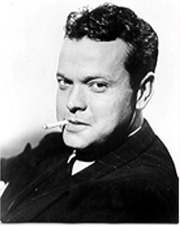
This is Orson Welles speaking from London. The Black Museum. Here in the grim stone structure on the Thames which houses Scotland Yard is a warehouse of homicide. A warehouse where everyday objects, a woman's necklace, her pair of spectacles, an iron ladle, all are touched by murder. These small white boxes are familiar objects. They might have contained sleeping pills or a mild sedative, just aspirin. But no, they contained arsenic. Comparatively tasteless, isn't it, Inspector? Yes, sir. The murderers coat it on that, obviously. Nasty way to die. And the boxes, they look so well innocent. Today, those white boxes can be seen in a place of special honor, in the Black Museum. From the annals of the Criminal Investigation Department of the London Police, we bring you the dramatic stories of the crimes recorded by the objects in Scotland Yard's gallery of death. The Black Museum. In just a moment you will hear The Black Museum starring Orson Welles. The Black Museum. The Black Museum. The Black Museum. Now, The Black Museum starring Orson Welles. And here we are, The Black Museum, Scotland Yard's mausoleum of murder. Perhaps a little courage to wander through this long ghostly room, all around arranged so very neatly as the evidence of man's rages, of woman's cruelty, of the rogue beast who lies waiting just beneath the veneer of civilization, waiting to kill. Yes, here, here lies death. Here death seems deliberate, murder almost moderate. Here in the echoing quiet, one is a spectator amid an orgy of violence, expressed so calmly by ordinary objects, the filing spike, just created for the piercing of papers, you know, to maintain orderliness on a clerk's desk, not for the purpose to which this spike was put. The piercing of the neck, the base of the skull, and the brain conjoins with the spinal column. Yeah, here we are, the white boxes, a little bit yellowed with age, the neat spidery penmanship on the tiny labels fading now, but still legible. Curries Pharmacy, Glasgow, Scotland, they say. And the date? January 1857. They were certain they had a case, the prosecutor for the Crown, a procurator fiscal, they called it, and a quiet man in charge of homicide, Inspector Webster. The prosecutor was quite definite about it. We'll have no trouble at all. It'll be a hanging. There seems to be plenty of evidence. You sound doubtful, Inspector. Juries can be emotional, you know. When that happens, the evidence goes out of the window. Juries haven't changed much. Almost a hundred years, have they? But rather, in the old tradition, let the guilty go free occasionally than have one innocent parish. They presented their case in proper order. Each fact, large or small, in sequence was paraded before the twelve good Scotsmen who sat in the jury box there in Glasgow almost a hundred years ago. Firstly was the landlady, Emile Dingeret's landlady. She told of that summer evening in 1856. Why, Mr. Dingeret, you are dressed up this evening. I have a reason, a very lovely reason. Do you like my waistcoat, madame? Quite striking. You ought to catch the lady's eye. I trust it will. Do just that, madame. How do you do it? Dress the fashionable on your salary, Mr. Dingeret. That is something I have learned from the frugal Scots, madame. I have indeed. You will excuse me. I must catch the steamer to Raoulin and the garden by moonlight. A happy little man that summer's evening, Emile Dingeret, a happy strutting little man in his new waistcoat, his well-pressed jacket, his smart hat. On the way to the key to board the side wheel steamer, he met his friend Robert Dougal. Mr. Dougal was a witness, too. His story was just as simple. Emile, how are you? As if I needed to ask. You are the sport this evening. Thank you, Robert. You look well yourself. Don't tell me if you don't want to, but I'll wager you have a rendezvous. I do. And you know, you introduced us. With Madeleine? Madeleine Smith? No other, my friend. But the Smiths are at Raoulin. Then you met the family. Not yet, Robert. But very soon. Tonight, just Madeleine. How long after tonight? Should I have to wait for the family to accept me? How long, little man? How long indeed? It was a good part of the problem. Robert Dougal was temporarily excused from the witness box. The next witness was a letter, a letter which tried to recapture on paper the wonder of a summer night, of young love. Oh, Emile, oh my darling. Madeleine, my love. Whisper, sweet. They are not asleep yet. How can I whisper when my heart wishes to shout from the house door? Emile, you're sweet. My darling, is this not a night for lovers? Come, darling. There is a quiet place I know where the moon will be reflected in the water and no one will be near. Don't let the gate bang, darling. We don't want my father finding us now. A garden gate shuts softly and footsteps, a man and a woman, fade away into the sounds of the night. It would be nice if we could leave the story here, but we can't. Nor could the prosecutor. There were more letters, many, many more, written by both young people. Letters which detailed the progress of the summer and of the love affair. Madeleine, your cartoon will coincide with the opening of a social season. You will go to all the dances, all the parties, but without me at your side, I cannot stand to picture this even to myself. Madeleine, let me be your husband, you fool. I cannot stand. Have faith in me. Have I not proven my love? Boy, Emil, the tears which bathed this paper, they are tears of longing, longing to be with you. There was more, much more. It all seemed endless, eternal, like the love these two pledged each other. But August moved into September and September into the fall. Present as the prosecutor didn't fail to point out the social round swept over Glasgow and over the Smith family, of course. Madeleine was caught in the whirl with her family. Here Robert Dugo was recalled to the witness box. This part of his evidence, if evidence it was, held a touch of wistfulness. Half our season. Do you think this is the proper place to stand, Robert? Not proper, but correct for our purpose. They'll have to pass this way. There's quite a crowd, is there not? The public dances of the Glasgow season are always crowded. They have more matches or made a teaser for her. Do not say that, my friend. This is my great fear, that she will meet someone. But she loves you. What am I, a ten-shilling backing-clerk? I am nothing. Our family do not even know I exist. Where are they? Has something happened? I must be... He stood there on the stairway leading to the ballroom, waiting so impatiently. The little man in a fancy waistcoat, beneath which was so much pride and so much love. And then at long last he saw a light on her father's arm from the carriage, at the start of the stairway. She is... she is a princess. Is she not, Robert? She's a very pretty girl. But then I'm not in love with her. I will speak to her. No, you mustn't. Not here, but Lent. Miss Smith, no, it would be unforgivable. Don't embarrass her like this. She passed within arm's length and seemed not to notice him, standing there waiting so eagerly for the acknowledgement which never came. Shortly afterwards the two young men went into the ballroom themselves. Emil saw his madeline whirling in the walls. Heard her laughter. Why, Mr. Minnich, I cannot allow you to treat him in like that. My father would be... Robert, this is what I have nightmares over. Patience, Emil, patience. That is what she says. Patience, Emil, patience. She's going into the conservatory. Quick, Emil. Do I, dear? What didn't you see? She looked at you, pointed with her front. Wait for me, Robert. With pleasure, my friend. Emil, here, behind the arboretum. Madeline, oh, my dear. You shouldn't have come, yet I'm glad you're here. If I could have only but one dance with you. Impossible, darling. My father noticed you on the steps. I told him it was Robert who spoke my name. I don't think he believes me. Let him know me. I am not ashamed of what I do. I will not be a clerk forever. Not now. Not tonight. I must be quick. They will be missing me. Darling, tomorrow night, come to the house. You know my window on the ground floor with the railing. We will talk about it then. Tomorrow, after the family is asleep. The ground floor window where the cat buys to keep out cats. Or was it young lovers? A strong yet decorative grill. There was an area entrance. According to the letters, offered clearly in evidence. Emil was admitted via the area entrance to the gracious old house in Glasgow. Madeline, oh, Madeline. Quickly, darling. In here, my sitting room. Here, my little girl. My sitting room. Here we are. We must be very quiet. My elder sister is just about and my father sleeps very lightly. Madeline, when? When? I must await the proper moment. And in the meantime, must I come to the area entrance in the dark of night, sneaking like a thief? I did not steal your blood. You gave it, darling. You gave it. What I gave, I can take back. No, you cannot. Of course not, dear. And we must not quarrel either. Our summer was too lovely for us to spoil it now. I have made some tea, my dear. It must be cold outside. Shall we have tea together and pretend we are the happy married couple we want to be? Of course, darling. Of course, whatever you say. Only letters be happy. It was a domestic scene. How the letters reveled in it. Charming, delightful. Two young people pretending marriage and stayed middle-aged. And then in due course and in proper chronological order, the prosecutor introduced Mr. Currie, owner and chief dispenser at Currie's Glasgow Pharmacy. Yes, the defendant. It was the defendant there in the prisoner's box who bought the arsenic from me. I was told it was for the destruction of weeds and rats. The destruction of weeds and rats. Well, be that as it may, today those little white boxes can be found in the Black Museum. In just a moment we will continue with the Black Museum starring Orson Well. The Black Museum The Black Museum And now we continue with the Black Museum starring Orson Well. White is the bride's color, they say. In China, white is the color of morning. Perhaps white was the right color for the little boxes in the Black Museum. The evidence continued. It was the starlit, honest police constable. He had a simple, sad little tale to tell. It began with a sound such as children make when they play with sticks on an ivory bed. But this was not a child. This was a lover calling to his love. While the onlookers were policemen and death. Amiel, for heaven's sake, you wake the family. I had to see you, darling. I had to. I told you, Amiel, I could not see you tonight. What? Was he here again? Was who here again? You know whom I mean. That Minoc. Since you mentioned it, yes he was. So you could not see me. You must be discreet, darling. It's perfect camouflage. Father likes Mr. Minoc. As long as father thinks I pay attention to Mr. Minoc, he will not suspect that I am in love with anyone else. Are you in love with me, Madeleine? Amiel, how can you ask that? Forgive me, forgive me, my darling. At the time I do not know what I am doing or saying. Here it is November. The summer seems so far away. Yes, the summer. Amiel, go home. I can not let you in tonight. Madeleine, you stand here talking through bars. You'll catch your death of cold. Glasgow in November. Damp, almost bitter. Oh, please go home, Amiel, where you'll be warm and safe. I'm chilly standing here. No, not until I have held you in my arms once more. Amiel, stop it. It's so late, so cold. Yes, cold and almost bitter. Good night, Amiel. Madeleine, Madeleine, you can't. You must not. Madeleine, I'll find a way. We will go off to South America. We will get away. Madeleine, listen to me. Here, here you are, Charles. It's, it's nothing, Constable. This is neither time to be rattling, Windy, it's much too cold for serenading, you know. You do not understand. Oh, don't I? I was young myself, not so long ago. Now, on your way, young fellow. Mr. Smith is a good friend of mine. I'll know how lovesick boy is disturbing his daughters this time of night. Off with you now. Get on to your hoose. Understand, little man, I'm telling you to move along. Yes, Constable, I understand. But did he understand? Did Amiel D'Argelé understand that this was the beginning of the end, that the summer was over forever? Perhaps, perhaps not. Perhaps he wouldn't let himself understand. However, this is all conjecture. The prosecutor was concerned with facts in their proper order. And so his next piece of evidence was a letter. In view of what appears to be the termination of our affair at the heart, will you be gentleman enough to return my letters to me at once, together with my portrait? I flatter myself that you have not destroyed either my picture or the missives I sent you while we felt more tenderly towards each other. There was no answer. Adeline tried another approach. Once we meant something to each other. I trust those moments are not unhappy memories. If they are happy at all, will you honor their memory by returning my letters and the miniature I gave you? Still no answer. Amiel brooded in his room, on his job, and then suddenly there was a change. The prosecutor brought this to the attention of the jury by recalling Amiel's landlady to the witness box. She told an interesting story. Well, Mr. D'Angelier, you haven't stopped at my pier last in a long time. I have had no reason to until tonight. Oh, a lady? Yes, a lady. With a warm heart, see you smile. With a warmer heart than she has shown in some time. I see. You're a faithful person, aren't you? I have always hoped I could be. You're not looking very well. I expect to see you improving health, Mr. D'Angelier, as you improve the problems of your heart. Thank you, madame. Thank you from the bottom of my heart. If you would excuse me, I must not be late tonight. I must not be late tonight, he said. Yes, tonight of all nights, he must not be late. Jauntily, the little packing clerk left the house where he lived in his finished fruit. There was no record, no witness, the prosecutor admitted of what went on that night between the jaunty Amiel and the beautiful Madeline. But the landlady had more to say. What she had to add was a tale which was neither jaunty nor beautiful. Mr. D'Angelier, are you ill? What's wrong? Do you want a doctor? Can I help you? Mr. D'Angelier. Mr. D'Angelier, what is it? You look as if you've crawled home on your hands and knees. Yes, yes, I did. The last block. The pain, the pain. I cannot stand the pain. I shall call a doctor. You're sick, you're very sick. You must have a doctor. A good woman hurried up the street, aroused the doctor who surgeries in the corner, and together they hurried back and up the stairs to the little man's shabby room. What is it, man? Where's your pain? Leave me alone. I want to die. Good heavens, Mr. D'Angelier. You will die unless you help me yourself. Madam, have you any must-ups in the house? Must-ups? What are they for? A pneumatic. This man has been poisoned. Quickly now. Oh yes, yes, of course. I must have some somewhere. They did their best, the doctor and the landlady, but their best was to no avail. He's gone. A bad end, my guess is arsenic. It'll take an autopsy to find out for certain. However, now it's the turn of the police. The police and the person of Inspector Webster gave testimony at the trial. Inspector, tell the jury what the medical stated. Death caused by a large quantity of arsenic taken by mouth, probably in tea. And what did you find in a small wooden chest in the victim's room, Inspector? A packet of letters in perfect chronological order from the prisoner to the deceased. Thank you, Inspector. One thing more. Did you arrest the prisoner? I did. Did you warn her that anything she might say could be used in evidence against her? I did. And what did she say? Too bad. He was a nice little man. If he hadn't been so persistent, I might have liked him better. Thank you again, Inspector. There was more, a little more. Mr. Currie, the pharmacist, was called back to the witness book. How many times did the defendant come to your shop, sir? Three times. Each time she bought six pennyworths of arsenic. And what reasons did she give for these purchases? First it was killing weeds in the back garden, then it was rats at the Smith's country place, and finally rats at their city house. Did anyone else connected with the defendant ever stop in your shop? A servant. One of the main servants from the Smith's house. He asked for plastic acid to whiten the defendant's hands, he said. I told him, nice young lady shouldn't have poisoned like that around. I refused to sell it to him. She came for the arsenic herself about two weeks later. The defense made two points. The sweetness and the excellent background of the prisoner. The fact that no one found any evidence that the poison had been administered by the prisoner. No one saw her do it, was the preg. The judge made the usual charge. The jury retired. They returned to a tense courtroom. Madeline Smith rose at the court's command and faced the jury. The foreman spoke briefly to the point. We find the case for the crown not proven. Our verdict is not guilty. So ended the trial of Madeline Smith. Were the jury right? We shall never know. History is as silent as the little white boxes which lie upon a shelf in their customary place in the black museum.