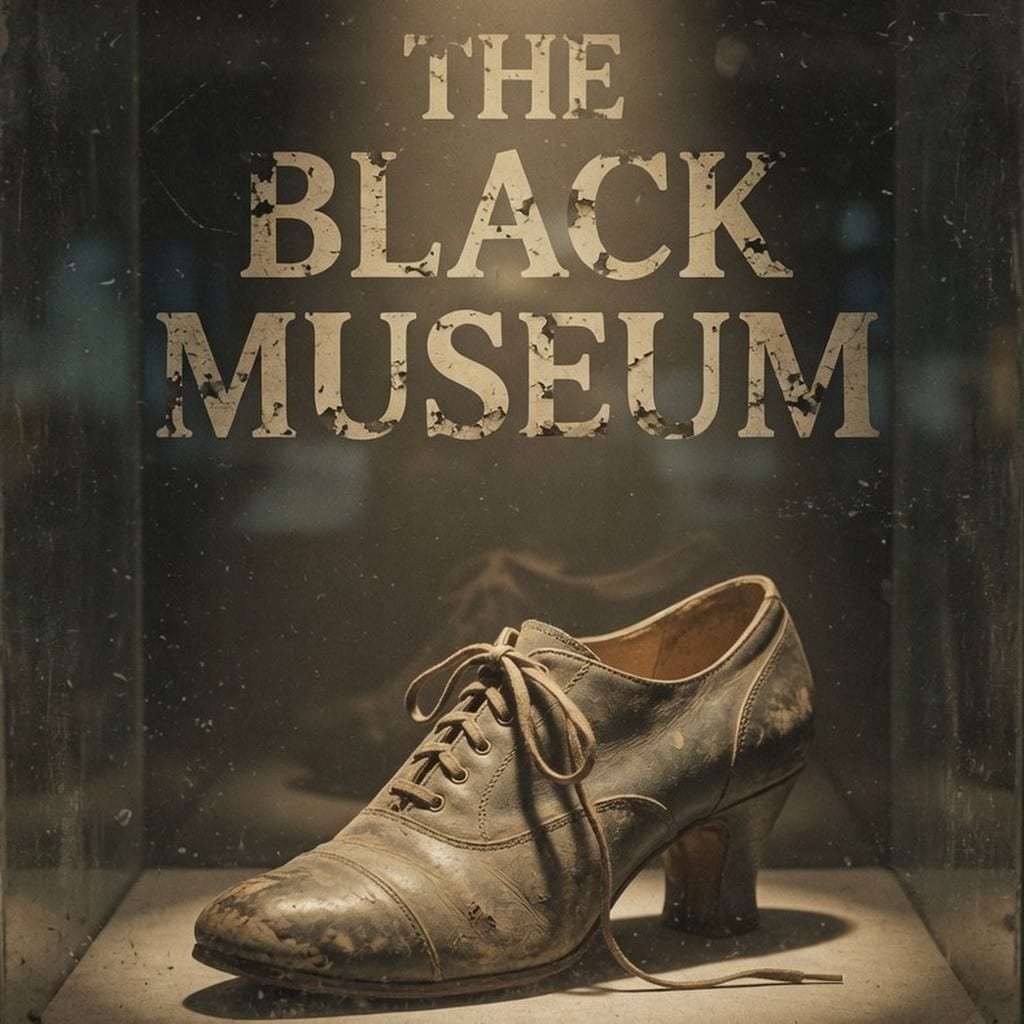
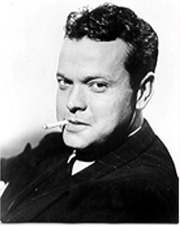
This is Orson Welles speaking from London. The Black Museum, the repository of death. Yes, here in the grim stone structure on the Thames, which houses Scotland Yard, is a warehouse of homicide, where everyday objects, a skillet, a screwdriver, a photograph, all are touched by murder. Here's a.22 caliber pistol. It's a familiar object. You've seen one or it's pictured. You've never touched one. An elegant little weapon, blue steel, mother of pearl inlaid grip, beautiful in its dainty snub-nosed wickedness. A ladies' weapon, wouldn't you say, Pepper? Looks as if it wouldn't harm a fly. Pretty in its way, Inspector. Pretty and dangerous. There ought to be a law forbidding the manufacture of these toys. Every one of them is capable of death. Well today, this little blue.22 can be found among the exhibits in the Black Museum. From the annals of the Criminal Investigation Department of the London Police, we bring you the dramatic stories of the crimes recorded by the objects in Scotland Yard's gallery of death. The Black Museum. In just a moment you will hear The Black Museum starring Orson Welles. The Black Museum. In just a moment you will hear The Black Museum starring Orson Welles. The Black Museum. In just a moment you will hear The Black Museum starring Orson Welles. The Black Museum. In just a moment you will hear The Black Museum starring Orson Welles. Now The Black Museum starring Orson Welles. Well here we are in The Black Museum. Scotland Yard's Museum of Murder. It's an impressive place, the kind of echoing awe which comes from a vaulted ceiling and sombre lighting. Weird, fantastic, with a harsh real fantasy that comes with murder. Here lies death, and so neatly. Each object placarded with a small white card labelled with black lettering, name, place, date, disposition of the case. Here's an odd looking ashtray, soapstone. It's carved rather nicely with the crouching figure of a woman. Something decorative for your living room, but observe closely now the red-brown stain on the rim. Lift up the tray, hold it by the figure of the woman. Whereas it's comfortable in your hand, and suddenly this is a weapon. Ah, here we are, a little blue 22. Well it's silent now, it was silent too during Vivian Davis' cocktail party in London's smart, sophisticated West End. Vivian's quite sheesh-y apartment. It was not destined to be silent though, not very long. It's a nice place, Vivian's apartment, if you go for ultra modern glass and metal combinations, nice people too. Well nice looking anyway, young men are quite, quite impeccable. The young ladies are lovely, lush, well aware of the well put together attractiveness. Ah yes, these are the chic young people. Larry, darling, have you been watching Vivian and Donald? What else sweet, they are at dagger points aren't they? Well frankly Larry, if Viv has one more martini she'll kill Donald with a look. She's a holic look at any rate, but why all the fuss and bother? If Donald wants to play she ought to let him. I know at least three males who are perfectly willing to give Viv a time, really. Including yourself Larry my sweet. No darling, I'm the fourth. A trifle strange isn't it? The ultra sophisticated, the over civilised, and yet you know beneath the polish. The same old jealousy that you can find in savages, oh yes, simple jealousy. For instance, at this moment Vivian herself is approaching the chrome and plastic bar where Donald is mixing a drink. Donald, haven't you had enough? You're quite tight you know. Am I really? I asked you Donald, haven't you had enough? I don't believe I have. Will you have one darling? I've had enough let me tell you. Ah. This is my party who might be polite enough to pay some attention to me and a little less to that strawberry blonde. Ah, she's quite attractive in a leggy sort of way. Oh yes, quite elemental beneath the polished surface. An interesting situation that continues of course, as long as the party lasts. It continues as a matter of fact well past the end of the party, even to the moment when May and Larry are making their farewells. The last of the guests to go. It was simply marvellous Viv darling, just delightful. I always adore your parties Viv, the liquor flows like water. Thank you both for coming. I looked forward to seeing you. I'm glad to see you. I'm glad to see you too. I'm glad to see you too. I'm glad to see you too. I'm glad to see you too. I'm glad to see you too. I'm glad to see you too. The liquor flows like water. Thank you both for coming, my little parties wouldn't be the same without you. Isn't that so Donald? Yes, yes of course. Coming Donald O'Sun. Well, I don't exactly know. Oh Larry, please. What? Put my foot in it, didn't I? Sorry old man. Au revoir Viv, let the martinis run again sometime soon. Bye darling, ring me won't you. Oh soon darling, quite soon. I'm looking for a girl for it now, did you see the look in her eyes? Come along dear, don't be catty. The party's over now. Silence descends on the carpeted hallway for a moment or two. And then through the muffling walls. You stupid little silly little beast on that woman. Oh stop it Viv, I'm not interested in her. No you're not, you look like a perfect idiot. A man versus woman, a jealous woman. Where does it go, isn't it obvious? Somebody's bound to be hurt. Inspector Summers and Detective Pepper arrive quickly from the yard. This seems to be the weapon inspector. A 22, blue steel, mother of pearl grip. A ladies weapon, wouldn't you say Pepper? Looks as if it wouldn't harm a fly. Pretty in its way inspector. Pretty and dangerous. There ought to be a law forbidding the manufacture of these toys. Every one of them is capable of death. Funny. What is? The body out here on the landing. Yes, well we'll find the reason for that shortly. Not much blood, 22s don't make much of a hole. Stay here Pepper, I want the pathologist to see the body before it goes to the morgue. You know the procedure. I'll be inside with the prime and only suspect. Yes sir, I understand. All right, tell me how it happened. Don't you dare to talk to me like that. Take hold of yourself Miss Davis, I need the answers to a few questions. I'll answer that. Don't you dare, that's my telephone. Yes? No, this is Inspector Somers of Scotland Yard. I see. I'm sorry Lady Munsey, you can't speak to your daughter just now. Yes, she'll be coming down to the yard. You can come there if you wish. Goodbye. Now will you leave me alone? You know who my mother is. Which do you prefer, to answer my questions here or to come down to the yard? I refuse to answer anything. That won't look well in the report Miss. Oh get out of here, get out. Take hold of yourself Miss Davis. I told you and told you. Donald and I were arguing. I suppose I grabbed the gun from under the pillow where I keep it. He tried to take it away from me. And next I knew there was a shot and he was mumbling something about a doctor. And then, then he was dead. Oh now leave me alone, leave me alone. Inspector Somers felt that further questioning was indicated. The location he chose was his own office at the yard. Where did you get the gun Miss Davis? My husband gave it to me several years ago. Are you married? I was. I'm divorced. Inspector Somers thought of many questions. Where did you struggle over the gun? In the bedroom. I see. Why do you use linoleum for a floor covering in the bedroom? Because it's easy to keep clean and because it's chic and because... Oh what has that to do with Donald? I'm asking the questions Miss Davis. Oh yes there were many, many questions. How long have you lived at that address? How long did you know Donald Martin? Have you ever bought any ammunition for that gun? What were you quarrelling about? It went on and on and finally. Very well Miss Davis. We shan't hold you but don't you worry. Your mother is waiting for you. You better go home with her. We are sealing your apartment. An inconvenient matter. Violent death from a gunshot wound. Apartments are sealed. People investigate. One's whole life is turned inside out. Then there are the experts. The scientific facts contradict some of Miss Davis's statements Inspector. They do? For instance? There's no evidence of any scorching of the clothing around the bullet hole. From that fact and the spread of the smoke stain I deduce that the gun was held from 3 to 6 inches from Martin's chest. As the blood ran down the chest he must have been standing at the time. It would be practically impossible for him to hold the weapon himself in that position. Could it be that the gun was held from the chest? Could it be that the gun was held from the chest? Could he have clutched the barrel say in an attempt to take it away from Miss Davis? In that case his fingers would be singed or at least blackened. They're not. I do not believe that the man was touching the weapon at all when it was fired. An embarrassing conclusion to say the least. There were other things. I've checked Martin's shoes at the morgue Inspector. Well? If they struggled in that bedroom on that polished linoleum floor his shoes would have had to scratch the floor. They're leather-soled and they have metal taps on the tips. Very good. Another discrepancy. Now, Pepper, I think we'd better have a bit of a talk with the neighbours. Are you certain of that, Mrs. Merritt? I am positive. It's not the first time they yelled at each other, those two, and the walls are thin. Do you have it down, Pepper? Yes, sir. They had a quarrel about two weeks ago. He left. She leaned out of the window, only half-dressed, and shouted at him, Laugh, baby, laugh for the last time. And then she fired a gun at him. Thank you. Now then, Mrs. Merritt, before the shot last night, did you catch any of the words they said? His? Oh, no, sir. But, well, her bedroom is next to mine, and I heard her say as clear as day, and at the top of her lungs, I will kill you. Thank you, Mrs. Merritt. Anything else? No, sir. Very well. Let's go, Pepper. All right, Pepper, I think we have the makings of a case. Pick her up. We'll book her for willful murder. And today, the Little Blue 22, which was to play such an important part in the case, can be seen among the other exhibits in the Black Museum. In just a moment, we will continue with the Black Museum, starring Orson Welles. And now we continue with the Black Museum, starring Orson Welles. As the inspector said, they felt they had a case. The evidence was piling up. Vivian Davis was arrested. Her defense counsel was a distinguished member of the Bar, and the prosecutor assigned was no less brilliant. But some of the conversation about the case was, well, a lot less brilliant. Why, if Larry and I had stayed, we might have seen the whole thing. And darling, those letters. Imagine leaving letters like that lying in your bureau drawer, where anyone might find them. And you suppose the prosecution will use them for evidence. This is one trial I simply shall not miss. Let me say here and now, if May owns a gun, I'm walking out. And at once. But Viv always was unstable, you know. That's the kind who'll pull a gun on you when you least expect it. Not for me, old man. Not for me. I always said she was no better than you'd think. Wild parties at all hours, firing guns around, drinking. Oh, I dare say the woman wasn't happy. But then who is? Now I ask you, who is? Poor Viv. Poor Viv. I understand the food in prison is all starches. See in the headlines, this is a juicy one, what? I'm dear witness. You don't say. Really now, you don't say. They tried the case in public gossip, long before it came to proper trial. And when the proper trial began, the courtroom was crowded naturally with bright young women and polished young men, the familiars of the defendant. This, however, failed to ruffle the solemnity of a British court. I shall permit no demonstrations. At the least lapse from property quorum, I shall have the courtroom cleared. And that settled that. The trial proceeded. Vivian Davis in simple black sat in the dark between the two wardresses assigned to guard her. On the witness stand, the pathologist repeated his evidence at his conclusions with the prosecution. There was no cross-examination. With Inspector Summers, it was another matter. Inspector, you heard the prison doctor testify that when Miss Davis was admitted to the prison after her arrest, he found bruises on her arms and on one thigh. Yes, sir. And that such bruises might have been sustained in a struggle. Yes, sir. Very well. Now then, in your experience, have you found that when one person handles a gun, that person's fingerprints are usually found on the weapon? That has been my experience. However, if two parties struggled for possession of a certain weapon, would there be fingerprints? In most cases, no, sir. They tend to smudge or eliminate each other's prints. This weapon, which you've identified and which has been entered in evidence as Exhibit A, did you find this weapon at the scene of the alleged crime? I did. Did you examine it carefully? I did. Did you have it tested for fingerprints? I did. Did you find any? Yes, sir. How many sets? Only one set of prints were on that gun. Whose were they, Inspector? Now tell the jury, please, whose fingerprints were on that gun? Only my own. Oh, there's no one else. One more point, Inspector. You stated that you found a bullet in the wall of the bedroom, correct? Yes, sir. Have you any reason to believe this bullet was fired on the night of the alleged crime? It could have been fired at any time, I suppose. Thank you, Inspector. That's all. Mrs. Merritt, the eager next door neighbour, had her proverbial day in court. Yes, sir. Just as I told the Inspector, she screamed at him, hanging out of the window, only half-dressed, and then she fired a shot at him. Counsel for the defence spent a little time in the cross-examination of Mrs. Merritt. Madam, did you actually see Miss Davies fire a pistol or gun of some sort at the deceased? I heard the shot after she yelled at him. You said she was only half-dressed at the time. Is that correct? Yes, sir. Then you must have seen her. Well, I took one look and after that I only listened. Why? Why, Mrs. Merritt? When a woman is in her condition, no other woman cares to watch her. I see. This is your opinion. It certainly is. Your Lordship, I respectfully request that the answers to the last two questions be stricken from the record as constituting an opinion and not evidence. Further, on the grounds that opinions are not warranted as the witness is not qualified as an expert. What? The clerk will strike the last two answers from the record and the jury is instructed to ignore the testimony. Proceed. No further questions. Thank you, Mrs. Merritt. Back and forth the battle raged, a battle for a woman's life. A case where the Crown was ably presented. The defence, by cross-examination, by objections in the record, sought to upset testimony to establish points which could be played upon later, the climax of the trial, when Vivian Davies herself took the stand in her own defence. Now, Miss Davies, you understand the seriousness of this situation. Of course. I refer to the testimony that you once fired a gun at Donald Martin from your bedroom window. Is this true? No, it's not true. What did happen that evening? He'd come to see me. He'd asked me for money to pay a gambling debt and I refused. We quarrelled. And he left. I was furious and I called to him from my window. Then I went back into the room and fired one shot to make him think I'd killed myself. What happened then? Oh, Donald! Mr. Martin came rushing back and we were friends again. Miss Davies, have you ever appointed a weapon at Mr. Martin? No, never. Have you wanted to? No, never. Did you shoot him the night he died? No! Have you any recollection of his having spoken to you between the time he was shot and the moment he died? I'll never forget it as long as I live. What did he say? He said, I wish the doctor would hurry. I want to tell him that this was an accident. It's not your fault. He said it over and over. And then he was dead. Thank you, Miss Davies. Your witness. Put yourself together, Miss Davies. Yes, yes, sir. Very well. I submit, Miss Davies, that the truth of your first public quarrel is, as it was stated by your previous witness, that you did fire out of your window at Mr. Martin. Oh, no, never. I fired in the room. I wanted to frighten him. Miss Davies, is this your pistol? Yes. Is this the weapon which killed Mr. Martin? Yes. And on the night this gun, your gun, killed Mr. Martin, you had a quarrel, a second quarrel. Yes. You were, to put it simply, jealous of his behaviour with other women. Oh, I was so jealous, I threatened to kill myself. You threatened to kill yourself? Yes. Then why did you shout, I will kill you? No, no, I never said that. What did you say, Miss Davies? I may have said I'll shoot myself. The other, I never said, why should I? I was jealous for them because I loved him. Oh, you've got to believe it. I loved him. I did. I did. There was more, much more, over and over, but they never managed to shake her on the essential points. I never pointed a gun at Donald in my life. And of course... I never said I'd kill him. I said I'd kill myself. At long last, with Vivian Davies on the verge of collapse, the prosecutor let her go. Shortly thereafter, the defence rested. Summations were brief. For the prosecution? This woman is guilty of the crime with which she is charged. There is no doubt in our minds, nor should there be any in yours, that she held the pistol and fired the shot. For the defence? It is clear that no woman kills the man she loves, despite the violence of their causes. This was an accident. It is clear that it was an accident. The presiding justice was clear and concise in his charge to the jury. Gentlemen of the jury, in conclusion, let me advise you there are three possible verdicts you may return under the present indictment. Guilty of murder, guilty of manslaughter, or not guilty of any offence. I commend the accused to your most painstaking deliberations. The jury filed out. They stayed out for too long, weary hours. There was chatter in the courtroom, as always is. But even the gossip was subdued. Everybody waited. Waited. It seems perfectly incredible. A murder trial and I've been in on it since the beginning. I do hope the judge wasn't as much against her as he seemed to be. It's rarely too exciting for words. I've had more dinner invitations because I know Vyat. Oh well, after all, the poor girl might be hanged, you know. Grisly thought. Well, for my part, even if she gets off, there'll be one advantage. She'll never be my neighbour again. And that will be an improvement, I'd say. And at long last, the waiting was over. The prisoner arose in the dock, the judge's request. The foreman of the jury faced the prisoner in the court. The age-old formula was intoned by the clerk. Members of the jury, have you agreed upon a verdict? We have. Do you find the prisoner guilty or not guilty of murder? Not guilty. Do you find the prisoner guilty or not guilty of manslaughter? Not guilty. Do you find the prisoner guilty or not guilty of manslaughter? Not guilty. Yet, despite that verdict, the little blue 22 can be seen today among the exhibits in the Black Museum. Orson Welles will be back with you in just a moment. Now here in person is Orson Welles. Yes, they let Vivian Davis go free. In many minds, the question was, and still is, did Vivian Davis get away with murder? Frankly, I don't believe anyone gets away with murder. Murder stays with the killer, twisting mind and heart and soul even in the unsuspected and therefore unsolved cases. Where Vivian Davis was concerned, perhaps the real crime was insecurity and the kind of violent jealousy that grows from fear. I don't know. That's for the psychologists, not for you and I to decide. Meanwhile, the little blue 22 remains in its customary place in Scotland Yard in the Black Museum. And now until we meet again next time in the same place and I tell you another story about the Black Museum, I remain as always obediently yours. The Black Museum, starring Orson Welles, is presented by arrangement with Metro-Goldwyn-Mare radio attractions. The program is written by Ara Marion with original music composed and conducted by Sydney Torch, produced by Harry Allen Towers. The Black Museum, starring Orson Welles, is presented by arrangement with original music composed and conducted by Sydney Torch, produced by Harry Allen Towers. The Black Museum, starring Orson Welles, is presented by arrangement with original music composed and conducted by Sydney Torch, produced by Harry Allen Towers.