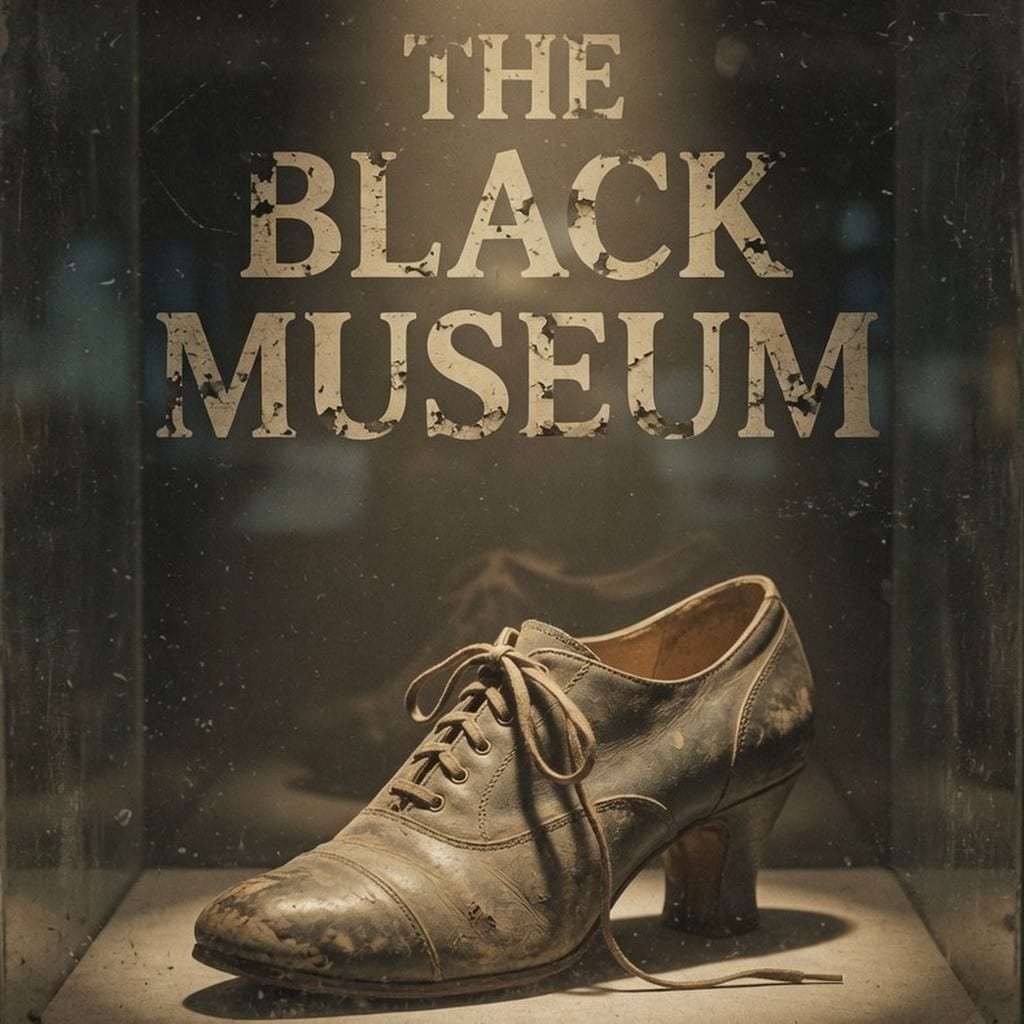
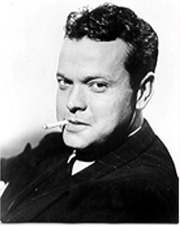
This is Orson Welles speaking from London. The Black Museum, a repository of death. Yes, here in the grim stone structure on the Thames, which houses Scotland Yard, is a warehouse of homicide. Where everyday objects, a kitchen knife, a roller skate, a violin string, all are touched by murder. There's a.32 caliber bullet. It's a familiar object. Brass cartridge case, snob lead and nose. Not very pretty to look at. Interesting, this bullet, Sergeant. Notice the back of the cartridge case. Yes, sir, it's for a centre fire weapon. The firing pin of the pistol must strike the centre of the cartridge. Right. The weapon in which we found this bullet was a rimfire revolver. The firing pin could strike only the edge of the cartridge. That little fact, Sergeant, saved at least one life, I'd say. Well, today that centre fire bullet can be seen in the Black Museum. From the annals of the Criminal Investigation Department of the London Police, we bring you the dramatic stories of the crimes recorded by the objects in Scotland Yard's gallery of death. The Black Museum. Here we are, the Black Museum. Scotland Yard's Museum. The Museum of Murder. Here lies death, so orderly, so well kept, row and row. A macabre record of the violence of many generations, each object in its place, each marked, tagged, carded with name and place and date. Each object in this room enjoyed in its life one supreme moment when the eyes of the world were upon it. It played its silent part in a case of murder. Here we are, here's a jeweled ring, fit for a princess, but born of a mind like the Borgias. Press the jewel, so, and a tiny point licks out, a fang, dripping death. Shake hands with your enemy, shortly thereafter he dies. A bathtub, yes, a bathtub, white, smooth, shining in the dimness. Once a man floated face down in this tub, he slipped or he had been pushed. Was the mark on his skull caused by striking his head as he slipped or by a blunt weapon? In any case, he drowned. Ah, you see, the.32 caliber bullet, even here lying so quietly, so somberly, it's ugly. This object was made for killing. As a matter of fact, he never did kill. That's the story. It began on a London street. A dark sedan drove slowly into the stream of traffic. Three young men in it. One seems quite a bit younger than the other, even so the car continues to cruise along. You got everything straight, Rod? Sure, sure. Do you think l'm a goon? You just want to be sure, kid. That's all. Now, what did we tell you? l'll stay in the car till you wigwag it's all clear, then l'll go in with you. Hey, there's a chance to park the old bus. Oh, kinky! Ha-ha! Watch the fenders now. Wouldn't want nobody to ask for your license at a time like this, eh, Maggie? Sure, Jack, sure. Just kidding, that's all. What's the matter, you edgy? Cold as ice, that's me. Yeah, ice is what we're gonna get. All set. Let's go. Two young men leave an automobile, stroll up the street, hands in pockets, cigarettes dangling loosely from their mouths. They walk past a busy jewelry store. Pretty crowded. Maybe we ought to wait. Could be. No use taking chances. They stroll a few steps farther on. They turn, start back, quite casually. Hey, what's the kid doing? Oh, the guy's going into the store. Come on! A goon must have thought they'd made the signal. Got your gun? What else? Slow down now. In we go. Rod, what's the idea? You wig man, didn't you? Never mind. Let's do it. Right. All right, everybody, this is a hold-up. Over against that wall! Everybody, these guns are loaded. No! You don't take my stone! No! Shut up, you! Quiet! Anybody talks, I'll give it to him. Rod, grip the junk on the counters. You there! Stand still! You've got the button! Rod, the car! Stop the engine! Maddy, scream! Stop him! Please! Please! Hey, in that store! Maddy, Jack, the truck! The double pump! We can't get the car out! We're stuck behind that truck! Come for it, kid! That way! I can't get the car out! I can't! Come on, Jack! Keep moving! Stop you! Stop! Stop! You're the thief! Stop! Get down! Get down! Now I wear you! I've got you! Pull him out! I've got you! Please! Now it's in the fire! Run, Maddy! A man lay dead on the sidewalk. The crowd milled around him. The black sedan stayed in its place. Three young men disappeared in the teeming streets. Disappeared completely and utterly. A few hours later, in a quiet office in Scotland Yard, Inspector Bowers and Detective Sergeant Wood looked at what they had. Not very much of anything, have we, Sergeant? No, sir. Descriptions which could be any of a hundred men and two bullets. 45 bullets from the woodwork in the jewellery store and the 32 which killed that fellow. With no guns to go with them. If those boys were smart at all, they'd ditch the guns. Funny, you'd expect a lot more shooting in a thing like that. They were conserving ammunition. Oh, well, I don't know. Circularise the descriptions and what there is of them. That's about all for the moment. Yes, sir. Three men, youngish, white handkerchiefs... And that was all. Where do you start among eight million people searching for three youngish men who may be miles away by now? Well, the answer is you don't start. You wait. You have patience. And sometimes your patience is rewarded. Sometimes sooner than you expect. This is Wilson, expector. He's the cabbie who called in this morning. How do you do, Wilson? Sit down. Thank you, sir. Thanks very much. Wilson may have something on the jewellery store killing, sir. Let's hear it, Wilson. Well, sir, I never thought about it until I seen the papers this morning. All about the hold-up and that poor fellow who got himself killed yesterday. Go on, Wilson. Well, sir, I was taking my cab along Queensbury Road, about a block from the place where it all happened, when a fellow with a white thing round his neck hops on the running board. What a fair, so I waved him off. Then I seen him go into that big building, the Brook building, I think it is, you know, corner of Queensbury and Mason. You're certain of this, Wilson? Oh, yes, sir. Anything else? I'm not so sure of this, inspector, but I think I saw another fellow running the building after the one what jumped onto my cab. Oh, very good, Wilson. Well, you may have been quite helpful. Thank you very much. Thanks. Get your hat, Sergeant. We're going exploring. The reward of patience. A hand sooner than expected, but only a bare and vague beginning. This kind of investigation takes long hours and hard work and endless, endless questions up and down the hallways of the large office building, in and out of business offices. Did you notice any commotion in the hall yesterday around 3 o'clock? Did a man with a white scarf around his neck take your elevator around 3 o'clock yesterday? Did you hear any running or anything like that around 3 o'clock yesterday? On and on, upstairs, downstairs, nothing. No one noticed anything, nothing irregular, no commotion. What was that? Did the porter notice anything? Two fellows. One of them had a raincoat, I think. Both of them had white rags around their collars, sort of. You're sure of this? Oh, yes, sir. They seemed in a hurry, sort of. Where did they go? Which office, you mean? That's right. Well, I wouldn't know, sir. They went up the stairs just as I was putting some empty wastecans on the service lift. Oh, did you see them in again? No, you mention it. Yes, sir, I did. Where? On the third floor, it was. I was taking my mop to the hall. One of them was sort of half sitting on the stair rail. The other fellow was looking out of the hall window that opens under Queensbury, sir. They didn't have the white rags, sir, but they were the same fellows. Anything else? No, sir, not that I remember. Old Pop Saunders might know something, Inspector. Who's this Saunders? He drives a van, sir. He's been making deliveries to this place every afternoon for years. Ah, thank you. Right, well, let's go, Sergeant. Maybe Mr Saunders does know something. We have your address. They reached the street outside, just as a large, rather decrepit truck, driven by an equally decrepit elderly man, pulled up to the kerbstone. You, Pop Saunders? That's me. Who are you? Sergeant Wood. Mr Scott from the R. This is Inspector Barrett. Yes? Have I done something? No, but you may have seen something that'll help us. Yes, sir? Were you here at this time yesterday? Yes, sir, I'm always here. This time of day. Well, did you notice anyone with a white scarf go into the building? Er, running, perhaps? Oh, those two. Yes, sir, I did. Funny thing, they seemed in such a hurry. One of them had a raincoat. They came out later, no scarves and no raincoat. Now the search is on for a raincoat. Scarves or handkerchiefs can go into pockets, not raincoats. The Brook Building swarms with police, every nook and cranny is inspected in the cellar in the dark corner. This must be it, Inspector. Every other raincoat in the building is accounted for. Not a mark on it, nothing. Try ripping the lining, Sergeant. Nothing, sir, except the manufacturer's stock tag under the armpit. Not much, but a little at any rate. Check the manufacturer from there to the jobber who bought the lot in which that coat was packed, from the jobber to the retailer. It's times like this I thank heaven for rationing. At least they have to keep a record of the clothing coupons and the names of everyone who buys anything. A thin, tenuous trail and a mountain of sales slips to go through. But nothing strikes a chord of memory. And then the Sergeant thinks of something. Inspector, when they make out these records, don't they write the last names first? You're right, they do. Oh well, back over it again. Here, how about this, Sergeant? Stanley, the other way, Stanley Mack. Remember that name, Sergeant? Stanley Mack. Not a usual name. Yes, sir, I do. Didn't he testify at a trial about two years ago? He did, the trial of Jack Jordston. He was sent away for armed robbery, first offense, light sentence. Pal Jordston ought to be out by now. All right, let's get his dossier over here, Sergeant, and then invite him in for a talk. It may be interesting, if nothing else. Well, today that center fire bullet can be seen in the Black Museum. It was a long chance. One man buys a raincoat. This man happens to be a witness at another man's trial. The defendant is sent to prison for armed robbery under circumstances similar to the case under investigation. The inspector in charge sends for the convicted man's dossier and finds. Well, so Jack Jordston was released from prison six days before the Queensbury killing. Well, let's have the young man into the yard, shall we, Sergeant? You'll be able to find him easily enough, I think. If not, we can suspect flight because of guilt, can't we? Send a pickup order out for him. Jack Jordston was found. Found quite easily in London. Look, you have nothing on me, Inspector, and you know it. Maybe, maybe not. Sergeant, show Mr. Jordston the garment. Here it is, Jordston. Do you recognize it? There's a million raincoats like that. Yeah, but not bought by Stanley Mack. Oh, that coat. You know it? Yeah. Yeah, I didn't have nothing against the rain last week when I got out. So Stan, give me the coat. Well, where did you lose it? I didn't lose it. I never lost nothing, except a little time recently. Yeah, we know about that. I figured you did. Keep a simple tongue in your head, Jordston, understand? Okay. Okay, I said. Well, now, since you didn't lose this raincoat, how is it that we found it? I, uh, I loaned it to a fella. How should I know what he did with it? Well, who had it? I don't remember. Now, you receive a raincoat as a gift against the rain. Within a matter of days, you loan it to someone, but you don't remember to whom. That's right. I don't remember. You try him, Sergeant. Yes, sir. Speak up, man. Who had that coat? I don't remember. Well, maybe I can refresh your memory. The coat's hooked up with a murder. Now, who had it? I don't remember. I don't remember. That was the refrain. I don't remember. Now, could they make him remember? If I never let him go, there was nothing to hold him on. But Inspector Bowers said... I want a tail on him, Sergeant. 24 hours a day. We'll pick up his friends one by one and see where he leads us. One of those friends was a boy named Rodney Hamilton. Let me alone. I never did nothing. How old are you, Hamilton? Seventeen. And you got no right to... We happen to know that you've been away to a reform school, Hamilton. You were caught snatching ladies' purses two years ago. Say what? I did me time. You don't keep very good company, son. Georgetown has been out of prison about a week. We like each other. I'll pick me home friends. Where were you day before yesterday, about 2.30 in the afternoon? Home. In bed. Sleeping late, huh? I was sick. Had a fever. We can check that, you know. Go ahead, check it. I was at home in bed. All afternoon, all morning and all night. I was sick. Yes, we know you said that before. Now, look here. It didn't do any good. The boy was obviously afraid. Whether of the police or the men he knew, it was impossible to tell. Still, the patients of Scotland Yard was rewarded once again. A report came in from detectives assigned to follow both Georgetown and Hamilton that they'd been present at a party in a bar given by a third young man named Manny Canvass. Dossier on canvas, Inspector. Ah, thank you. Oh, nice lad. Stole a car when he was 11. Convicted, assault with intent to rob. Convicted, jewel robbery. Convicted, armed robbery and assault. Nice little trio. Our three friends, aren't they, Sergeant? Not exactly. Do you want Canvass brought in, sir? Yes, do that. Oh, and, Sergeant, bring the other two along, but keep them separated. Don't let any one of them know that we have the other two. Nothing highly dramatic, nearly routine, Scotland Yard routine, recognisable as standard practice by any policeman in any large city. Bring him in for questioning. And it always helps to have a few facts, facts on which to base the questions. With this in mind, and knowing their underworld, Inspector Bowers and Sergeant Wood repaired to that certain bar where Manny Canvass held parties for his friends. Nothing much here. Well, there may be. Keep your ears open. Another pint of ale, please. Very right, you are, sir. Oh, in there, Larry. Let me wait on the table. Seat yourself, Miguel. Seat yourself. Oh, well, down the hatch. Patience. Frequent the bar. Wait. Keep your ears open. Don't talk. Just wait. Say, Larry, you hear they picked up Matty? Yeah, and the other two. What two? That kid? Well, I for one ain't sorry. Gives the place a bad name. I mean, kids around with guns in their pockets. Not bright. Canvass ain't bright, that's for sure. That's until they get bunked out of 5,000 quid worth of stuff. Gets mad, works the kid like that, they're raw. Oh, well, so it goes, I'll say. Another couple of pints, please, miss. Oh, yeah, sure. There you are. Do you know a lad named Canvass? Me? I don't know nobody. How about a kid named Hamilton? You think I'll keep track if everybody comes in here? That would be difficult. I thought I heard you mention Mr. Canvass by name. So did my friend here. Then you thought wrong. We don't encourage conversation with the other. No, I don't suppose you do. Care to have a drink on us? I'm not certain that I drink sweet cops, mister. More routine ahead. More routine for the inspector and the sergeant after they left the bar. They checked descriptions of the men seen at holdups and robberies prior by some months to the tragedy in Queensbury Street. In one case, a description tallied with Natty Canvass. Mr. Canvass was invited out of his cell and into the inspector's office. All right, Canvass, you've been identified on the Davis job. You'll do a good long stretch for that. You may as well tell us what you know about the Queensbury shooting. I don't know nothing. Turn King's evidence, Canvass, and you'll get off easily. Otherwise, it's a hanging matter. You can't pin that one on me. I was miles away. I can prove it. Suppose I told you the kid's been talking his head off. Rod? Talk? Not in your life. He's too scared somebody will cut his liver out. All right, Canvass, if that's the way you want it. Take him back, Sergeant. We'll give him plenty of time to think. No luck with Georgetown either, but the kid. There's a chance he'd break. Just a chance. The inspector took it. Look, boy, your pals are saying that you held a gun that killed the fellow in the Queensbury holdup. I never had a gun. Maybe they're framing you, lad. After all, you're pretty young, 17. You won't hang. They will. So naturally, they say it was you. I didn't. I never touched the gun. Canvass says you did, that you had the.32 all the time. I never did. They can't say it. They can't. But they do. Both of them told me. Looks to us like they got together to put the job on you. Well, why shouldn't they? They might have to die. There were only two guns. They had them. You've got to believe that. You've got to. We don't have to believe anything except evidence. If you had the guns, if I told you where they were, I'd... I said it. I didn't mean to talk. I did. I did. Keep talking, lad. It's the only way to save your neck. My neck? If you held that gun and pulled that trigger... All right, we threw the guns away, both of them, the.45 Meti-Ed and the.32 Jack-Ed. We threw them in the river from the key at the Langsha Wharf. If you can find them, you'll see. Maybe there'll be fingerprints. You've got to find them, guns. You've got to. Ballistic report, Inspector. The.45 fired the bullet we found in the woodwork. The.32 killed the man in the street. And it's funny, half the cartridges in the.32 were rimfire. The other half were centrefire. Those didn't go off. If they had, chances are there'd have been a lot more murder. And today, if you're interested, you can find that centrefire bullet in a place of honour in the Black Museum. Orson Welles will be back with you in just a moment. It's an accepted fact in police work that 80% of the occupants of our prison either would talk there or talk themselves there. In this case, it was patient police routine. Plus the talking of young Rod Hamilton, which put Rod behind bars for the rest of his life and brought Georgetown and Canvaas to the 13 steps and the rope one morning at 8 o'clock. There's a postscript to this story. The use of a gun by an English criminal is rare. Nor in England do the police go armed in their normal course of duty. The Hamilton case was one of the more obvious symptoms of a post-war disease of violence. The death of Georgetown and Canvaas was not without its effect on this disease. For days, weeks and even months after their execution, pistols, guns, knives, many of them perhaps innocent wartime souvenirs, others of more dubious origin, were found by the police on rubbish heaps, disused gardens, on the mud banks of the River Thames. The criminal world of London had come to terms with their traditional enemies at Scotland Yard. Perhaps after all, the innocent man had not died in vain. The bullet that killed him, the Santa Fire bullet, remains in its customary place in the Black Museum. And now, until we meet next time in the same place, I tell you another story about the Black Museum. I remain as always obediently yours.