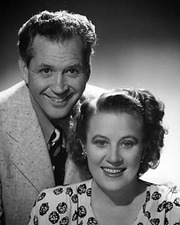
The cavalcade of America. DuPont, one of America's oldest industries, presents the cavalcade of America, a series of episodes from American history, stories showing the qualities of mind and spirit that have made America and the American people what they are today. Distinguished educators, prominent in the American Historical Association, have cooperated in this series to achieve historical accuracy. Throughout this pageant of American life, listeners will find the inspiration that accounts for the forward march of American industry, agriculture, science, and art. In the realm of research chemistry, where the name of DuPont is known the world over, the will to achieve, to build and rebuild, to produce better things for better living, is but a reflection of traditional American spirit. Tonight we are pleased to announce as our star player a favorite of the stage and screen, a man who is not only an actor but a distinguished playwright and director, Mr. Frank Craven, who will be heard in the first episode as Josiah Quimby, a resident of Sacramento, and in the second as Henry Fowler, a western farmer of the present day. Tonight the cavalcade of America recreates two outstanding examples of the will to rebuild, events characteristic of thousands of similar happenings in American history. The spotlight swings back through the mists of time, back through 83 years. Our cavalcade orchestra takes us back to California in the early years of the gold rush for the 1849 overture. November, 1852. Four years have passed since the cry of gold, gold went ringing around the world, but still the mad rush to California continues. On the Sacramento River stands a flourishing young town, the town of Sacramento. On this day in November, 1852, a newcomer in front of the Avalanche Hotel stares curiously at the kerbstones along the main street. What's the idea of kerbstones as high as a man's head? Well, that's to keep the water from washing the buildings away. Huh? Well, in spring you see these streets here is all rivers. Them dusty rivers? I know you don't believe me, but it's right. You go look in the backyards of all the houses along here, you'll find a rowboat in every one of them, ready and waiting. Oh, now listen, that's too much to swallow. I know, I laughed like that myself when I first came here. I didn't think it was so funny the next spring though when I see my tents and my bed and all my worldly goods go disappearing downstream with me following on a plank. You mean to tell me that... All I know is that when the spring rains commenced and the snows began to melt in the mountains, the old Sacramento just naturally forgot she ever had any banks. I see. This wasn't a city anymore, just a great sea of muddy water, full of debris and cattle and struggling people. The water rose right over these buildings? No, not these buildings. These are all new buildings. Now, shall we add more sense that time? We didn't build them out of dopey, we built them out of wood. We built them higher up in the banks too. And built curbstones six foot high. Yes, we built more than that. We built a levee, a $250,000 levee. I don't know how we ever managed to raise the money with half the folks in town ruined, but we did, somehow. Well, at least now you don't fear any more floods. Well, we've taken all the precautions, we know how. There's no telling though. I said there was a boat in every backyard, didn't I? I'm surprised that anybody stays here at all, if that's the case. It'll take more than a little inconvenience like a flood to destroy the folks of Sacramento. Only gets the dander up. Makes the place grow. Oh, we've got great plans, Sacramento. We're going to lay out parks here one of these days, build schools. There goes the school bell now. Hey, that's no school bell. That's the fire bell. Fire? I can see it. Look, you want to see those parks building up? They're boring us away too, right across the town. Good Lord, quick, come on, let's go. For many hours they struggled against the devastating flames. Building after building fell to the ground in spite of their efforts. The South Quimby and the others stood watching Sacramento become a mass of smoldering ruins. There goes the last block of buildings while we stand here watching. There's nothing else we can do. Yeah, there's plenty we can do. We can be making plans. Plans? Plans for rebuilding the town. Might be a good idea to let the fire burn itself out, mightn't it? Before we start talking about rebuilding. If we rebuild at all. What do you mean, Jim Hapsgood, if we rebuild? Of course we're going to. This ain't the first time that Sacramento's been destroyed. No. Twice already the town's been wiped out by floods and now comes this fire. Well, Jim, sometimes the Lord has a way of trying our souls to see what stuff we're made of. And he's going to find out too, pronto. He's going to see the city of Sacramento rise up out of these ashes, bigger and finer and stronger than ever. Well, we've got no time to lose. Cold weather will be on us before we know it. We ought to start rebuilding just as fast as we can get the debris cleared away. Well, we can get lumber up here from San Francisco in a couple of weeks. Yeah, we'll need more lumber than San Francisco has got to rebuild all of Sacramento. Well, there's big supplies in Stockton, Marysville, Nevada City. We'll need all of them. All the lumber we can lay our hands on. Hundreds of thousands a feet of it. Hundreds of thousands? At $70 a thousand? That's the price they're asking in the market now. But just let them hear what's happened. Let them find out that Sacramento's been destroyed by fire. That we need lumber the worst way in the world, no matter what it costs. Yell loud enough and perhaps they will hear about it down in San Francisco. But keep quiet, till after we've put our order through. How can you keep a thing like this quiet? The burning of one of the biggest cities in California. The news will travel like lightning. You know how slow the mails are. If we start out right now, tonight, and stop for nothing, we ought to get to San Francisco and the rest of these places before anybody else traveling that way carries a news to them. And if they do hear of it before you get there... Well, then that would be just one more piece of hard luck for Sacramento. But at least we can try. Music In the offices of Wilson and King, Lumber Merchants, San Francisco. There you are, Mr. Quimby. There's your order. The biggest order, I don't mind telling you that we've had the pleasure of filling since we started our business here in San Francisco. And if you'd had any more lumber, you could have sold me and I'd have bought that too. You're a speculator? No, no, I'm just acting as agent. You mind telling me for who? Some folks in Sacramento. Funny, there's another fellow in town today, you understand, from Sacramento, doing the same thing. The same thing? Buying lumber, ordered a raft of it from one of our rivals. You don't say. You folks must have a lot of faith in the future of Sacramento if you figure on using all this stuff. Yes, we have. Well, I hope you don't get stuck with it. No, I don't think we will. Not now. Where is it you want me to sign this order? Right there, where I made that pencil mark. I see. When your signature goes underneath. That's right. There, see, 100,000 feet, 70 dollars a thousand. Yes. All right. There. There you are. Now, if you just give me the pen, I'll put my John Hancock under it. There you are. Hey, Mr. King. Mr. King. What's the idea of rushing in here like a wild boar, Tom? Anybody think the city was on fire? Well, it is. I mean, it has been. There has been a fire. What? No, not here. Sacramento's been destroyed. Burned to the ground. You sure? Who told you? The city's been destroyed, the city's been destroyed. Not a house left standing. This gentleman here has just come from Sacramento. Oh, sure. There's a bunch of gentlemen just come from Sacramento. They've bought up all the lumber in the market. At 70,000. Well, they're not buying it from us at any such price. This order's canceled, Mr. Quimby. Don't you dare tear up that order. It's canceled, I tell you. You signed it. You got me to sign it under false pretentious. You didn't tell me what you wanted all that lumber for. Are you in the habit of making your customers tell you what they're going to do with the lumber that they buy from you? You took an unfair advantage of me. I didn't know what had happened. I didn't know Sacramento had burned. No, you didn't know that the city was destroyed, that its people were homeless, that they'd lost their houses, their places of business, everything they owned. But now that you do know, you're going to try and profit by it. You're going to hit them when they're down. You're going to charge them an outrageous and exorbitant price for the lumber that they need so desperately to put roofs over their heads. Well, we're not asking you to give us this lumber, Mr. King. We're only asking you to sell it to us at a fair price. Well, what do you think, Mr. King? Hmm. All right, Mr. Quindy. Your order stands. Through the years, to the present day, Americans in many communities have demonstrated many times that the will to rebuild is a trait deep set in the American character. The will to rebuild is a trait deep set in the American character. The will to rebuild is a trait deep set in the American character. The American cavalcade moves onward. The will to rebuild is as strong today as it ever was. It is spring, 1935, and over the Great Plains region of America, for months no rain has fallen. Starved livestock grub the park's fields. Trees and grains choked for moisture. Farmers scan the skies carefully, hopeful that rain will soon come to end the rising dust. One afternoon in March of this year, Henry Fowler, played by Frank Craven, a farmer of the blighted region, and his small son Jimmy are making family purchases in a general store. Will it be anything else, Henry? No, I guess not, Tom. That's all your mother wanted, wasn't it, Jimmy? Yes, but you said I could have a chocolate bar, Dad. So I did. Well, give the boy a chocolate bar, Tom. That's right, Jimmy. Who'd you let your Pa forget that? Here you are. Thank you, Mr. Wilson. Beats all how it don't rain, Henry. Oh, it's bound to rain before long. I'm looking for a good year this year. Your Pa's optimistic, Jimmy. I don't know what folks will do if the dust don't let up pretty soon. One good rain will fix the dust. Here's your money, Tom. Come on, Jim. We've got to get us a home. So long, Tom. So long. Bye-bye, Jimmy. Bye, Mr. Wilson. Bye, little man. Hop in, Jimmy. It's getting dustier than ever. Hey, Dad. What does he mean? What does who mean, Jimmy? Mr. Wilson in the store. When he said he didn't know what folks would do if the dust doesn't quit. Well, he meant it would be pretty bad for the crops if the dust gets bad. Nothing will grow on our farm either. Well, not if it gets real bad. Oh, that's all right. We can buy stuff at the store, can't we, Dad? Huh? Yeah, yeah, sure, son, yes. We can buy stuff at the store. Ooh. It's getting dark. Dad, quick, look. What? What is it? A big black cloud. Maybe it's going to rain. Oh, no such luck, Jimmy. That's dust. Dust? Quick, roll up that window. I'll turn on the light. Ooh. It's getting just like night out. Now, don't get scared, son. We're almost home. I'm not scared, Dad. It's getting worse by the minute. Hold your cap to your face, Jimmy. All right, Dad. Are you scared, Dad? No, no, but we won't be able to see the road if I... I hope your mother... Of course not, Dad. Huh. I can't budge it. It's stopped by the dust. Well, it'll... we'll have to leave it here. Come on. Get out and climb up on my back. Come on. All right. Oh, hey, Dad. The dust got in my eye. We'll be there in just a minute, son. Hang on. I see a house, I think. I see a light. Hold on tight now. We'll make it. Look, Dad. Something's in the road. It's... it's Spotty. Spotty, pick him up, Dad. Come on, Spotty. Come here. Come here. Come on, get up here. Come on. Come on. He'll carry you, too. So, like Spotty. We'll still be home. There's your mother in the window, son. We'll make it now. Mary! Mary! Open the door! Mary! March 25th, 26th, 27th, 28th, March 29th. Five endless days and nights of dust storm ragers. The worst in the history of the Southwest. Helpless to combat it. Unable to save the crops or livestock. The Fowler family huddle in the house. March 30th. Henry, what are we gonna do? There's nothing we can do, Mary. Just sit and wait. That's all. That's all there is to do. Dad, you mean I can't ever go to school again? Sure, Jimmy. Just as soon as the storm dies down. Yeah, just as soon as the storm dies down. Just as soon as the storm dies down! Mary! I'm sorry, Henry. I can't stand it much. You won't have to, Mary. Can't last forever, you know. Oh, I suppose not. Five days. Oh, look at this house. Dust. Dust. Dust everywhere. Comes in the windows even when they're open. Well, don't forget we're not the only ones. We've got a roof over our heads anyway. I feel sorry for the cat when we sleep. The dogs are like spotty if they're outside. Don't you think you ought to go to bed, Jimmy? Oh, no. I can't sleep anyway with the dust in my nose. I know. Golly, I wish I could look out of the window. Oh, it's funny to have the lamps lit all the time. In the daytime even. Henry, do you think the farm's gone? Well, don't be discouraged, Mary. I know it's bad, but we've just got to make the best of it. But we had the crops all in. Well, we'll put them in again. Then if we get just one good soaking rain. If we get a good rain. Oh, if we could only have a little rain. Next morning, the wind has died a little, but the air is still loaded with choking dust. There has been no dawn, no sun. It's a good time. Did you get any sleep, Mary? Yes, a little, Henry. It's so hard to breathe. Oh, of course, the wet paws. Oh, I wish I could do anything except get this here. I can see out of the window. Oh, look at that cherry tree. The whole trunk is buried. Can I go to school today, Dad? School? Mary, that gives me an idea. What? Wait a minute. What's Tom's number? What? I know, I know. Hello, Central? Are the lines open? Good. Central, call 74, ring two. Here. Hello? Hello, Tom? This is Henry. Is anybody getting through to town? There are a few, huh? Well, look, can you be at the schoolhouse in two hours? Fine. Tom, phone some of the neighbors on your line, and I'll call the folks around here. Here, tell them to be at the schoolhouse in two hours. Well, tell them to get through somehow. I'll see you later. Oh, but you can't do it, Henry. You know the car's broken down. Well, then I'll make it on foot. Hello, Central, eight, seven, ring one. Oh, thank you, Dan. How many are there here, Tom? About 25, I reckon. The lights west of here is all down, Central told me. I couldn't get a soul west of here. What's the matter with the lights? All the lights in the village went bust two days ago. I brought some candles from the store. Here, I'll get them lit up. You got a match, Henry? What's the idea, Henry? What's good of a meeting? Listen, you men, I can't see you much, but I think I know who most of you are, even with those dust mask sons. Listen, I was sick and tired sitting in the house helpers. I know you are, too. I thought if we got together, we'd find out who needs help the most. I thought it might give us courage to go on if we decided to do something about this thing. I done mined this mornin' a shot forehead of the finest cattle ever raised. Starvin' it was. I see the wind blow seas right out of my land. What can you do about that? Yeah, George and me had to shut down our feed mill. We was grindin' sand in the flower. I know what I'm gonna do. And right quick, I'm gonna take my wife and kids and get out of here. The dust has got my farm. It can keep them. Well, where will you go? Well, there's no dust further north of here, they tell me. John, there's been 18 million acres of land in the southwest hit by dust storms in the last two years. Anyway, any place else than here is not our country, John. Well, I guess that's right, really. Our homes are here. It's where we were born and raised, most of us. Yes, and it's good land, dust or no dust. We'd fight, wouldn't we, if anybody tried to drive us out? That's what the dust is trying to do. Well, are we going to let it? No. Are we going to let a few days of a dust storm make quitters out of us? We've had to eat dust. Are we gonna let it beat us? No. You bet we're not. But what we want to do now, boys, is to check up the damage that's been done. Some of us have been hardy-hitting others, and we've gotta pitch in and help them first. That's right. Well, now, you see, the wind died down last night. In a few weeks, we'll be... What's the matter? Look, it's getting lighter outside. The sun's coming out. The sun's coming out. And I told you, boys... And so, on the morning of March 30th, hope comes to the stricken country. But for two months more, the dust clouds continue. Not until May does rain bring a release. Ever hopeful, the farmers put in another planting, care for their livestock, hold courage in their hearts, and finally reap a full harvest. And so, one day this fall, Henry Fowler and Jimmy are jogging again over the same road toward the General's door. Dad, you're not forgetting to promise me a chocolate bar, are you? Oh, no. No, I won't forget, Jimmy. Remember the time when you bought me one just before the death storm came up? Uh-huh. I'm glad we didn't move away. Aren't you? You bet I am. Will I own a farm someday when I grow up? Of course you will. Just like your grandpa and me. Will it be death storms then, too, Dad? Maybe not, Jimmy. Maybe by the time you own the farm, we'll have found some way to prevent them. Oh, I wouldn't care if there were. I'd say, just the way you and Mom did. Sure you wouldn't. And when you grow up, you'll understand the reason you'll stay. We're the sticking kind, Jimmy. Like your grandpa and my grandpa. What we struggle to get, we fight to keep. That's our heritage. You can't understand that word yet. But someday you will, Jimmy. Someday you will. And that belief passed on from father to son has become one of America's real riches. We salute their courage, both the fathers who have handed down the will to rebuild to their sons and their descendants, who today are carrying on this outstanding attribute. Heroes in the cavalcade of America. And here's another short story of rebuilding. The story of an amazing conquest in the realm of agriculture. Growing things need nitrogen and plants take it out of the soil faster than nature can replace it. This was a challenge to the skill of man to improve on nature's method of rebuilding the soil. Turn back the years to 1898, to a day in September in Bristol, England. The British Association for the Advancement of Science is holding its annual meeting. Sir William Crooks, one of the foremost scientists of all time, rises to issue a solemn warning, charging chemists with a vital duty to mankind. Are we to go hungry and to know the trial of scarcity? That is a poignant question. Let us remember that plants create nothing. There's nothing in bread that is not absorbed from the soil in the air. And unless nitrogen is returned to the soil, its fertility must ultimately be exhausted. The fixation of atmospheric nitrogen, therefore, is one of the great discoveries awaiting the ingenuity of chemists. It is deeply important in its practical bearing of the future welfare and happiness of the civilized races of mankind. Sir William gave this warning to the world because he feared the natural deposit of nitrates in South America would be exhausted unless some other source was found. Fortunately chemists accepted his challenge, rolled up their sleeves and went to work. By 1902 they actually had succeeded in capturing the nitrogen from the air, experimentally to be sure. But the job of rebuilding the soil was on its way. American chemists were pioneers in the first stages of this work. In 1926, in our own country, the DuPont Company started the production of fixed nitrogen on a really commercial scale. And today DuPont is producing quantities of this vital compound for the needs of America's agricultural land. And the amazing thing is that this vital substance is made with the aid of coal from the most abundant of all raw material, air and water. Thus, chemistry safeguards the very life of mankind by ensuring a continued supply of fertilizer essential to food crops. And today as yesterday, research chemists are working out problems which are equally important for tomorrow. For it is the aim of DuPont to provide better things for better living through chemistry. On tonight's program you have heard Frank Craven, favorite star of stage and screen. Next week at this time DuPont again presents the cavalcade of America. This is the Columbia Broadcasting System. Music WABC New York