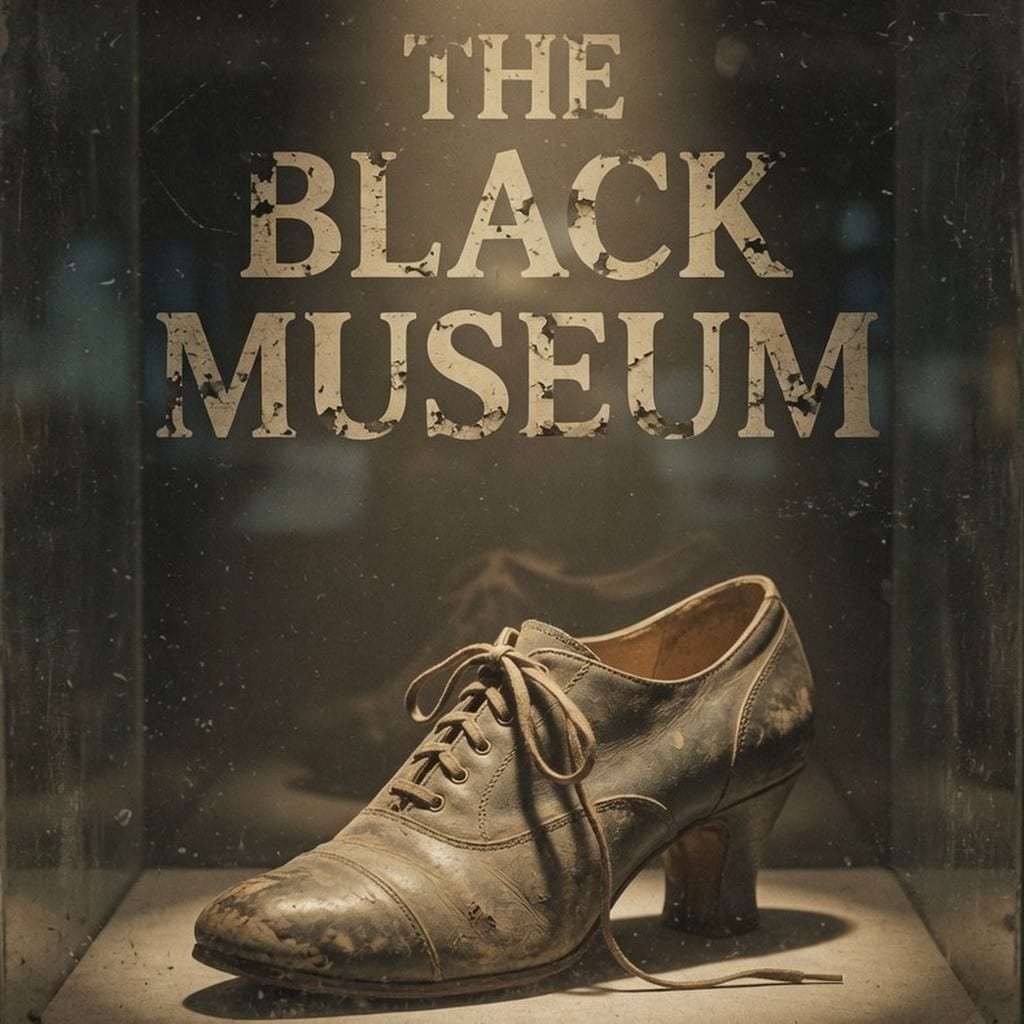
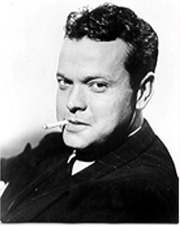
Speaking from London. The Black Museum. Here, in a grim stone structure on the Thames, which houses Scotland Yard, there's a warehouse of homicide. A very strange room where everyday objects, a woman's shoe, a tiny white box, a quilted robe, all are touched by murder. You take this raincoat, it's a familiar object, waterproof cloth, ray-on lining, collar, you can turn up against stormy weather. Here in London it's called a Macintosh. But you wouldn't wear this raincoat. Oh, isn't it, Inspector, the way it was tucked around that poor woman? And partially burned, as if someone had tried to destroy the evidence. Well, it is evidence, sir, but against whom? I'm not sure yet, but this raincoat, Sergeant, this raincoat will hang someone. You can depend on it. Today, that raincoat can be seen in a very special position in that very curious room in Scotland Yard. Which is known as the Black Museum. From the annals of the Criminal Investigation Department of the London Police, we bring you the dramatic stories of the crimes recorded by the objects in Scotland Yard's gallery of death. The Black Museum. In just a moment you will hear the Black Museum starring Orson Welles. The Black Museum. The Black Museum. Now the Black Museum starring Orson Welles. Now the Black Museum. Now here we are in the Black Museum, Scotland Yard's Museum. It's a museum of murder. Here are the objects of homicide, the weapons, the clues, which at one time or another betrayed killers. They've been collected over a hundred years. And now here they are shelf upon shelf in this dim echoing room. Here lies death on these shelves, in these glass cases. Just for instance, in this case, simple mallets. Just the sort of thing a suburbanite might use in his garage or his shop working at wood carving on a quiet weekend. In fact, a suburbanite did use these mallets on a quiet weekend, but not for wood carving. Ah, the raincoat. There we are. Stained, charred, too, around the edges. There's nothing you'd like to handle for very long, but there's a story attached to it. A story begins in the kind of place you immediately associate with absolute silence. No, not a graveyard, a chess club. It is silent, isn't it? And into this silence of concentration are intruded... ... ... ... ... ... ... ... ... ... ... ... ... ... ... ... ... ... ... ... ... ... ... ... ... ... ... ... ... ... ... ... ... ... Mr. Agard, sorry to disturb you, sir. Just a moment, Stuart. There. Now stuart. Most important telephone message for you, sir. Came in about half an hour ago before you came in, otherwise I would never have disturbed you. From a Mr. Chamfer, sir. Chamfer, strange name. Oh, oh, yes, yes, perhaps I do know him. May I have the message to you? That was all. That was all until the next evening. Little bit after seven o'clock on a streetcar, this quiet little insurance salesman, John Ager, had said to the conductor of the streetcar, I beg your pardon, does this car take me to Edison Mews East? I've never been out there before, you see. I'm not quite... Yes, you're all right, mister. Take you about 20 minutes from here. Oh, thank you, thank you very much. I'll call it out for you if you like. Oh, yes, thank you again, thank you very much. Oh, I beg your pardon. May I trouble you for the right time, please? It's 7.35. I am right for Edison Mews East, aren't I? That one block to the car line. Oh, thank you. I beg your pardon, Constable. Yes, sir? I am looking for a Mr. Chamfer. In Edison Mews East, I have an appointment, it's insurance. Do you happen to know the gentleman officer? Oh, I'm afraid not, sir. Oh dear, oh dear, and my date was for 7.30. Is it much past that now? 7.45, sir. Steeplechime just struck for 3.25. Oh, thank you, thank you very much indeed. I am sorry to have troubled you, officer. He seemed a worried little man, John Agard, upset over his difficulty in finding Mr. Chamfer, and he was still worried apparently, but an hour later, when he's next to our neighbors, Harry and Ethel Benson, saw him coming across the scrap of lawn which separated their houses. Is Agard coming over? Funny. Why is it funny, Harry? They come over very often. That's just it, Martha isn't with him. Funny. Such a devoted couple. Martha had a bad cold today, perhaps John needs something. Well, no, isn't enough. There he is. Hello, Agard. Sparagey coming across the lawn. Yes, good evening. I am sorry to bother you. No bother at all. Do you need something for Martha's cold? Oh, you'll know about that. No, and yes, I suppose the cold made her forget to unbolt the doors when she went to bed. You mean you can't get in your own house, oh man. That's it, front and back. I can't seem to open either of them. I don't quite know what to do about it. It's not like Martha to forget a thing like that. Does she always bolt the door behind you when she's alone? Oh, at night, yes. There's only the two of us. I do so rarely go out without her, but tonight it was business. If you come across with me, I'd appreciate it. The three of them crossed the lawn to the Agard house. Three ordinary people. An insurance agent, a bank clerk, bank clerk's wife. The wife said, Let me try the front door just for luck. John Agard said, It won't help her. I've tried several times. The woman tried it. That's a bit strange. I could have sworn. It happens lots of times. The lock gets stuck. It's really open and you think it's locked and it just won't work. Well, now you're here. Won't you stop in for a moment? What with Martha's cold and all the- Oh, she'll like to see you. Come in, please. Well, just for a minute. Martha? Martha, dear? The Bensons are with me. Martha! Oh, oh, Martha. Good Lord. She was dead. Completely, horribly dead. One look, no doctor could help. The woman's head was battered in. She lay before the fireplace, her arms and legs twisted awkwardly like some carelessly dropped wooden figure and there was blood on the hearth. Two of her arms were broken. Two of her arms were broken. Two of her arms were broken. And tucked around the body, as you tuck a blanket around a child, was a raincoat. Let me go over this once more, Mr. Rager. Of course, Inspector. If you think it'll help. Details very often help. You say you left here just before seven, took a trolley to Edison Mew, but you couldn't find the address or the man would call you. Even asked the constable on the beat. Then you returned home to what you found. That is correct, sir. And your wife was alive when you left home. Oh, of course, of course. That was about quarter to seven. The boy who delivers milk says he saw her in the kitchen through the window about that time. The news boy says he tossed the evening paper at the front door about 6.30, but saw no one. Can you corroborate any of those points? Oh, I took the paper with me at a quarter of seven. Martha, Martha was alive when I left. Who could have done this, Inspector? Who will find out? We usually do. May I see the cuffs of your trousers, Mr. Rager? The cuffs of my? Oh, yes. But whatever for? Thank you. No, no stains of any kind? Do you really think for one minute that I... We think nothing, not yet. The raincoat, Mr. Rager, is it yours? Are there two worn spots at the buttonhole? There are. It's... When did you see it last? It was hanging on its usual hook in the hall. I see. Thank you, Mr. Rager. That's about all for now. But not nearly all. The experts were at work. Somewhere, somehow, the tiny thread which would lead to the heart of the tangle would be found. In a quiet office in the Scotland Yard, Inspector Mason discussed the experts' reports with Sergeant Crandall. He couldn't have been robbery. A guard reports nothing missing. A guard reports a lot of things, A guard reports a lot of things, including a mysterious telephone call that took him on a wild goose chase. During which he seems to take good care to leave a clear trail of his own movements. She was seen alive between 6.30 and 6.45. It's been a long time since I've seen a ghost. I don't know if it's a ghost or a ghost. It's been a long time. It's been a long time. It's been a long time. It's been a long time. It's been a long time. Absolutely long time. And I couldn't forget a thing. In fact, at 6.45, a guard was in the tobacco shop at 7.35. The girl who works there remembers him. He probably took good care she would. Beyond a doubt he did that. But he couldn't have battered her to death after 6.45 cleaned up, destroyed whatever he was wearing and still be in that shop at 7. 35. Or made that trolley car a few minutes after 7. Exactly. Which leaves us, Inspector- burned as if someone tried to destroy the evidence. Well it is evidence sir, but against whom? I'm not sure yet, but this raincoat sergeant, this raincoat will hang someone, you can depend on it. That was all they had, the raincoat. Inspector Mason thought about it. It was tucked around her just as if someone who loved her were taking care of her. There was a threat, it seemed the only threat. Where did it lead? Where could it lead? Where could any of it lead? John Agard, you're under arrest, and you'll be later charged with the murder of your wife Martha. It is my duty to caution you that anything you may say... Today, that raincoat can be seen in a very special position. In that very curious room in Scotland Yard, which is known as the Black Museum. In just a moment we will continue with the Black Museum starring Orson Welles. And now we continue with the Black Museum starring Orson Welles. Well they charged John Agard with the murder of his wife Martha. The evidence seems slight, pretty flimsy, but still there were strange lapses, contradictions of character. A quiet little insurance salesman responds to a call from a possible client and suddenly he's talkative, almost garrulous. He establishes himself at definite places at definite times with total strangers, all of whom can be checked quite easily by the police. The possible client is nonexistent. And then of course there was the raincoat. From the very beginning the prosecutor for the Crown made it clear that a great deal of his case rested on that raincoat. And if the prisoner did commit this murder for apparently no reason, he deserves the full punishment. Much will be made of the part life he led with his wife. Much will be made of the fact that no tilt-hill twist of blood was found on him or his clothing. But I say to you, and we hope to prove this to your satisfaction, that this woman could have been beaten to death by someone wearing only the raincoat, which we will place in evidence. Now who, ladies and gentlemen of the jury, could have approached Martha Agard naked, save for that raincoat, except her husband, the prisoner, John Agard? Moreover, as you will see, the police officer... There was more of the same, much more. The counsel for the Crown was out to make an impression, no doubt about that, but then so was counsel for the defence. My king has already admitted that no trace of blood was found upon my client, although from the condition of the body and though time. John Agard could never have committed this crime, performed the necessary ablutions, and been where he was definitely seen between 6.45, when his wife was last seen alive by a third party, and 7.5, the moment when my client spoke to the trolley conductor. But far, far more important is the relationship between my client and his core wife, a relationship of love, of understanding, of the perfect companionship of declining years. For that reason alone, I submit my client could never have committed the crime with which he stands charged today. So it began. The legal lines of battle were drawn. Twelve honest men sat in the jury box and gave their whole attention to the parade of witnesses, to the arguments, to the cross-examinations. Sergeant Crandall gave evidence on the amount of blood and the places where it was found. Defence counsel cross-examined. It is apparent, Sergeant, that there was an attempt to burn the raincoat, which is now in evidence. Do you agree? Yes, sir. Such an operation would take some time, would it not? Well, I assume so. I can't say for certain. I've never experimented with a raincoat. Very well. You saw the scene of the crime before it was cleaned up, did you not? I did. From what you saw, would you say it was possible for the killer to escape splashes of blood? Well, I doubt it. He would get blood on his legs, his hands, his face, his hair? I expect so. Were any such traces found on my client? Well, none that I know of. There has been a suggestion made that the murderer took a bath before leaving the premises. Did you see any traces of a bath? A wet towel, indications in the bathtub? No, sir. Nothing like that. One more point, Sergeant. These are the telling points. But the Crown made its own points as well. Inspector Mason, who was calling to know the defendant when you first questioned him? I was rather surprised at him. He showed less emotion than I did. How was this indicated? We sat in the room where the murder had occurred. Mr. Agard smoked and talked. He held his cat on his knees and stroked it quite calmly. At one point, he casually stepped... Such points, sir. A clever prosecutor. Quite clever. He called the steward of the chess club. Was Mr. Agard in the club when the telephone call came from this mysterious Mr. Ciampa? No, sir. I looked particularly. He was not there. Did you recognise this Ciampa's voice? I'd never heard it before. I haven't heard it since. Might it have been a disguised voice? It might. It sounded muffled. Very heavy sort of. Thank you. Your witness. Mr. Stewart, in your observations of Mr. Agard, have you ever seen him behave as a poor loser? No, sir. Never. Has he ever expressed violent opinions, to your knowledge? Mr. Agard violent? He's the quietest man I've ever known. Did he ever mention his wife to you? Many times, sir. On what occasions? Usually about nine in the evening. He always worried about leaving her alone too late at night, sir. Very considerate of her, he is. Was, sir? Thank you. That's all. That was all they had. An elusive case. An impression, really, more than a case. Very difficult to prove, but just as difficult to defend. For instance, the evidence of Harry Benson, who was with John Agard when the body was discovered. And in all the years you've been neighbours, what would you say impressed you most about my client's relationship with his wife? His absolute devotion. Never a quarrel, never a raised voice. They liked the same things. They were perfect for each other. Your witness? Mr. Benson, after the discovery, who called the police? Why, Agard did come to think of it. My wife was very upset. She was sick over what she'd seen, as a matter of fact. Yes, he was the one who thought of the police. He used the telephone, quite calmly. Quite calmly? Thank you, Mr. Benson. And naturally, the defence brought John Agard's immediate superior to the stand, the manager of the local branch of the insurance company Agard represented. This man's testimony was double-edged. On direct examination, he stated... We have always had complete faith in Mr. Agard's integrity and character. He carried a large policy on his own life in favour of his wife. She was not insured. To the best of our knowledge, which is rather complete, Mr. Agard has never been in financial trouble in his life. On cross-examination, he explains... Yes, I live near Edison Mews East. Mr. Agard has been to my house many times. He knows the way very well. I cannot imagine why he asked for directions. I was at the cinema that evening. My neighbour recognised Mr. Agard when he came to the door of my house. Unfortunately, I was not at home. When John Agard's turn came to take the witness stand, there was little left for him to say. I did not kill her. I had no reason to. I loved her. The jury was decided by the opposing judge. Again and again, you have heard the importance of the time element in this case. Could this man or any man have committed this crime, removed all traces of it from his person, dressed and been at a trolley-car line twenty minutes from his house, in the time between the moment the milk boy saw the victim alive and the moment the conductor saw the defendant on the trolley-car? More, there is no evidence to connect the defendant directly with the crime. The case is entirely circumstantial. No motive has been established. They listened. The twelve honest men in the jury box. They retired and they debated. What went on in that jury room is sealed in silence under the honoured tradition of the law. Anyway, forty minutes elapsed. Then the jury re-entered the courtroom. The clerk asked the usual question. Are you agreed upon a verdict? We are. Do you find the prisoner guilty or not guilty? Guilty. Prisoner at the bar, have you anything to say why you should not die according to the law? I am not guilty. I have nothing else to say. You are looking well, John. They treat me well. I had a shock yesterday. The governor of the prison came here. He said eight o'clock in the morning, Monday the sixteenth. Don't worry, John. It will be put over. The appeal? It's being studied. The court won't rule for another month at least. They are going to stay in execution. A month. Another month. A month. An extra week after that time went on endlessly, it seemed to John Agard. Waiting in his cell in Walton prison. At long last, they gave him his own clothes and took him before three judges of the court of the criminal appeal. Handcrafted stood there between the bailiff and his own counsel. The voice of the judge seemed very far away. There is indeed reasonable doubt in this case. We believe there is eminent difficulty and doubt. The case against the appellant was not proved with the certainty necessary to a verdict of guilty. Disappeal will be allowed. The prisoner will go free. Yes, he went free. But the raincoat, that famous raincoat, can still be found today in its place of very particular honor in that curious room known as the Black Museum. Arson Wells will be back with you in just a moment. Now here in person is Arson Wells. So, Inspector Mason was wrong, wasn't he? The raincoat didn't hang anybody after all. John Agard went free and for the first time in the history of English law, a conviction for murder was set aside for reasonable doubt. Now what happened to John Agard? He lived out his life. Just two years after his release, he died. Some say of loneliness in Liverpool, a broken, weary old man. I've seen his grave in Liverpool and I've seen the raincoat, that famous enigmatic raincoat, in its place of particular honor, in that strange room at Scotland Yard, known as the Black Museum. Now, until we meet again in the same place for another story, for the same kind, I remain as always obedient for yours. The Black Museum, starring Arson Wells, is presented by arrangement with Metro-Goldwyn-Mare radio attractions. The program is written by Ara Marion, with original music composed and conducted by Sydney Torch, produced by Harry Allen Towers. The Black Museum, starring Arson Wells, is presented by arrangement with Metro-Goldwyn-Mare radio attractions. The program is written by arrangement with Metro-Goldwyn-Mare radio attractions.