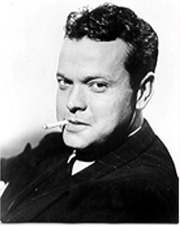
This is Orson Welles speaking from London. From the Black Museum, a repository of death. Yes, here in a grim stone structure on the Thames, which houses scuff and yard, is a warehouse of homicide. Here everyday objects, a silk scarf, a length of twine, a child's toy, all are touched by murder. Now this jar, running well in a cheap stained glass container the type you find in a laboratory, what's in it? A colorless fluid. Water perhaps? A cleaning spirit? No. Acid. Was just the thing to decompose a body without leaving any traces. Exactly Sergeant, you'd better take a sample of it. Very well Inspector, the jar on the shelf here, I'll use that. Today, that jar containing the acid sample can be seen in the Black Museum. From the annals of the Criminal Investigation Department of the London Police, we bring you the dramatic stories of the crimes recorded by the objects in Scotland Yard's gallery of death, the Black Museum. And here we are in the Black Museum, Scotland Yard's Museum of Murder. Here lies death, unseen but ever present, uncatalogued but orderly, enveloping the shadows, tapering the walls, carpeting the floor, death for display purposes only. And here's a hypodermic syringe, was once used to inject life-deserving serums and later used to inject poison and death. Here's an umbrella, ordinary everyday umbrella, ordinary and everyday up to a point, that is. Look closer and you'll see just how sharp that point is, just how lethal a sword stick can be as a weapon of murder. And here we are, here's the acid jar, sealed and somber looking in its place on a shelf. Once this jar rested on another shelf, a workshop shelf in Crawley. But let's not anticipate, let's begin our story at its beginning, not on a shelf of a workshop in Crawley, but in the dining room of a hotel in Kensington. It's dinner time. One corner of the room, the table set for two sits an attractive, fashionably dressed woman. We're joined by another equally attractive and equally fashionable woman. Agnes, oh, Renée. I'd almost given you up to last. Sorry if I kept you waiting, my dear. But just as I was leaving my room, I ran into Mr. Hart. He's such a lovely man. I simply couldn't resist stopping to have a few words with him. Mr. Hart? The nice looking one I pointed out to you at lunchtime. Oh, yes, of course. He really is the sweetest thing. You're so friendly. I thought he looked rather intriguing. He was introduced to us. I will, my dear. And slimmer than you think. I've asked him to join us when he comes down. You don't mind, I hope? Oh, not at all. I'm so glad. I know you'll like him. Isn't that him coming in now? So it is. Over here, Mr. Hart. Ah, forgive me for keeping you so long, Mrs. Regan. I had a little bother with my necktie. Oh, please don't apologize. I only just arrived this minute myself. Oh, I'd like you to meet a very dear friend of mine, Mrs. Lansbury. Agnes, Mr. Hart. How do you do, Mr. Hart? Delighted, Mrs. Lansbury. I do hope I'm not intruding. Oh, perfectly horrible thought. Of course you're not, Mr. Hart. Do sit down. You're very kind. What a thorough gentleman he was. And so amusing. So very, very amusing. Oh, Mr. Hart, I do declare, it's a long time since I've loved so much or enjoyed a meal so much. Oh, save the latter compliment to the hotel cook, Mrs. Regan. And now I really must ask that you excuse me. So soon? You won't take coffee with us? Much as I'd like to, Mrs. Regan, I'm afraid not. I have some rather pressing business to attend to this evening. Business that won't wait, even for coffee. Some other time, perhaps? Oh, we'll hold you to that, you know. Please do, Mrs. Lansbury. Please do. The two ladies, who were both widows, chatted on till late that evening, discussing the numerous virtues and charms of their newfound acquaintance, a topic that was continued the following morning at breakfast and then again at lunch. Will he be dining with us this evening? I'll ask him when he comes in. Don't forget, as if I could, my dear. The annual Mr. Hart proved only too ready to accept a second dinner invitation and a third. He appeared to enjoy the two ladies' company as much as they did his. But it was upon Mrs. Regan that he centered most of his attention. I thought of taking a stroll in the country this afternoon, Mrs. Regan. You wouldn't care to join me, I suppose. Why, I'd love to, Mr. Hart. I simply adore the country. Fine. We'll start out straight after lunch. The country's stroll agreed with Mrs. Regan, as proved by the healthy flush in her cheeks that evening as she sat down to dinner with Mrs. Lansbury. You're looking very radiant tonight, my dear. Oh, am I? Your afternoon jaunt with Mr. Hart appears to have brought about a most desirable effect. It was rather refreshing. Is, er, not coming down this evening? He has another business engagement. Oh. What exactly is his business, my dear? Well, I'm not sure. He never really discussed it with me. Hmm, pretty. Oh, by the way, I'm off to town to do some shopping tomorrow afternoon. I thought we might be together. Oh, I'm sorry, dear, but I'm afraid I've made other arrangements. Oh? Yes. I promised to meet Mr. Hart. We're going to Crawley for the afternoon. Oh, how nice for you. You don't mind? Oh, no, of course not. We can leave out just to town to next week sometime. That makes no difference to me. No, it made no difference to Agnes Lansbury, but to Renée Ashcroft Regan it made a great deal of difference. The difference between life and death. Mrs. Regan did not appear for dinner the next evening, nor did Mr. Hart. Nothing particularly unusual about that. Obviously they decided to stay in Crawley for dinner. Mrs. Lansbury dined alone at the hotel the following morning, arriving down late for breakfast. She was surprised to find that there was still no sign of her friend. Honest? Not often she misses breakfast. Oh, good morning, Mrs. Lansbury. Oh, Mr. Hart, good morning. Mrs. Regan, not down yet? No, not yet. Not like her to be late. Well, she probably stepped in. I wouldn't be surprised. Have you had breakfast? Oh, yes, I came in earlier, just on my way out. Business again? That's right. Well, I must be off. No doubt I'll see you at dinner. Yes, don't be late. I won't. Until this evening, then. It was almost nine o'clock when Mrs. Lansbury finally left the breakfast table, and still no sign of Mrs. Regan. Strange Mr. Hart had not mentioned their visit to Crawley the previous afternoon, but perhaps the dear man preferred to keep it a secret. One never knew what sort of gossip could spread itself about a hotel, even a spark of encouragement. Still, still it did seem rather odd. Seemed even more odd when Mrs. Regan did not appear for lunch. A feeling of uneasiness crept over Mrs. Lansbury. Perhaps her friend was ill. She would make some inquiries. Oh, boy! Yes, madam? Oh, have you seen Mrs. Regan about at all this morning? Mrs. Regan? No, madam, not that I can remember. Well, now, perhaps you'd better take me to her room. Very good, madam. This way. The bellhop looked pretty in his blue uniform with a red braid and brass buttons. Such a fresh young face, so unspoiled-looking and clean, with a quick toothy smile. Not as engaging a smile as Mr. Hart's, perhaps, but nonetheless quite attractive in its way. Here we are, madam. Oh, thank you. Oh, here? Thank you, madam. Anything else you might be wanting? Well, I'm not sure yet. Just a moment. Must have stepped out, for a bit. Well, try the door. Locked. Renée? Renée? Are you in there? Nothing wrong, is there, madam? I don't know. I think Mrs. Regan may be ill. You'd better go and call the manager. Tell him to bring a passkey. Very good, madam. I'll be a chip. The hotel manager arrived in due course, asked a few rather pointless questions, fiddled with his large key ring, and finally opened the door to Mrs. Regan's room. It was empty. It looks as though your flowers were grounded, Mrs. Lansbury. She must have gone into town for the day. That still doesn't explain why she didn't come down to breakfast this morning. Oh, perhaps she didn't feel like it. Still, I'll have a word with the roommate. She may have noticed something when she came in to tidy up. The roommate was duly summoned and questioned. No, Mrs. Regan had not been in her room when she came in to clean up. Yes, yes, she'd noticed something unusual, something most unusual, as a matter of fact. Mrs. Regan's bed had not been slept in on the previous night. That settles it. Something's happened to her. I can feel it. She'd met with some kind of accident and... Very calm yourself, Mrs. Lansbury. I'm sure that... How can I calm myself when my closest friend has disappeared into thin air? But my darling... The police must be informed at once. Oh, come now, Mrs. Lansbury, let's not be too hasty. Oh, please don't argue with me, Mr. Stewart. I want them contacted immediately. Very well, if you insist. But I would ask you to refrain from mentioning the matter to any of the other guests, at least until we have something yet. At the hotel manager's request, Mrs. Lansbury agreed to keep silent. But being a woman, she could not keep entirely silent. She had to confide in someone. Naturally enough, the someone she confided in was the benign Mr. James Gerald Hart. His concern was touching. Dear me, this is most upsetting, Mrs. Lansbury. When was the last time you saw Mrs. Regan? I just after lunch yesterday. She was on her way out. Did she by any chance say where she was going? Well, Mr. Hart, as a matter of fact, yes, she did. Oh? Yes, she said she was going to meet you in town, that you were going down to Corley together. Did she meet you, Mr. Hart? Well, no, she didn't. That's just what I was about to tell you. I'd arranged to meet her outside the Army and Navy's Pouls in Victoria Street at two o'clock. I was there on time and I waited over an hour, but she didn't show up. Oh. Have the police been contacted? Well, yes, the hotel manager, Mr. Stewart, gave them a ring shortly after lunch. They hadn't been here? Well, not that I know of. You know, I rather think it might be an idea if we went round to the station and had a word with them ourselves. We may be able to give them some lead or other. What do you think? Oh, I think it's an excellent idea, Mr. Hart. As a matter of fact, I was hoping you'd suggest me. Good. We can go straight away. I'll get my hat and coat and join you in the lobby in ten minutes. And so it was that the disappearance of Mrs. Rene Ashcroft Regan was confirmed. Mr. Hart repeated his story of the proposed crawly visit to the police, and that story was accepted. At that time, there was no reason at all why it should not have been. Well, today evidence to the contrary can be seen in the Black Museum. At least a dozen women are reported to the police as missing every week. Mrs. Rene Ashcroft Regan was only one more female whose name and description had to be distributed to every station in the Metropolitan Police Forces area, then printed in the current editions of the police gazette. Routine? Nothing more. Steady, patient routine. At the Chelsea station, woman police sergeant Carol Henderson, whose duty it was to check through the daily records of missing persons in the area, came up on the case of Mrs. Regan and, as a routine step, paid a visit to the Kensington Hotel for a brief chat with those who had known her best. Naturally enough, the first name on her list was that of Mrs. Agnes Lansbury. Now, Mrs. Lansbury, if you could just tell me when you last saw Mrs. Regan, what she was wearing, and as much as you can remember of any conversation that may have passed between you on the day of her disappearance. Mrs. Lansbury had nothing to what she had already told the police, but nevertheless was most helpful and directed Sergeant Henderson to the room of the much concerned, but still charming, Mr. James Gerald Hart. Do as you doubt, Sergeant. Thank you, Mr. Hart, but I prefer to stand when I'm on duty. Not often one has the pleasure of meeting a lady policeman, not as you wish. If you don't mind, I would... Not at all. Now, I understand, Mr. Hart, from what Mrs. Lansbury tells me, that you were arranged to meet Mrs. Regan on the day of her disappearance. That's correct. I was to meet her at two o'clock outside the Army and Navy stalls in Victoria Street. But she didn't show up. No. How long did you wait for her, Mr. Hart? At least an hour, close to an hour and a half, I should imagine. And then? Well, as you may know, we intended going to Crawley together. When I realized she wasn't coming, I drove down alone. I see. Exactly what had you intended going to Crawley for, Mr. Hart? Well, as a matter of fact, I have an interest in a chemical factory down there. I'm what you might call a research chemist. Oh, yes? Mrs. Regan was hoping to purchase some samples of certain plastic fingernails I'm manufacturing. I see. Well, I think that's all I need from you at the present, Mr. Hart. Thank you for your time and your cooperation. No trouble at all, Sergeant. I'm most anxious to have this matter cleared up, you understand? Mrs. Regan and I were close friends, and I hate to think that anything may have happened to her. Quite. If I can help you in any way, I'll only be too pleased. That's very kind of you, Mr. Hart, but I think we'll be able to manage. If we need any further information from you, you can rest assured we'll get in touch with you. Sergeant Henderson returned to the Chelsea Police Station. She had listened to what had seemed a straightforward story, but there was a doubt nagging at her. Hart's manner had been very obliging and polite, but there had been something about him she didn't like, something that didn't ring true. That something took her to the office of Divisional Inspector Russell White, to whom she expressed her doubts. So you think it's a bit fishy, eh, Sergeant? Well, I wouldn't go so far as to say that, sir, but, well, I do think Hart might be a checking up on. Well, that's good enough for me. Scotland Yard, please. Criminal Records Office. Within the hour, the checkup had been made, and the results phoned back to Chelsea, results that stood by Sergeant Henderson's feminine intuition. According to the record, the plausible Mr. Hart had served two sentences for fraud. Well, there you have it, Sergeant. It appears he's been up twice in the past ten years. I can't say it surprises me. Perhaps not, but I wouldn't let it influence you too much. Just because a man has a record, it doesn't say he knows anything about Mrs. Regan's disappearance. That's true. I think at this stage the best thing we can do is to forget about Hart for a while and concentrate on Mrs. Regan herself. Give the newspapers a full description of her and the clothes she was last seen wearing. The usual thing. All right, I'll get on to it straight away. Thus did the story of Mrs. Renee Ashcroft Regan's disappearance receive its first coverage in the London newspapers. A close-up photograph and underneath it a full description of a missing woman as she was last seen by Mrs. Lansbury prior to her leaving the hotel for her proposed meeting with James Hart. Mm-hmm. Ah, that should bring results, Sergeant. Good job, Sir Inspector. The jewelry's the thing. Mrs. Lansbury's quite sure she was wearing it when she left the hotel. She was most emphatic about it. Good. Every jeweler and hawk store proprietor in London's been alerted. If a legitimate sale is attempted, we'll hear of it. Two days passed. No information was received by the police. Then on the third day, word came through that a Persian lamb colt very similar to the one worn by Mrs. Regan at the time of the disappearance had been found in a cleaner shop near Crawley. It was later identified by Agnes Lansbury and then brought to the Chelsea police station for analysis. Laboratory tests, however, failed to uncover any further leads. Nothing more, Inspector? Afraid not. A pettit went through the wash before it was noticed. Yes. Well, I suppose we shouldn't complain. At least we know now, without a shadow of doubt, that something has happened to Mrs. Regan. And also that it happened somewhere in the vicinity of Crawley, which is where she was supposed to have been going with Hawke. A further two days passed. Then came the information that Inspector White had been waiting for. A report was received that jewelry fitting the description issued by the police and newspapers had been offered for sale to the proprietor of a second-hand store in Horsham. It was also identified by Mrs. Lansbury as belonging to the missing Mrs. Regan. The proprietor, Sally Jacobs, was questioned by Inspector White. Just how long have you been holding this jewelry, Mr. Jacobs? One week tomorrow. Party brought it in just after lunch. Hmm. Well, that fits. And this party gave his name as Jones, you say? Well, here's the ticket, John Jones. You couldn't give us a description of him, I don't suppose? Well, so let me be remembering like he was, um, short, stocky, with a dark hair, and, uh, well, I'm not quite sure, but I think he had a small mustache. A small mustache. And nothing else? Well, not that I can bring to mind, no. Yes. Well, it just so happens, Mr. Jacobs, I have a few photographs in my pocket of men who could fit the description you've given me. I wonder if you'd take a look at them. Well, what have I to lose? What about this one? Uh, no. This? Ah, no, nothing like it. Well, how about this one? Oh, well. Aye, that's it. You're sure of that? As sure as I'm standing here. I never forget a fight. Thank you, Mr. Jacobs. You've been very helpful. Returning to the Chelsea Police Station, Inspector White summoned Sergeant Henderson to his office, bringing you up to date on his visit to Horsham. He produced the photograph that had been recognized by Jacobs. James Gerald Hart. As he was when arrested in 1939 for fraud. Hasn't changed much. Fortunately for us. Going to pull him in? All in good time. If he's done away with Mrs. Regan, as facts seem to indicate, he must have deposited her body somewhere. His chemical factory? Well, that's as good a place to start looking as any. Tell Peters and Cunningham to stand by. We'll pick up Hart on the way down. Twenty minutes later, Inspector White, accompanied by Sergeant Henderson, arrived at the Kensington Hotel and asked for Mr. Hart. That smiling gentleman, as smooth and suave as ever, came downstairs immediately, greeting the sergeant with an airy wave of his hand. Good afternoon, Sergeant. I was hoping you'd call again. Oh? Yes, yes. I've been rather anxious to hear what progress has been made in the search for Mrs. Regan. Perhaps you'd better ask Inspector White here that question. He's taken over the handling of the case. Oh? How do you do, Inspector? Mr. Hart? Before I answer your questions, Mr. Hart, I've a few I'd like you to answer for me. By all means, fire away. Sergeant Henderson tells me that you have an interest in a certain chemical factory at Court. Is that correct? And that you arranged to take Mrs. Regan there on the afternoon of her disappearance. Yes. We'd rather like to look over this factory if it can be managed. Just routine, you understand? Of course. Anytime, Inspector. Will tomorrow morning suit you? Hardly, Mr. Hart. It'll have to be this afternoon. Well, I'm not sure that that would be convenient, Inspector. You see, I have a business appointment in Chelsea at three, and then... Then I'm afraid your business appointment will have to wait, Mr. Hart. But, Inspector... Let's be on our way, shall we? I've a car waiting outside. For a fleeting second, the ever-present smile almost faded from the lips of Jane's heart. Then it broadened, and his perfect white teeth flashed in the sunlight streaming through a lobby window. Lead on, Inspector. Little was said during the trip down to Crawley. In the back seat of the police car on either side of Hart, Inspector White and Sergeant Henderson interested themselves in the swiftly passing countryside, and in the front, Constable Rex Peters sat grimly at the wheel and beside him, equally as grim-faced, sat Sergeant Dennis Cunningham. The silence appeared to amuse Mr. Hart, who chuckled audibly to himself more than once before remarking casually. Lovely spot, Crawley, don't you agree, Inspector? Huh? Oh, yes, yes, indeed. I've often thought how very pleasant it would be to live down here. Next turning to the right, Constable. A few minutes later, the police car came to a standstill outside the Hart Chemical Factory, which proved to be a little more than a glorified workshop, fitted up as a laboratory. Hart remained in the car under the watchful eyes of Peters and Cunningham while the Inspector and Sergeant Henderson entered the wooden building. Oh, plenty of experimental equipment lying about. Nothing, no. Much else as far as I can see. Oh. Certainly no Corpus Delecti. No, no. What's in those drums over there? Oh, looks like some kind of oil. Yes, oil behind. It's acid. Drums of acid in a laboratory. Nothing very odd about that unless, unless that acid happens to contain the undissolved remains of a human body. Acid. Just the thing to decompose a corpse without leaving any traces. Exactly, Sergeant. But in this case, I think it may have left traces. Look, floating on the surface. Looks like a piece of bone. With particles of flesh still clinging to it. Oh. You'd better take a sample of the acid itself. Siphon it out. Very well, Inspector. There's a jar on the shelf here. I'll use that. James Gerald Hart made no attempt to deny the accusation of murder that was subsequently leveled at him. On the contrary, knowing the game was up, he admitted his guilt freely, stating that he had first shot Mrs. Regan and deprived her of her clothing and jewelry, then deposited her body in the drum of acid. A sample of which today occupies this position of honor in the Black Museum. Orson Welles will be back with you in just a moment. The defense brilliantly conceived was, of course, insanity. To strengthen this plea, Hart cheerfully claimed to have done away with no fewer than nine other victims in a similar fashion to that in which he had disposed of Mrs. Regan, whether or not this claim was justified will probably never be known. But it is an established fact that at the time of his trial, five of those he named as his victims had been missing from their homes for months. They have not been found to this day. However, justified or not, his plea was rejected and he was found guilty of murder in the first degree. His subsequent execution relieved the world of a murder student who set up in practice before taking his diploma. For James Gerald Hart was by no means an accomplished killer. The trail he left behind him bears out that fact. Rather could he be described as a dabbler in the art of dealing death who dabbled just once too often. And now until we meet next time in the same place, I'll tell you another story about the Black Museum. The plane is always obediently yours.