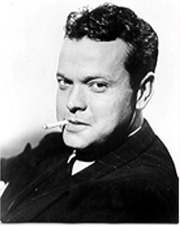
This is Orson Welles speaking from London. The Black Museum, the famous repository of death. Here in the grim stone structure on the Thames which houses Scotland Yard is a warehouse of homicide. Where everyday objects and earthenware parts are silver shilling, a typewriter ribbon, and all are touched by murder. Four small bottles. Other familiar objects, medicine bottles, shining glass, cork stopper, the labels in neat clear handwriting, such bottles are in the medicine cabinet of almost every home. These were found... Found one, inspector. Two ounce size. The others can't be far. Yes, here are two more. One ounce capacity, these. And here's the fourth. Innocent little things, aren't they, sir? Well, today those four small bottles have a place, a very honored place, in the Black Museum. From the annals of the Criminal Investigation Department of the London Police, we bring you the dramatic stories of the crimes recorded by the objects in Scotland Yard's gallery of death. The Black Museum. And here we are. Black Museum. Scotland Yard's Museum of Murder. Yes, here lies death. In these hundreds and hundreds of objects, large and small, is the means to death, a thousand methods of killing, all neatly labeled to indicate who and what and where and when. Here's a kitchen mop. Long handle, gray with youth, gray with red-brown stain, fails to cover the grayness. Look closely at the harsh metal, binds the strings of this utensil. Yes, this blade struck and struck again before the mop itself removed the traces of the crime. Ah, here we are. Here are the four small bottles. Three of one ounce capacity. One holds two ounces. They mark a strange story, a story out of the Edwardian era, when man was still lord of all he surveyed and women were just beginning to demand equality. To the ladies, Reverend, although I would prefer toasting them in something slightly stronger than tea. To the ladies, my friend. To listen to my husband, Reverend, who think he was old-fashioned and not an advanced thinker for this age. Aye, an advanced thinker? Why, Anne, why, dear? But you are, Oscar. You really are. At the risk of shocking you, Reverend, but then you're a young man, and not, I assume, as easily shocked as some past is unknown, I believe a man should have two wives. Really, sir? He means it, Reverend. Listen to him. I believe a man needs two wives, one to cook, sew, and care for the household, the other to be a companion when a man needs intellectual stimulation, to lend beauty to the drawing room, and grace and wit. Then you would give the latter education. Exactly. And since I am not allowed two wives, I chose the latter. You're new here, Reverend. You don't know that I married Anne when she was very young and sent to Brussels, and then a French university for her education, before installing her here as my wife. Why, why, that's unheard of, sir. You are a pioneer in the field, Mr. Oh, yes, Mr. Oscar Stone, wholesale grocer and a man of means, was truly advanced for his age, the age of 99, and very liberal in his philosophies. In fact, he was so considerate of his wife and of the difference between her age and his own, that he encouraged rather than look disconce at her companionship with the Reverend Edgar Sweet, a much, much younger man than Mr. Stone himself. Edgar, you've been a good friend to me these past months. I'm happy to hear you say so, Anne. That is why, well, I'm not hesitating to tell you something which I feel is rather unfair. Tell me what it is. Oscar has drawn his will. He's my friend, my good friend. I'd hate to see him pass on, but every man must have his house in order. Edgar, you don't understand. Making the will is all right. It's what he's put in it. Go on, my dear. He has left me his entire estate, provided I never marry again. That is his right, you know. It's not his right. He's afraid someone might marry me after he's gone, for the money. He's only protecting you from fortune, Hunter Zand. Then why did he give me an education if he doesn't think enough of me to let me protect myself? A serpent in Eden? Perhaps. Perhaps not. But it is clear that the young lady had a will of her own and wanted to control her own destiny. In any case, the friendship ripened not only between the two young people, but between Edgar and Oscar as well. Edgar, my friend, I'm not well. I saw a doctor today and I am not well. I can't believe it. You look fine. Fine. The debilitation of age. But you're not old. Oh, 55 isn't old. When you worked as hard as I have for almost 50 of those 55 years. Well, in any case, I've decided to take a risk. Excellent, Oscar. That's what you need, an extended vacation. I've made arrangements to go to the shore. A month at the sea ought to practically, well, rejuvenate me. I'll miss you. Our talks have been a great stimulus to my work. And I thought that, well, even pastors have vacations occasionally. Occasionally we do. Of course. So I reserved accommodations for you along with Anna myself. But I can't possibly afford... As my guest. You don't know how much I appreciate this, Oscar, but I couldn't accept this. Oh, I'm sorry. I thought you were alone, Oscar. I'm glad you came in, Ann, dear. I was telling Edgar we're going to the shore for a month. Oscar, how nice. I'm insisting that Edgar come along as my guest. How can I accept such an invitation? Tell him you will find him as welcome as I will, Ann. Of course I'll find him welcome, Oscar. Edgar knows that. They compromised. Edgar came for weekends. The ripening of a friendship. Or the growth of a triangle. A classic triangle. Husband, wife, and the young man. The summer ended. Oscar and Ann returned to new lodgings in Pimlico, and they took an additional room. Edgar, you like it? Bookcases, a couch, a fine desk, all this room. How could I help liking it? And in here. Right next door. Edgar, my boy, welcome to your new lodgings. Now, we are not only friends, we are neighbours. Really, Oscar, I don't know why you... There was more, rather interesting. One afternoon while Oscar was at his doctor's office. May I disturb you for a moment, Edgar? Oh, of course, Ann. What is it? Remember, months ago, I told you about Oscar's will. Oh, yes, I remember. Why? He took out that awful clause. If I want to, I can marry anyone I please one day. And you were the executor. Everything was quite smooth. Quite, quite smooth. In fact, Oscar began to feel quite a bit better. At least he said so and insisted that Edgar and Ann accompany him to a horse show. Why do you love horses, though, Oscar? Perhaps because I always wanted to ride and never learned. Oh, there's a fine animal. He must be at least 16 hands high. Edgar, why don't you take Ann to the stalls to see her favourites? I'll just sit here a while. I guess I'm not as strong as I thought I was. Will you, Edgar, please? Do you think you'll be all right here alone, Oscar? It's a picture, isn't it? The elderly husband sitting on the bench watching the two young people stroll away. What are his thoughts as he sees them disappear in the crowd? What would his thoughts have been if he'd heard their conversation? I'm dreadfully worried about Oscar. He seems much better. Seashore did him good. Seems as the word. He's not, not really. Ann, what are you telling me? That his doctor has confided it to me. Oscar may not live out the year. The next morning there were signs that Ann's words might become the truth. She sent for the doctor, a youngish man named Richards, who lived some half a mile from the lodgings. I don't like this, Mrs. Stone, not at all. Oh, dear. You stop frightening my wife, young man. The truth, sir, is the truth. You're not well. Your stomach's in very bad shape. I shall prescribe for you and your wife will see that you take your medicine, won't you, Mrs. Stone? Of course, doctor. The young doctor was very certain, but not Oscar. His pain continued. Ann was obviously very upset. She took Edgar a sign. Edgar, I want you to do something for me. If I can. I cannot see Oscar suffer the way he does at times. I know a way to ease his pain, but I need your help. Of course. I want you to buy me some chloroform. Chloroform? Yes, a few drops on a handkerchief and he will sleep easily. I learned about it in the practical nursing classes in Brussels. But, but Dr. Richards will get you some. No, he'll never believe I know how to use it. Here's a pun note. Please, Edgar. Edgar went to the nearest chemist shop. What can I do for you, reverend? I'd like a little chloroform. What are you looking for, sir? Chloroform. Whatever for, sir? I, I understand it's good for taking out grease spots. Oh, yes, I suppose it is. But be very careful with it. Three more times Edgar walked into chemist shops and bought a small amount of chloroform. The other three one ounce bottles and the one two ounce bottle. Out of consideration for Ann's convenience, no doubt, Edgar poured the contents of all the small bottles into a larger one. He delivered the chloroform to Ann. Quite suddenly, Oscar became a whole lot better. Landlord, I want to speak with the landlord. Yes, Mr. Stone. How can I help you? I want to prepare a surprise for my wife and the reverend for tonight. A New Year's Eve party. Some roast duck, a bit of cold ham, some good cheese, a bottle of champagne and a bottle of good brandy. It's short notice, Mr. Stone. But I'll do my best. What will you be eating? What everyone else eats. Will they be surprised? Oh, I'm feeling wonderful for the first time in months. And for breakfast tomorrow, see if your maid can find a large one. I feel I shall be quite hungry in the morning. Oscar wasn't hungry New Year's morning. Oscar was dead. And today, the four small bottles which played so large a part in his death can be seen in the Black Museum. It was a sad New Year's Day for Anne Stone and a bewildering day for the reverend Edgar Sweet. Oscar Stone, husband and friend, lay dead quite suddenly. And after what seemed an indicated quick recovery. But that was only the first event of January 1st, 1910. Onto the scene strolled an old man, Oscar's 75-year-old father. Anne met him at the door to the Stone apartment. Oh, father. Father. Yes, yes, of course, cry all you want. I want to see my son. He's in here, father. All right. Who is this? Reverend Sweet, our good friend and pastor. Yes, I heard about you. Oscar wrote me. This moment comes to all of us, sir. We can only pray for courage. I've got courage. What I want is facts. I'll see my boy now. It looks as if he died in his sleep. He did. So peacefully. I didn't realize it until morning. You were a good boy, Oscar. I shouldn't be outliving you. There's a funny smell around his mouth. The doctor said he had gastritis. That's not what I smell. Are you having a post-mortem? Dr. Richards asked for permission to do one. Richards? Who's he? The family doctor, Mr. Stone, a fine young man. All right, if he wants to do it all right, but I want my man there with him. Father, are you insinuating... I'm not insinuating anything. I just don't like the look of this. For his own protection, this Richards ought to have another man present. That's all, father. My boy's no right. The second doctor arrived and forthwith behind locked doors, the autopsy was performed. In the landlord's parlour, Anne waited with Edgar to give her support and courage. Presently, the door opened. Mrs. Stone. Yes, Dr. Richards. We are ready with our report. Did you find out anything? We are not certain as yet. Dr. Fletcher, your father-in-law's man, suggests Mr. Stone should be in the hospital. Your father-in-law's man suggests Mr. Stone swallowed chloroform. Chloroform? Yes. Will you come upstairs and hear the report, please? Anne? Yes? Did you...the chloroform I bought for you, that is... It's still in its bottle, Edgar. Don't worry, you don't even have to mention it. Shall we go upstairs now? The two young people went upstairs, but not hand in hand. There was a sudden reserve between them. In the room where the doctors and Mr. Stone awaited them. This is Dr. Fletcher, my daughter-in-law and pastor's suite. How do you do? Was Dr. Richards in charge of the case? Perhaps he's the one to give you our official report. Please do, Dr. Richards. It's a simple report. We are unable to find any natural cause of death. The contents of the stomach are suspicious. We're holding them for the coroner. Have you any particular suspicions, gentlemen? None which we care to state officially. You'll realise the room where death occurred must be sealed, and its contents must not be told. My purse is in there. It'll have to stay there. Surely I may have my coat and a hat. I assume so. If Dr. Fletcher's present when you remove them... Anne went to stay with a cousin, a brief train journey away. The coloner's interest was held and adjourned, pending a full report from a government analyst. That was all. But Edgar dispatched a note to Anne, and she met him as he requested, in a quiet tea room in Pimlico. Edgar, what's the matter with you? You haven't looked me straight in the eye since we met today. I can't seem to help myself. Anne, Dr. Richards did tell you that Oscar might not live out the year? Of course he did. It came so suddenly. They all behaved so strangely. Anne, I'm afraid I'm finished. If this develops into anything, I shall lose my pulpit. If you don't do anything foolish, I certainly won't. Everything's going wrong. I feel as if... Anne, I bought that chloroform. If there is chloroform in the autopsy report... Anne, don't you see? Forget the chloroform. Forget all about it. I can't. Where is it? What did you do with it? I took it with me when I left the apartment, right in my coat pocket, under the nose of my dear father-in-law. I poured it out of the train window, then I threw the bottle away. Oh, that makes it worse. If they prove that Oscar was... Don't you see? They'll trace the chloroform to me. In other words, Edgar, you're implying that I gave it to Oscar. I'm not implying anything of the kind. What else are you saying? Edgar, you helped me over a bad time. Now I think it will be best if we do not see each other any more. Goodbye, Edgar. The lady was annoyed, perhaps rightly so. The young man was frightened, very rightly so. In their separate ways, each awaited the report of the government analysts. At long last, Dr. Richards came to the young widow. The news could be a lot worse, Mrs. Stone. They could have found arsenic or one of the slower, more common poisons. What have they found, Doctor? Poisoning by chloroform. Oh, Doctor, that is the worst. How so? Don't tell me you had some in your possession. I did. I had my reasons. Doctor, my married life was not happy. I am young. He was old. Practically my father. He kept putting me in Edgar's company. I began to... when two people are together constantly... Please go on, Mrs. Stone. I obtained the chloroform. I kept it in a drawer. But I never had a secret from Oscar. Never. On any score. So on New Year's Eve after our party, I told him I had it and where it was. He spoke to me sadly, but kindly. Grieved that I had been feeling about him as I did. Then he went to sleep. Or I thought he did. The next I knew... he was dead. Did you look at the bottle? Yes. I couldn't tell how much was gone. I took the bottle and I poured what was in it from the train as I went. The autopsy report came to Edgar's well. He wrestled with himself and finally took the only course which seemed open. Inspector Seward? Yes, come in, sir. Sit down. Thank you. I understand you have some information on the death of Oscar Stone. I do. You see, I bought the chloroform. They should be in here somewhere, Sergeant. If the little parson is telling the truth, I'm sure he is. He let himself in for something with that woman, didn't he? It looks that way. Leave it to a woman every time. Grease spots, eh? Not bad for an amateur. I suppose this is the gorse patch where he said he threw those small bottles. Yes, this is the place. I found one, Inspector. Two ounce size. The others can't be far. Yes, here are two more. One ounce capacity, these. And here's the fourth. Innocent little things, aren't they, sir? Anne Stone. I have a warrant for your arrest on the charge of willful murder of your husband. Edgar Sweet, I have a warrant for your arrest. You stand charged as an accessory before the fact in the murder of Oscar Stone. The trial took place at the next exercises. Gentlemen of the jury, the attorney general who has this case in hand with full knowledge of the facts will present no evidence against the Reverend Mr. Sweet. You are therefore directed to find him not guilty, and I shall order his release at once. Edgar Sweet left the courtroom, a much wiser young man. The trial of Anne Stone proceeded and rested entirely on the medical evidence. Dr. Fletcher, you have described yourself as an expert in criminal toxicology. We have accepted you as such. Is that correct? It is, son. Very well. Now, I call the particular attention of the jury to the answers you will give to these questions, as they will have great bearing on the evidence against my client. First, sir, have you ever known of a recorded case of murder by liquid chloroform? No. Is there any record, to your knowledge, of the possible administration of this liquid, of anyone pouring it down a victim's throat? There is not. If the victim were sleeping, for instance? The burning would wake him. He'd probably go down his windpipe, not his gullet. And there would be burns, clearly visible after death? There would be. Then, in your expert opinion, Dr. Fletcher, is it impossible to commit murder by liquid chloroform? Nothing's impossible, but it's highly improbable. Thank you, doctor. That is all. The chief witness of the Crown, Dr. Fletcher, had given his testimony. All that remained in the opinion of the defending counsel was to create a reasonable doubt in the minds of the jury. He called no witnesses, but spoke for six hours, summing up. In essence, he said... Oscar Stowell was a loving, if elderly, husband. He felt his life was over. Remember, he was an eccentric who believed in having two wives. Can we say that this man, who had given so much to his sweet young wife, was not prepared to give her the greatest gift of all, her freedom? Once he knew that chloroform was in the house, could he not have taken it himself and passed quickly into the coma which ended in death? And if he gave this lovely girl freedom, are you who sit in judgment to do any less? The judge was clear, and somewhat caustic in his charge to the jury. There have been sweet faces which hid guilty consciences before. When a young wife and a young man are thrust into daily contact by a doting husband, strange events have a way of taking place. All this is true, but one salient remains. You may find this woman guilty as charged, only if no reasonable doubt exists in your minds that she did commit the crime of which she stands. The jury deliberated for over two hours. There were twelve solemn men when they filed back into the jury box. A hand stone rose to face them. The clerk asked for the verdict. The foreman rose and spoke clearly. We have considered the grave suspicions in this case, but find no evidence that would indicate who administered the poison to the victim. We find the accused therefore not guilty. But despite that perhaps surprising verdict of not guilty, the four famous small bottles can be seen today in the Black Museum. Arson Wells will be back with you in just a moment. No double jeopardy. That's an ancient English law, no double jeopardy. One cannot be tried twice for the same offense. It was felt therefore that since Anne Stone had been acquitted, if she had committed this crime, she ought to tell the world how it had been done. But no, all that was heard thereafter from Anne Stone was a letter addressed to her defending counsel, read as follows. Dear Sir Edward, I feel I owe my life to your earnest effort. I have not been a good woman and my temptations have been terrible. But though I have not kept my vows, you will judge me mercifully. And there the case rests. Now until we meet next time in the same place and I tell you another story about the Black Museum, I remain as always obediently yours. Thank you.