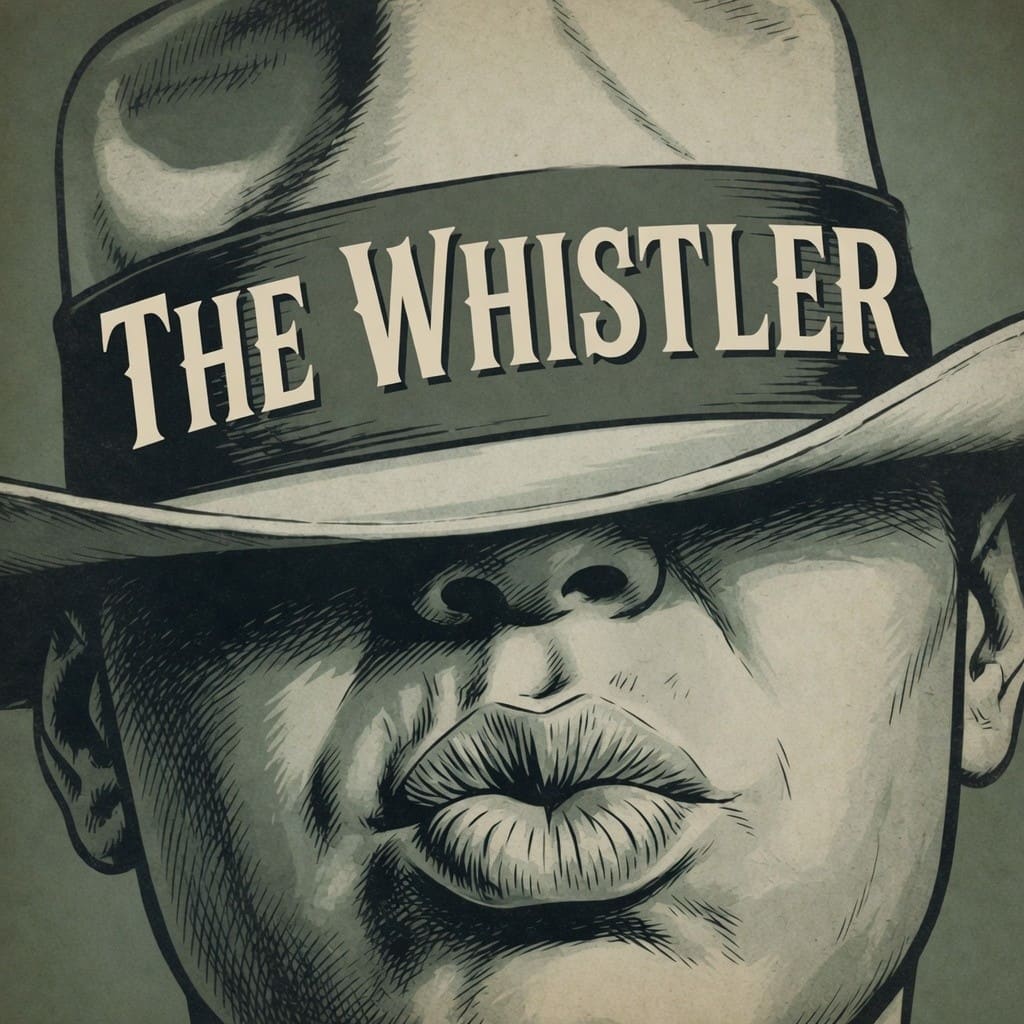
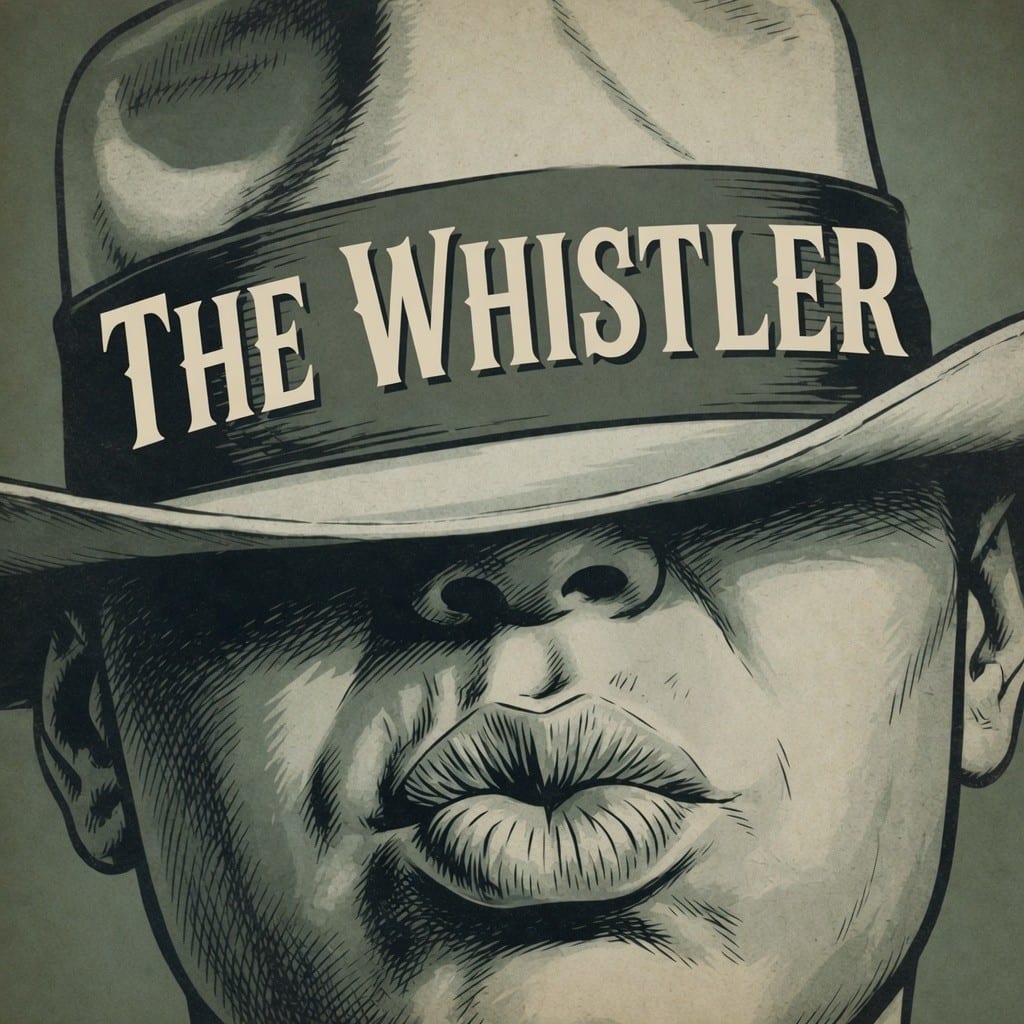
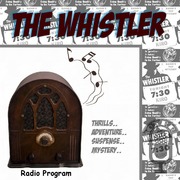
The signal oil program, the Whistler. That whistle is your signal for the signal oil program, the Whistler. I am the Whistler, and I know many things, for I walk by night. I know many strange tales, hidden in the hearts of men and women who have stepped into the shadows. Yes, I know the nameless terrors of which they dare not speak. Yes, friends, it's time for the signal oil program, the Whistler. Rated tops in popularity for a longer period of time than any other west coast program in radio history. And signal gasoline is top two, tops in quality. It takes extra quality, you know, to give you extra mileage. And signal is the famous go farther gasoline. So look for the signal circle sign in yellow and black that identifies friendly dealer-owned signal stations from Canada to Mexico. And now the Whistler's strange story. Come back. Even on Fifth Avenue, he was a distinguished looking figure, this handsome man in his mid-fifties. His clothes were a little outdated perhaps, though few would notice that. And as he strolled along, chin lifted, swinging his stick, there were curious glances and whispers in his wake. Wasn't that John Maynard, the old matinee idol, I'd say? Not quite sure. Of course, they knew him better on Broadway. Stops and spoke to him on his good day, pretended not to see him on the other ones when his eyes were bloodshot and his gate unsteady. For then he was out for a touch, looking for a dollar or two for the bottle that turned the dreary present back to the day when John Maynard, if not the king of Broadway, was surely the crown prince. On Fifth Avenue above 45th Street, he entered an office building, rode to the 14th floor, finally walking past the secretary and through a door marked Oliver Stanley Theatre Production. Good morning, Oliver. Well, John, just how did you get past my secretary? On my nerve. Sorry, my boy, I knew you wouldn't see me, so I had to do it this way. Do you mind if I sit down? That seems to be what you're doing. Thank you. You know, John, I should think you'd have had too much pride to do this. Pride? Coming to me with your hand out. That's what you're doing, isn't it? No, that's just where you're wrong, Oliver. I'm here to help you. No, James, it's not. You need me very badly for the part of Hubbard in your new play. Bonnie Newman, who's rehearsing with you, let me read the script. So you've come to help me. Precisely. I see. I'm sorry, John, I'm very busy. Now wait, Oliver. Tell me, how do I look? Unusually good, I'd say. However, I can't... Let me finish. Oliver, take a look at a man who's had his last drink in this veil of misery. Oh, well. Don't smile, my boy. I'm not jesting. John, have you ever kept track of the number of times you've said that? This time it happens to be true. What's happened to your sense of humor? I don't blame you, Oliver, and I've let you down. I've let every producer down. And above all, you've let yourself down, John. You were one of the finest actors in this town of us all. The old bottle and that phony temperament of yours finished you off. Let me prove myself, Oliver. Once I'm successful again, there won't be any temptation to drink. John, make a bargain with me. I'll accept any conditions you care to make. I'll meet the test. I know I can. You say you've read the part? I know most of it already. If you give me a reading... That won't be necessary. I know you can do it. I suppose I'll get the horse laugh from everyone, but I'm going to give you one last chance. I don't know what to say, Oliver. Hang on a sec. Here's a script. For the first time in theater history, a character man's going to have an understudy. Lewis Cook will always be up in the par John, ready to take your place at the moment of notice. He'll never get a chance. I hope not. You realize, of course, what this play means to me. I'm not only producing it, I'm also the star. Yes, yes, yes, Oliver. You're the star. Here at the theater tomorrow at eleven. Yes, of course. And John, about the bargain, it's this. The part is yours. If I hear of you taking even one drink, you're through. I understand. Believe me, you'll never regret this decision, my boy. All right, John. The rest is up to you. You bow and leave. And as you walk down the hallway to the elevator, there's a new triumphant sound in your ears. The applause of opening night, the crowds raving about your comeback, the reviews saying you stole the show from a mediocre star. You'd do anything for that, wouldn't you, John? You'd even resort to murder for the pleasure of forcing Oliver Stanley to crawl back to you for a job. But that won't be necessary now. You knew the minute you read that part that here is a play with one rewarding role, the part of Hubbard and the rest completely second rate. You know the show will flop, John, but not you. And the next morning at the theater, your confidence as the rehearsal moves into the last act. Now comes your big scene with Oliver. Who are you? What are you doing here? I've come to see you about Nancy. Hubbard? The mask? Why are you here? A very practical reason for the mask, Edward. If you are what I've come here for, I can't risk being recognized. Listen, Hubbard, we can work this thing out reasonably without Hubbard. Oh, Edward, I've taken your life. I've given up my freedom. Does that seem a bad bargain, Edward? Your life for mine? But mine was gone, you know. Mine was gone the moment you took Nancy from me. So, like gentlemen, we've come to terms. We've taken the hand. Goodbye, Edward. Goodbye. Great, John. That was wonderful. When the other actors applaud you, you know you're good. Oh, thank you, Oliver. That'll be all, Cassie. Back at seven. Go ahead, John. I want to see you a moment. Oh. You're marvelous, old man. Well, what did I tell you? You know, Oliver, I think we've got a hit. Going to put you back in circulation in a hurry. Now, run that last scene. Yes. I'm afraid we'll have to cut most of your floatering scenes. Not it? My dear man, you heard the cast applaud. Yes, I know. I'm not a ham, John, but after all, I am supposed to be the star. Oliver, I think you're being unfair. You won't have any of that. I know what I want in my own soul, John. Get your dinner and be back at seven. I'll have the cut figured out by then. Very well, Oliver. Anything you say... No. He's beginning to wake up, John, starting to realize the danger of having an actor like you in the cast. But it won't matter after all, because on opening night you intend to read the full speech anyway. It belongs there, John. In that one scene, the careful development of Hubbard's character reaches its climax, and you'll read it all, alone on the stage, regardless of Oliver or anyone else. So for the next few weeks, you avoid arguments with Oliver. Everything goes smoothly until one night Lewis Cook, your understudy, meets you at the stage entrance as you start out of the theater for dinner. Hello, John. Oh, Lewis. I waited for you. Hope we might have dinner together. Good. How about the automat? Let's make it, Mike. Well, I... I'll even grab the check. It's not that, it's just that... You see, Mike has a bar in the... Oh, afraid of bar? Well, all right, Lewis, let's make it Mike. Ah, that's better. One of the great joys of P. time, John. A man can get good scotch again. You know something, Lewis? I admire you. They tell me you hit the bottle pretty hard in your time. Oh, off and on, I suppose. And now you can take it or leave it alone. Like tonight. How's the lemonade you ordered? Oh, it's lemonade. You're on the wagon for good, eh? Awesome, awesome. Oh, no. You don't mean he went into that too. That's right. You know, I've hated that guy on general principles for years. Now at last I've got a reason. Lewis, could you keep a secret? Sure. I think a drink will do me good. One can't hurt me after all. Oh, boss's orders. One drink leads to another, you know. I'll be responsible for that, Lewis. Just don't say anything to Alan, will you? Well, I'd be the last one in the world to rat on you, John. You know that. Good. Bartender. Yes, sir? A double scotch. With the prologue of Comeback, the Signal Oil Company is bringing you another strange story by the Whistler. Since last week, Whistler, you know, your car has aged a whole year. Yes, even though shiny 1947's are now last year's models. But after all, the important thing is not the year your car was made, but rather the care it receives. That's what determines how long and how well it's going to hold up. And that's why if you want your car's performance to stay young, it's so important for it to receive the more thorough, more conscientious service cars get at dealer-owned signal service stations. For example, when a signal dealer lubricates your car, he doesn't take any chances on memory to locate the many different lubrication points. Instead, he checks against the official factory chart that shows exactly which of signals nine specialized lubricants each part should have for long, trouble-free service. And then just to make double sure not a single part has been missed, your signal dealer checks the whole job again, which explains why we call it signal double-check lubrication. This is typical of the many little extra services you get from signal dealers, because each one owns his own business and has a personal interest in keeping your goodwill. Typical of signal service, designed to help your car run better, look better, and last longer. Now back to the quick play. ["The Little Mermaid"] So it'll be a real comeback, John. Here in this mediocre play, Oliver Stanley has put a new career in your hands. A solid chance to pull yourself in one flashing performance out of the cold lonely pit of frustration and cheap liquor. Yes, all that matters now is opening night and the reviews that are certain to come with your brilliance in the role of Hubbard. Back at the theater after dinner, you go to your dressing room. The scotch is wearing off now and you feel a little let down. Come in. How are you feeling now, John? Sit down, Louis. You look almost sober. Huh? I'm only kidding. You see, that drink did you good, and who's the wiser? The idea of that guy telling you. I wish I had another one right now. It's been several weeks. Oh, I don't think you'd better, John. If Oliver happened to get suspicious, you know... Yes, I guess so. No point in thinking about it anyway. There isn't a drop within a block of the theater hall that's not go that far. You mean there is some? I just happened to have a bottle in my overcoat pocket. But, Louis, I'm sure another one wouldn't hurt. No, sir, I don't want the boss accusing me. He won't do a thing about it. Come on, Louis, be reasonable. If we settle for one packet, Mike, he might smell it on your breath. I have a pack of mints here. Please, Louis. Well, just one. Sure, sure, just one. Oh, that's better. Okay, you'd better get out there now. They're ready to start. Yes, yes. Thanks, Louis. I needed that one. Not at all. Anything for a pal. Your nerves are steadier now. And through the first two acts of the rehearsal, you give a wonderful performance. There's a big audience of theater people out there watching you. And the murmurs of approval only make you more confident... that the opening night will see you back at the top. At the end of Act Two, Oliver breaks for instruction. All right, let's hold it here a minute. Henry, you're jumping your heels again. I know, Oliver. I'll watch it. And Alex, at last entrance was a trifle slow. Sleep in fast, right on Henry's line. All right, Oliver. I think we'll go right into the last act now. Oh, John. Yes, Oliver? While I think of it, I'm going to make another simple cut near the end. As you know, you walk off stage right after you shoot me. Of course. At that point, the play's over, as far as you're concerned. Don't I come back for the scene with the servant? I mean, after I've taken off the mask? No. I believe it will be more effective if you stay off. I see. And after you kill me, I'll remain on stage until the final curtain. Clear? Yes, Oliver. Quite clear. You turn and walk away to hide your contempt. Another of your scenes gone, John, to satisfy Oliver's unbelievable ego. But you're not worried, because tomorrow's triumph will put you back on top. The critics will single you out, you're sure of it. And you can leave Oliver and his ridiculous play for good. At two in the morning, the grind of the rehearsal is over. You hurry back to your dressing room, tired and nervous from the strain. And then you notice something. Louis is overcoat hanging next to yours in the closet. You hurry over and lock the door. Then go to the closet. Oh, no. John, are you in there? Open up. Just a minute. Coming. Why did you get the door locked, John? Sorry, Oliver. Come in. What's the matter, anyway? Why not a thing? I must have slipped the catch on the door by accident. I don't know why. May I come in, John? Well, Oliver and I are talking. It's all right. I just want to get my coat. No, I mean, I'll get it for you, Louis. It's no trouble for me. John, what is it? What's the matter with you? Maybe a little nervous from all the rehearsal, not nothing more. Hey, what's this? Liquor all over the... What is it, Louis? Oliver, Louis' coat fell off the hook as the bottle broke, that's all. Without a drop of liquor spilling on the coat? I'm afraid that is all, John. You've broken our agreement, haven't you? But the bottle belongs to Louis, doesn't it, Louis? Ask him, Oliver, he'll tell you. Sure it's my bottle. But you've been drinking it, John. Well, now look, Oliver, I haven't committed a murder. Get out. Get out of this theater. And don't come near it on me again. I'm surprised you do a thing like this, old man. What? Well, you're the very one... Now don't start blaming me. If you can't control your liquor, you belong in a rest home, not in a Broadway show. Why, you can't make me... Will you get out, you cramp? Yes. Yes, I'll get out. I wouldn't breathe the same air with either of you. Don't head for Mike's. It's much deeper in bottles at the liquor store. Consciousness is finally breaking through, John. And things start to make a little tense. You're lying on the bed, you're ill and weak, but you lunge forward to knock an empty bottle aside. But you're over it now, John. And you can't bear even the sight of a bottle for a while. You look about the dreary, distorted room, wonder what time it is, what day it is. A cracked, wavy mirror shows a haggard old face staring back at you, a face covered with gray stubble, with patches of grease paint still clinging in places. It's a horrible sight when you turn away. They did this to you, didn't they, John? Oliver Stanley and Lewis Cook, your friends. You wonder how you can strike back. You're still thinking about it as you make your way to a tiny lunch room for a few cups of black coffee. A calendar in back of the counter tells you that four days have gone by. Four days. Oliver's show is open without you, with Lewis playing your part, moving about the stage in the role that belongs to you. That's when it comes to you, isn't it, John? A simple, effective plan for revenge against the two men you hate. You get up, pay your check, and hurry downtown to a hardware store. That evening, you're back at the theater, standing on the fringe of the small crowd as they pour out into the lobby between the second and third acts. I'm afraid I can't agree with you. It's a bad thing. I wonder what John Maynard would have done with that part they gave Lewis Cook. I don't know. Why did they make the switch? Well, I heard it was the same old reason. Last act! Curtin's going down! Curtin's going down! Yes, John, the last act. You smile coldly at the thought as you walk back to the stage door, slip inside unnoticed. You know that Lewis is on stage as the curtain goes up, so you're quite confident that you'll be alone when you enter his dressing room. You close the door softly, find the gun that's used near the end of the play, and then seat yourself behind the screen to wait. Call me in 15 minutes, will you Ted? I don't want to miss my cue. I'm afraid you're going to miss your cue, Lewis. John? Yes, the man you had thrown into the alley with your dirty cheap tricks. I had quite a wait, Lewis. Look, I don't want any trouble with you. But if you don't get out of here I... Well, you won't have any trouble with me. And I'm going very shortly, quietly as I say. Well, go now. I have nothing to say to you. I have something to say to you, Lewis. I've come to take over your part in the last act. My part I should say. What's the matter with you? I've had enough of this. I'm going to call Oliver down. Sit down, Lewis. That's why I locked this door. You can't threaten me with that. A prop gun. No longer a prop, Lewis. I've loaded it with the real thing. What? It's not that simple to do. Just a little trip to a hardware store this afternoon. John, you can't get away with this. It's amusing, isn't it, Lewis? All the things you've been doing imitating my style. They'll make it so much easier now. What are you talking about? Last act. For you and Oliver. Wait a minute. I'm beginning to get this. You intend to go out on that stage and murder Oliver? Oh, you murder him? Or at least an entire audience will think so. We're the same size, a part called for a mask, and I think I can read it as badly as you would. Even with Oliver's cuts. I've been rehearsing for hours. And just how do you expect to shut me up? I'll forgive that too, Lewis. But you haven't figured when you coaxed me to take that drink. What do you intend to do? Why are you wrapping that towel around the gun? You're dead in the sound to some extent. When Alice Horton does her big screaming scene, that will help too. No, John. Don't do it. You won't get away with it. Ah, they fight you. Goodbye, Lewis. John, no! You stand there waiting. Five minutes. Ten. Fifteen. And then... You're on, Mr. Cook. Who are you? What are you doing here? I've come to see you about Nancy. Hubbard! The mask! Why are you wearing it? A very practical reason for the mask, Edward. In view of what I've come here for, I can't risk being recognized. Listen, Hubbard, we can work this thing out reasonably without Hubbard! Goodbye, Edward. Goodbye. You walk quickly off the stage and back to the dressing room. Place the gun in Lewis Cook's hand. Twenty minutes later, you're away from the theater and entering the dingy lobby of your hotel. Well, evening, Mr. Maynard. Hello, Frank. Want to leave a call for in the morning? No, it won't be necessary. Ah. Haven't found another play yet, huh? No. I, um, have been reading about Mr. Stanley's play. Seems to me they made an awful mistake taking you out of that part. Thank you, Frank. No, it wouldn't surprise me if the show folded up tomorrow. I think you have something there, Frank. Good night. Good night. The Whistler will return in just a moment with a strange ending to tonight's story. Meantime, since most everyone is concerned about getting maximum value out of today's shrinking dollars, I'd like to give you a tip on how to be sure you're choosing the gasoline that tops in quality. Just remember these two points. One, in gasoline it takes extra quality to go farther. And two, signal is the famous go-farther gasoline. Yes, it's a fact. Your best yardstick of gasoline quality is mileage, the thing signal gasoline is famous for. After all, in order for a gasoline to give you more miles per gallon, it has to help your motor run more efficiently. And when your motor runs more efficiently, naturally you enjoy quicker starting, faster pickups, smoother, knock-free power. In other words, the superior performance you expect of a superior gasoline. That's why we say to be sure of the tops in gasoline quality. Just remember two things. One, in gasoline it takes extra quality to go farther. And two, signal is the famous go-farther gasoline. And now back to the whistler. It's over, Don, the play, your chance at a comeback, everything. But now, sitting in your cheap hotel room, blocked from the theater, you take satisfaction from the knowledge that Oliver Stanley and Lewis Cook, the men who took your opportunity away, are dead, and you killed them. You wish that you could be there with the others, watching their expressions as they make the discovery that Oliver is actually dead on stage. That his death scene was well played, for the simple reason that he had actually been shot. And then, because of your own careful acting, Lewis is the murderer who then took his own life. You wish that you could tell that to them all, just as you did to Lewis the moment before you killed him. But there's nothing left now, is there? The perfect performance is over, and this time applause and acknowledgment will have to be omitted. Huh? Who is it? Open up, Mater. What do you want? I want to talk to you. My name's Dunkle, homicide. I don't understand. Okay, Mater, keep up the performance. I'll see here, I've done nothing. No, wordy don't, even out of your room tonight, huh? Of course I was. I went for a stroll, but in some stroll. Right on stage and into the third act of a flop play. Look, I haven't a faintest idea what you're talking about. Please, please, Mater, I'm not sitting in a front row balcony. I'm Dunkle, homicide, remember? Standing right here in your room. But... Why? Because all the evidence in the world brought me here. That wasn't a murder suicide we walked into tonight. It was a double murder, and you did it. No. Uh-huh. I'd tell you how, but you know that already. So I'll just tell you the way you slipped up. It was your big scene, old boy. Bad. Very bad. Huh? You left out the best part. The speech right after the murder. Beautiful thing, Mater. That speech was cut? Uh-uh. Oliver put the speech back right after he threw you out. Maybe he wasn't afraid of the speech, Mater. He was only afraid of you stealing the show with it. Let that whistle be your signal for the Signal Oil Program, The Whistler, each Wednesday night at the same time, brought to you by the Signal Oil Company, marketers of Signal gasoline and motor oil, and fine quality automotive accessories. Signal has asked me to remind you to get the most driving pleasure, drive at sensible speeds, be courteous, and obey traffic regulations. It may save a life, possibly your own. Featured in tonight's story were John Brown and Herbert Butterfield. The Whistler was produced by George W. Allen with story by Kerry Shaw and John Moore and music by Wilbur Hatch. It was transmitted to our troops overseas by the Armed Forces Radio Service. Next Wednesday, for a full hour of mystery over most of these stations, tune in a half hour earlier. Enjoy the saints as well as the Whistler. This is Marvin Miller speaking. This is CBS, the Columbia Broadcasting System.