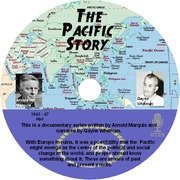
The National Broadcasting Company and its affiliated stations present The Pacific Story. This is the story of the Pacific, the drama of the millions of people who live around this greatest sea, where the United States is now committed to a long-term policy of keeping the peace. This is the story of the situation in the Pacific, of the men and events which are today influencing the shape of the world for generations to come. Timor, pawn of the Pacific. Another Japanese merchant man here. Trim little vessel, isn't it? Don't pretend you don't know what I mean, Talbot. You Dutch can't monopolize all the shipping that comes into Trimor. That Japanese merchant man coming in there, and all the others that have been coming into the sport of dealing here lately, should give you Australians as much concern as it gives us. They're cutting in on you Dutch, not on us. Remember what I'm about to say now, Talbot. Those Japanese merchant men are a vanguard. Of what? Of a squadron of Japanese warships that will one day come to this island. It will then be very late to reflect that Timor is only 400 miles from Australia. I knew he was right. Everyone in Australia knew it. What he said made me shiver. I'd known Cornelis Van Buskirk a long time, met him from time to time at economic meetings concerning the Netherlands, Indies and Australia. I thought many times of what he said that day, back in 1934, as we stood there on the waterfront of the port of Dilly and watched that Japanese merchant man come in. But even though I knew the danger, I didn't dream of what would happen to him and to me on that island of Timor in the next few years. I'd come to know Timor fairly well. My work took me there from time to time. I met Van Buskirk in Coupang in the southwestern part of the island, in Dutch Timor. Okay, goodbye. Yeah, here's to you, Van. This is absolutely senseless, Pellis. We've been talking about the island being owned jointly by the Portuguese and the Dutch. Either the Portuguese should get out or we should get out. Oh, you know you Dutchmen are never going to get out, and certainly the Portuguese will not. The whole island is only 200 miles long and only 65 miles wide at the widest part. Well, it's the last stand of the Portuguese Empire in the Pacific. But it is so small. They have only the port of Dilly and we have only the port of Coupang here. And the products hardly make it worthwhile. Oh, Van, you bergless. The thing that makes you unhappy is that the most productive part of the island is the Portuguese half. Well, I don't know about that. Why, your part of the island is parched and dry. The Portuguese part gets more rain. It's lush and green with palm groves and plantation. We peruse our part of the export product. But who produces most of the coffee, the cocoa, vanilla, cinnamon and beeswax? Yeah, but what of the work we are doing to develop oil resources and rubber? Oh, come on, drink up. That's the way we talked whenever we met. Sometimes we ran across each other there in Coupang in Dutch Timor and sometimes we met in Dilly in Portuguese Timor. There are no railways in Timor. There are some roads and a good many trails. But most of the travel between the port cities is by water. The interior is mountainous and almost inaccessible. The ridges rise from about 4,000 feet up to 9,000 feet. It is almost impossible to get through, Mr. Talbot. Well, if that's where the coffee grows, back in those limestone mountain areas, that's where I'll have to go. You will have to ride a horse. Well, I can do that. And you will have to pack the coffee out on the back of all the horses. Well. And you will have to have a guide. You can fix me up with one, can't you? Well, I think so. But you should know, Mr. Talbot, it is much more difficult than you think. The horses are dirty, but remember they are very small. They can carry not the most, only one piccolo coffee each. That's 136 pounds. That is all I will need. The Portuguese lined up a guide and a string of horses for me. The guide was one of those mixtures of Malayan, Papuan, and Polynesian that you find along the coasts of Timor. Well featured, good looking, with a light, almost golden complexion. His name was Olloc. You have never been into the island, Mr. Talbot? No, I haven't, Olloc. Different from out here on the coast. I knew that word, different, meant more than just different. We were about to start when Van Buskirk turned up. Hello there, all of you. Hello, Van. He joined us and we moved up into the interior. How different are the people of the interior from your kind of people, Olloc? Oh, very different. Tall, big frames, black. Are they dangerous? Oh, sometimes, maybe. We moved inland through the deep grass and into the thickets of bamboo and tree ferns. The vegetation grew sparser as we went along. See that mountain Mundo Perdido? That means lost world, Talbot, oh yeah. Top always covered with clouds. It's about 5,700 feet high. Mount Kablak, higher. Oh yes, Mount Kablak's about 9,000 feet high. But it is not shrouded in clouds like Mundo Perdido. I didn't know what Mundo Perdido was going to mean to me. What is the matter, Talbot? Many wild animals up here? Oh, a few deer. Some snakes. What kind, Olloc? Pythons, big ones. They're not poisonous, are they? No, not many poisonous snakes on Timor, except green cobra and few others. It was in the village that we met Sengi, a tall, dusky brown, almost black Timorese. He had a big frame, a narrow chest and a large abdomen. He had fine black hair, deep set eyes and a slack jaw. I agree. We've already got a guide. Olloc here. Bad country here to plantation. Then, do you think we need this fellow beside Olloc? I do not think so. You need me. Not this time. Maybe we can use you next time we come up this way, Sengi. Worth more take me. Better go now, Mr. Talbot. Yeah. Everybody up. Let's go. As we moved out of the village, I looked back and saw Sengi standing there, watching us go. A very grim look on his face. He is a real native Timorese. Certainly different from Olloc. Well, Olloc has mixed blood and he's a little more civilized than Sengi. The sturdy little horses were as sure-footed as deer. I paid close attention to the way my horse was picking his way. But Olloc rode along with beautiful lack of concern, looking up into the sky. Yeah, I've noticed there's been quite a few of them. The Portuguese have established a new airline between Dili and Coupang. Airplanes friends? Yeah, yeah, I think they're friendly, Olloc. They may be. Now. At last we reached the limestone country where the extraordinary Timor Coffee grows. We stayed there until the next day. I made arrangements for the coffee that we would buy over the course of the next year. Then with our pack horses loaded with one people of coffee each, we started back toward the coast. Our goal for the first night was the village. We reached there at nightfall. Olloc took care of the horses. The coffee was placed in a sort of compound for safekeeping. Van Buskirk and I turned in. At midnight, Olloc came bursting in on us. Thief! Thief! Thief! Coffee! What? Thief! Thief! Coffee! Take many people! Come on, Talbot, let's get out there! Van ran one way, Olloc and I ran the other, out to the compound where we'd stack the coffee. Hear noise with horses. Go see. Then see men taking coffee. Run over there. They go fast in the dark. We checked over the coffee. The thieves had made off with about a quarter of it. I'd just seen two of the thieves. One of them was carrying a small sack of coffee, and the other was watching for him. Where did they go? They disappeared into the thicket before I could get up to them. But I caught a good view of one of them in the moonlight. It was that Timorese that wanted to guide us. Singhy? Yes, Singhy. The next morning, we were asked to come down to the center of the village. Singhy and two other Timorese had been captured. Is this the man you saw last night? Yes, he is the man. He is the leader of the thieves. There is the coffee we caught them with. Take it. It was about half of the coffee that had been stolen. They led Singhy and the other two away, and we brought up our pack animals and loaded the coffee on them. Mr. Talbot, come. Come see what they are doing to Singhy. We went with Olloc. Good heavens, what are they doing to him? They are beating the tidally stretched palm of his hand with that mallet. We can't let them do this. We got back most of the coffee they stole. Stay here, Talbot. You can't do anything about this. Well, how many times have they gone ahead? About 50 times on each hand. And maybe they've gone to the other side. Then he'll be sent to a reward gang or prison. Singhy's eyes never left Van Baskirk until we were out of sight. I had a feeling that we would meet Singhy again. When we got back to the coast, we learned that the Portuguese had granted Britain a concession. To establish an airline between Port Darwin in Australia and Dilley in Portuguese Timor. For some time there had been talk about this line. What is the purpose of this airline, Talbot? Oh, development of trade. There is not enough freight or passenger traffic between Australia and Timor to warrant such a lot. What do you want, Van? Everybody to stay out of Timor but the Dutch? Remember, this line is to Dilley and Port Darwin. Yes, you are deceiving no one. The purpose of this line is strategic, not economic. What do you mean? Why would a nation establish a commercial airline when it cannot support itself? This was 1940. Not many months later, the Portuguese granted the Japanese a concession for an airline between Dilley and Palau. The scramble for the Timor is on, Talbot. This was my friend, Kenison. It actually shows as a fate accompli how far south the Japanese have penetrated. And it should be plain what the Japanese have in mind. I thought of what Van Buskirk had said back in 1934. Here, look at this map. Here is Palau up here. That's about 900 miles northeast of Timor. Yes. Now follow my finger straight from Palau to Dilley. It goes directly over the Netherlands Indies. And directly over the Dutch naval base in Amboyna. This was 1941. The tension in the Pacific was growing. With this base at Dilley, the Japanese now had reconnaissance from Japan straight down to within 400 miles of Australia. Our troops were scattered throughout the world on a dozen fronts. We kept close watch on the Japanese operations in Dilley. Japanese warplanes landed airfield, Mr. Talbot. Are you sure they're warplanes, Ollick? Very sure. That's a light bomber, sure, as you're living, Colbert. Who would be flying a military plane of that kind? Certainly not a civilian pilot. Our intelligence turned up the answer. Japanese reserve officers were flying those planes. Australia Protester, General Japanese reserve officers were flying those planes. Australia protested, but the Japanese were rolling up to the crest of the wave. Almost before we could turn around, something else happened. You are Mr. Talbot? Yes, I am. I am Kushi Onimoto. How do you do, Mr. Onimoto? How do you do? Thank you, please. I have called to pay my respects and to announce the opening of a Japanese consulate here in Dilley. Consulate? Where's the business you're going to handle? Many Japanese merchant men now call here, and we now have a commercial airline from Pellau. I hope that all relations can be friendly and mutually advantageous. Scramble for Timor-Wazan. The implications of it all made me quite a little. Well, if they can have a consulate here to keep an eye on us, we ought to have one to keep an eye on them. Australia immediately requested the right to open a consulate in Dilley. The request was granted. It was opened in December, December 1941. We knew it was only a matter of time until there would be war in the Pacific, and on the other side of the world they were as aware of it as we were. On December the 6th, 1941, the British Foreign Office approached the Portuguese ambassador in London with three questions. One, what would be the attitude of Portugal in case the Japanese attacked the island of Timor? Two, in case Timor is attacked by Japan, will Portugal accept British help? Three, if Portugal will accept British help, in such an event, would it not be better to make plans for common defense now rather than after the attack is made? The Portuguese studied the question. Portugal has remained neutral so far and will continue to be neutral. Portugal will resist any aggressor anywhere. Should Timor be attacked, Portugal will accept British help, but it must be clear that the neutrality of Portugal must be broken, an actual attack must be made before the help of Britain will be accepted. That's fine. That means that after the Japanese have invaded Timor, we can try to land and fight them. The Dutch in the Netherlands Indies were more realistic. Their motherland had fallen to the Nazis. The Netherlands government of Batavia made hurried moves. This was December the 6th, 1941. The Dutch permitted Australian troops to land in Tupang in Dutch Timor. I flew over to meet them. Tower, tower! Hello, man! I knew you would be here. I had to come over and help you keep the Japanese at heart. Maybe our Dutch troops here will keep the Japanese out of Australia. But truly, Tower, we are glad to see you. We laughed, but we knew the seriousness of the situation. Two days later, we got the word that the war in the Pacific was on. We listened to the reports of the Japanese attack on the Philippines and all the other places in the Pacific. The Dutch immediately moved into Portuguese Timor and rounded up all the Japanese, including Mr. Onomatopoeia. Very unfortunate, very unfortunate. Business can only prosper in peace. Where the attack would come, we didn't know. Preparations went on day and night. A joint force of Dutch and Australian troops was moved from Tupang in Dutch Timor to Dili in Portuguese Timor. In Dili, the little port city bristled with guns. No more Japanese airplanes came in from Palau. Day will come. We listened to the reports coming in about the steamroller drive of the Japanese to the south, the east, and the west. We dug in and waited and listened to other reports. The Axis powers are making strong representations to Lisbon, charging Portugal with breach of neutrality. Lisbon has replied that the Dutch and Australian troops were landed in Timor without the permission of Lisbon and over the objections of the local authorities in Timor. The Portuguese government has demanded the immediate withdrawal of the Dutch and Australian force in Timor. Lisbon has taken the position that while it recognizes the importance of Timor to the allied defense, it never will have demand. The United Nations today rejected the demand of the Portuguese government to withdraw the allied troops in Timor. The allied has taken the position. The dispute went on. At last it was agreed that Portuguese troops should take over the defense of Timor. Our combined force would hold the place until the Portuguese troops dispatched from Mozambique in East Africa arrived. We waited. We waited throughout the month of January. February came. We waited vigilant day and night. Look. Look, Mr. Talbot. Look out there. Ollick pointed out through the darkness of midnight. Shadows out there in the dark. Ships. Are those ships? Yes. Two of them. No. Three. Four. They must be the Portuguese ships bringing in those troops from East Africa. Portuguese send so many ships. Maybe Japanese. Come on, Ollick. We've got to report them. Look. Look. Even more ships. Come on, Ollick. We shoot them out. They're Japanese, all right. The light lit up with the flashes from the guns on the Japanese ships and the fires the exploding shells started all over Dili. We ran to headquarters. Here are the many ships coming. Hubbard. Hubbard, here's a gun for you. Thanks, Ben. And here's one for you, Ollick. Now give me a hand with this extra ammunition. Come on. I was carrying. Take all that all of us can carry. Here. We were ordered to positions right down on the waterfront. Every person who could handle a gun was deployed to meet the landing we knew would come. How long they shoot with big guns before Japanese come? We can't see out there. They may be on their way in now. The bombardment went on. They come. See them? See them in flat boats? Remember what they told you back in 1934? Yes, I remember, Ben. Suddenly, as far as we could see through the flashes in the dark, the Japanese landing barges were coming in. We got orders to hold our fire. How long we wait? Keep your finger on the trigger, Ollick. The landing barges were coming through the surf. The bombardment stopped. The city was burning behind us, and the flames lit up the rolling waves. The barges kept coming through the surf. Suddenly, we got the order to fire. We poured our concentrated fire into those boats. Not one Japanese lived to put foot ashore. Japanese ships are gone now. They must have moved out to sea, Ollick, but they would be back. They came back. As the sun rose, the Japanese hit the beach four miles west of the city, and here we could not prevent them from landing. They swarmed up over the beaches by the thousand, and a few hundred of us scattered and retreated into the hills. Then Buzkirk and Ollick and I were separated in the confusion that followed. The trails into the interior were choked with refugees. I headed for the only part of the interior I knew, the Limestone Mountains area where the coffee grew. At last, we reached the village, and one of the first persons I saw there was Sengi, the Timorese who had stolen the coffee and who had been punished. I didn't think he saw me, but the next morning my horse was gone, and even if I'd had money, I could not have bought a horse in that village for a fortune. Sengi was nowhere to be found. Refugees drifted in all the next day. Talbot! Talbot! Yeah? It's you, Talbot. Don't you know me? Lord, what happened to you, Van Buzkirk? They have killed me, but for Ollick. He saved me. Oh! But they killed him for helping me and two Australians. They killed Ollick? The two Australians, too. With the summer I sold. I am the only one who get away. Well, come on, Van. We've got to get you some help. You're bleeding. Oh! I got Van into a hut. Then I went to see if I could get something to help him. Some water, maybe some drugs or some dressings for his wounds. A Japanese patrol, about 30 men, burst into the village. I was on the opposite side of the village from the hut where I'd left Van. I lay quiet in the thicket for an hour. The hut was at the edge of the village. Perhaps I could make my way around to it and get Van out, and we could go deeper into the interior. I crept and slid through the undergrowth until I was within 50 yards of the hut. I decided to stay there about an hour until dark. Suddenly I heard people approaching. He in this hut, here. It was Fenge. He was leading two Japanese soldiers and a Japanese civilian to the hut. The civilian was Mr. Onomoto, the Japanese consul who had come to see me at Dilly. Ah! They went into the hut. I lay quiet and listened. Ah! There was no more open battle on Timor. After the 700 Australians and Dutch made their stand at Dilly, it was a matter of guerrilla operation, ambush and the like. As the months went on, we drew together back in the interior. In May 1942, we got word out to Australia that a few hundred of us were still living deep in Timor. We knew there wasn't much chance of rescue. Quite a few of us made our way to Mount Mundo Perdido, the mountain of the lost world. There, shrouded in the clouds, we hid. Talbot! Hi! Talbot! I thought I heard someone calling my name. Talbot! Are you up there, Talbot? Yeah! Who is it? This is Talbot! It's Kennison! Where are you, Talbot? Here! Here I am! Talbot! Is that you? This is Kennison! Oh, Kennison! Talbot, you old goat, we've come to take you back to Australia. You look like the old man of the sea. Is the war over? No, no, but it's turning in our favor. This island's still in the hands of the Japanese, but we've come to take you off, all of you. Come along now! Hurry! Well, a year after the fighting at Dilly, they evacuated us from Timo, got us back to Australia. We learned that those Portuguese troops dispatched to Timor from East Africa and never landed. The Japanese got there first. About a month or so after we got back to Australia, the Portuguese offered to collaborate with the Allies for the reconquest of Timor. Could this offer be related to the fact that the war is now swinging in favor of the Allies? Well, Timor was occupied by the Japanese until the end of the war. It's back in Dutch and Portuguese hands again, and Australia said she will make no claim whatever to the island. Today, the Portuguese are buying power plants, building and road-making machinery, motor cars, cattle, and a lot of other things from us. And it seems to me, no matter who owns Timor, in the years to come, it's probably going to be closer to Australia than ever before. You have been listening to the Pacific Story, presented by the National Broadcasting Company and its affiliated independent stations, to clarify events in the Pacific and to make understandable the cross-currents of life in the Pacific Basin. For a reprint of this Pacific Story program, send ten cents in stamps or coin to University of California Press, Berkeley, California. To repeat, for a reprint of this Pacific Story program, send ten cents in stamps or coin to University of California Press, Berkeley, California. The Pacific Story is written and produced by Arnold Marquis. The original musical score was composed and conducted by Henry Russell. The principal voice was that of Stuart Robertson. Programs in this series of particular interest to servicemen and women are broadcast overseas through the worldwide facilities of the Armed Forces Radio Service. This program came to you from Hollywood. This is NBC, the National Broadcasting Company. Thank you.