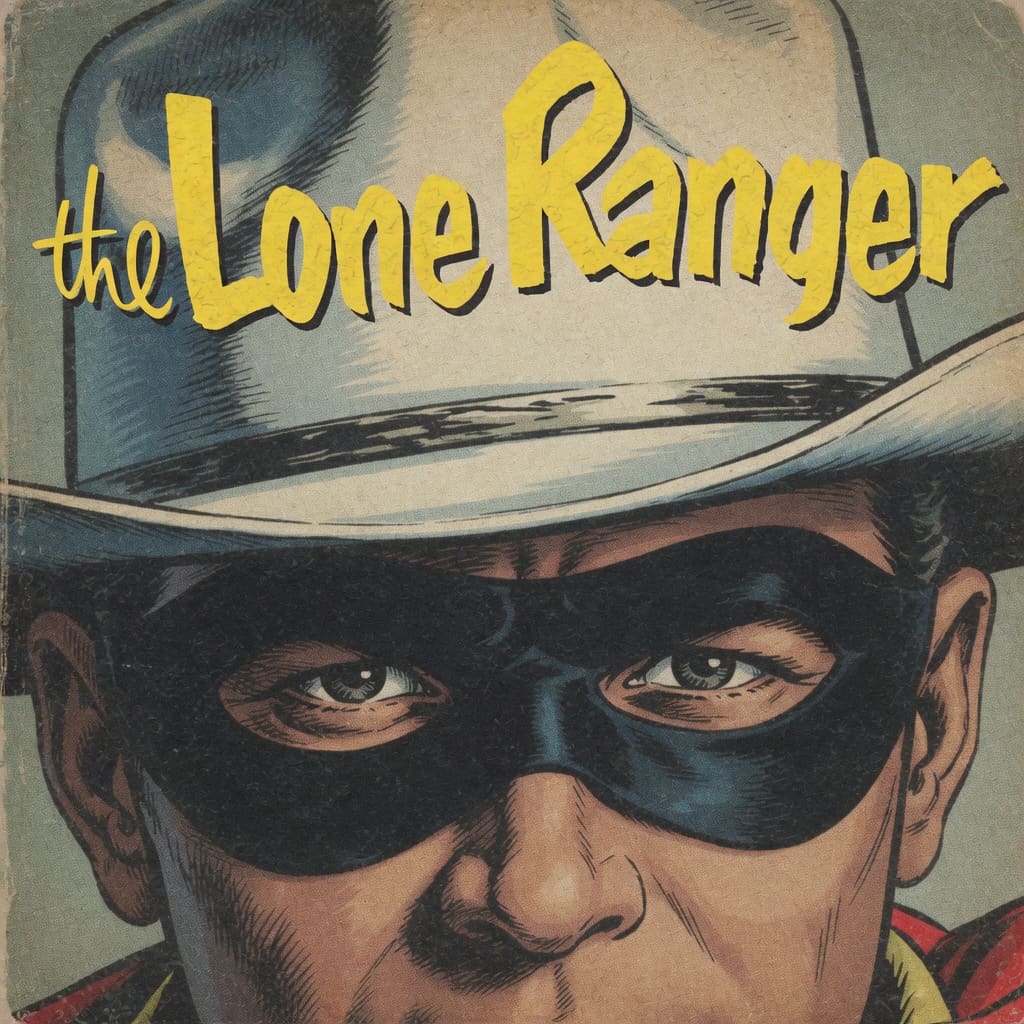
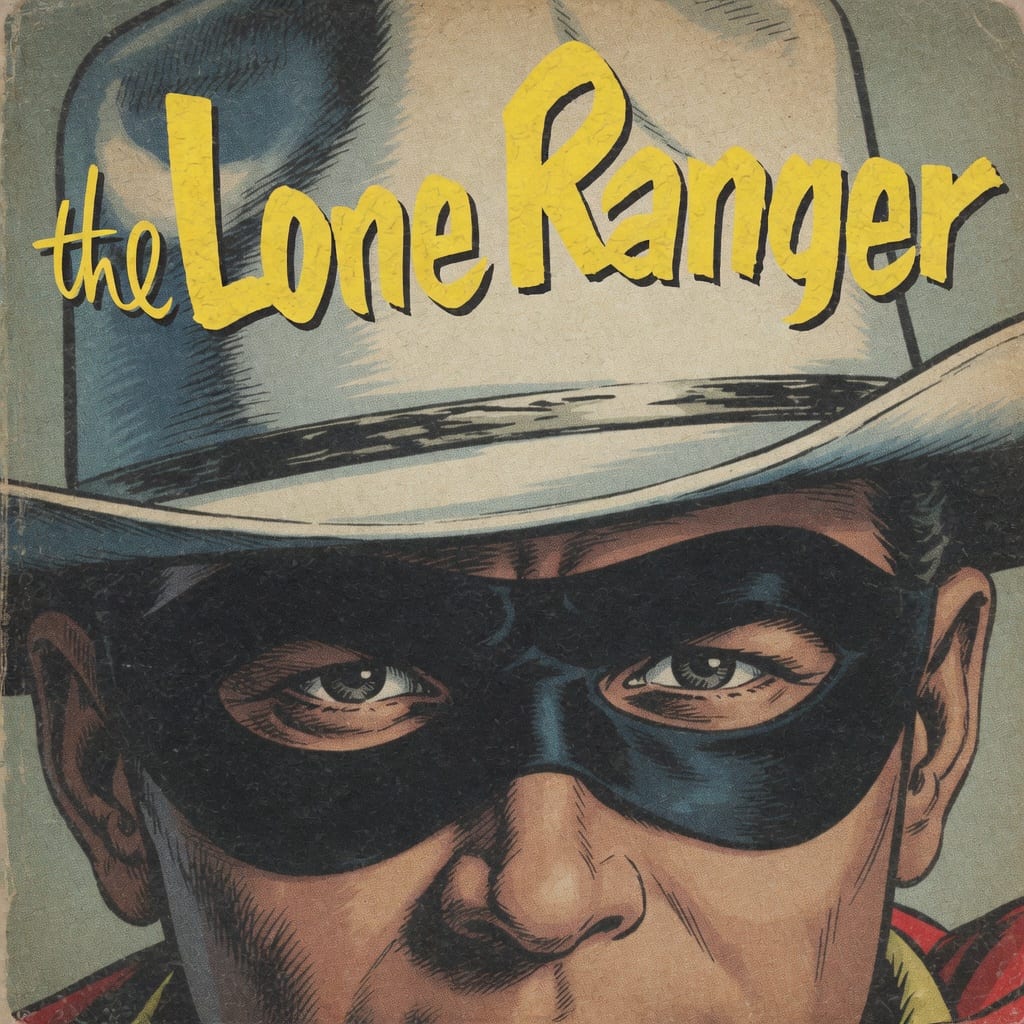
Fiery horse with a speed of light, a cloud of dust, and a hearty hi-oh silver. The Lone Ranger. Faithful Indian companion Tonto, the daring and resourceful mask rider of the plains, led the fight for law and order in the early western United States. Nowhere in the pages of history can one find a greater champion of justice. Return with us now to those thrilling days of yesteryear. From out of the past come the thundering hoofbeats of the great horse, Silver. The Lone Ranger rides again. Come on, Silver. Let's go, big fella. I don't, Silver. The frontier town of Red Sand was five miles east of Fort Randolph and seven miles east of Apache Chief Black Bear's Indian Village. Red Sand was a lawless town, a paradise for crooked merchants and politicians who defrauded the government on orders for army supplies. Other victims were the soldiers, whose income, while monthly or seasonal, provided a bonanza for cheats who dotted the town. Two such crooks were Rip McKay and Buck Haskell. Their trading enterprises, most of them illicit, included gambling halls and a cafe. It was in their cafe that Rip McKay, after a trip to the territorial capital, joined his partner. Buck, did you hear the news? Chief Black Bear and his tribes have signed a peace treaty with the government. Do you mean that? I'm sure I do that straight. The government's setting them up in a reservation only a few miles from the fort. We're going to give them cattle, set them to farming, and going to supply them with tools and seeds and everything else. If they do that, we're not going to be able to sell them stuff. You haven't heard the worst. Huh? What could be worse? That Congress back in Washington's cutting down on army expenses. The way I heard it, the government's reducing the number of posts in the territory from 18 to 9. Oh, no. Hey, don't tell me they're going to get rid of Fort Randolph. No, but they'll cut the number of soldiers stationed there. That means when payday comes, we'll have fewer suckers to relieve their money. We can't allow that to happen, Buck. No, siree. The only way to keep soldiers around is to go on stirring up the Indians, and the army will be forced to keep at full strength to fight them. Buck, let's start making plans to get things blazing. Let's start now. That's the best plan we've hit on yet, Rip. With most of the soldiers at Fort Randolph being sent to New Orleans, like they were, there's only a skeleton garrison out there. And that garrison I heard today is out on a two-day bivouac. If we strike tomorrow, we can pull off this thing easy. We'll want a real engine to lead our men, Rip. We have a real one, Buck. Howling birds, just about the meanest redskin that ever breathed. I'll talk to him right now. He'll do anything I tell him. The renegade Indian howling bird, made rich by a few gold coins and the promise of fire water for time eternal, planned with Rip McKay and Buck Haskell that night. They met with a group of ten white men in the cabin, hidden deep in the underbrush of Lost Gulch, which was to the north of Fort Randolph and the Apache village. The ten white men were dressed in Indian regalia, with their bodies dyed brown and their hair greased and plastered down beneath the feathered bands that encircled their heads. Buck Haskell held a lantern in his hand and played it on the men as he scanned their disguises. Now, boys, boys, I have already told you what to do. Now, just remember, before you start things, let Howlin' Bird do some talking. Stay in the background until he gives a signal by pretending to talk to you in Indian language. Why? Don't you want us to scalp a few of those settlers? Make it look real good? No, no, Whitey. There'll be enough real scalping before weeks pass. By that time, Black Bear's engines will be doing it with no faking. Remember, keep away from Black Bear's village on your way south to Pinyon Creek. When you're coming back from there, stop at the outskirts of the village. That's when Howlin' Bird will plant the horses for the soldiers to find. And by next morning, the soldiers will be shooting up Black Bear's engine tribe. And then the engines all over the territory will go on the warpath, because they'll have to to protect themselves from getting wiped out. But they'll get wiped out anyway. On the following morning, Oren Snyder, leader of the colony of farmers who had settled along Pinyon Creek, had awakened before dawn. He was preparing breakfast for his wife in the candlelit main room of his cabin, when the stillness outside was broken by the sound of horses. He laid aside a tin pan and started toward the window, now leaden-colored with the first traces of day. Before he reached there, the cabin door burst open. An Indian, his face streaked with many colors, stood in the opening, a rifle held menacingly in his hands. Paleface, get up four birds. Me see light and window. What is it you want? Want all men, women, and village, get up. Listen to word Injun brave say. Oren, who's that out there? You stay in your room, Sarah. Don't come out. The horse is outside, Oren, and I... Get back into your room, Sarah. No, woman, stay here. She'll not stay here. Keep quiet. Woman, come outside. Men, come outside. Oren. Oren. Don't be frightened, Sarah. Let me talk. Me say you come outside. You call chief a village. Tell him bring all man, woman outside. You not do that in... Oren. He's gonna shoot. Wait. Lower your gun. I'll do as you say. Oren Snyder gathered the members of the colony together. Howling Bird's band of pseudo-Indians covered the settlers with their guns, remaining at a distance, however, so that their disguises could not be penetrated. Howling Bird talked to the assembled men, women, and children. Me bring message from great chief of Apache's black bear. Him say, pale-faced, go. This country belong to Indians. You go. But we have an agreement with Chief Black Bear. We made peace with him when we came here. That happened long time ago. Now there's no more peace. You go. You not go, Injun. Kill and scalpel. You can't do this. Our soldiers at Fort Randolph witnessed the agreement we made with your chief. Injuns make soldiers go, too. Kill soldiers. Kill all pale-faced, no matter where. It's suicide for your tribe if you do. We in this village do not believe in the use of firearms. Me not savvy. My wife means guns. We don't use them. But our white brothers do. And they'll fight you. Our soldiers will come from everywhere in great numbers. The Indians will not have a chance if that happens. Pale-faced make heap big talk. Injuns laugh at talk. Injuns on warpath. Give pale-faced last chance to go. You not go, Injuns. Kill them all. We'll not go. We'll not leave here. Take us to your chief. He's paying no attention to you. He's talking to those Indians with him. What's he saying? I don't know. I can't understand. Now. Injuns make sure. Pale-faced go. Half the men with howling bird lit torches and ran from cabin to cabin. And to the storage huts applying flames. The other five men aimed their guns at the suddenly aroused settlers. Stop those graves from setting fire to our homes. They're destroying our food. Stop them, I say. I'll kill you. You not kill nobody. Oren, darling. Are you shot? As Oren Snyder fell to the ground wounded, the men of the group aroused to a fury. Started toward the men they believed to be Indians. But the crooks themselves afraid fired at the charging colonists. As the white men fell to the ground, Oren Snyder, still conscious, spoke to his wife. It's no use. Tell our men to stand back. We don't want any more of them killed. Yes, sir. Stop it. Stop it. Don't shoot anymore. Stop it. Sarah Snyder, pleading with settlers and gunmen, brought a stop to the shooting. The colonists, stunned and bewildered, paid no attention now to the flaming cabins or to the men who were visiting destruction upon them. Instead, they knelt beside their fallen men and began to administer to them. The sun was above the horizon when shortly after, Howling Bird and his cohorts rode away from the flaming settlement. They were herding the colonists' horses along with them. When they were a mile from the scene of destruction, one of the crooks brought his horse up beside Howling Bird. Well, we did it like Rip wanted. Huh? When are we going to drop off the horses we took on? Not till we get near Injun village. Me take horses then. Sneak them in the Injun horse lines so soldiers find them. Ha-ra! Ha-ha! After pain-filled weeks in the home of Claribel Hornblow, the Lone Ranger had completely recovered from his wound. He had regained his strength in full measure and set out with Tonto to ride again the western trails. One, two, one! Come! After leaving the Hornblow ranch, the masked man and his Indian companion attended a meeting between government officials and Apache tribal chiefs in the territorial capital. Officials had requested the Lone Ranger to carry a message to the commanding officer at Fort Randolph. Now on the last leg of his journey to the fort, he and Tonto had camped for the night on the bank of Pinyon Creek. They were preparing to leave their campsite when looking through a clearing. The masked man saw smoke billowing into the sky a few miles away. Tonto, there's a bad fire straight ahead. Ah, me see. Near the colony on Pinyon Creek. Come on, Tonto. Easy, sir. Come on, fella. The Lone Ranger and Tonto arrived at the scene of the fire and found the farm colony almost completely destroyed. Their arrival was greeted with apprehension at first, but the Lone Ranger introduced himself and Tonto and assisted in treating the men who had been wounded. Sarah Snyder told the story of the Indian raid while Tonto studied the hoof prints left by the marauders. The Lone Ranger was puzzled. I don't understand what may have caused the Indians to do this. Well, the one who led them said that Chief Black Bear sent him with a message that white men must leave the territory at once. That's the most puzzling part. I happen to know that Chief Black Bear hasn't been near his village in more than a week. What? Chief Black Bear and the chiefs of all the tribes in the Apache Nation are meeting with government representatives from Washington. They're together, as they have been for a week, in a place many miles from here. Why should they meet together? Because they're arranging the final details of a treaty, a treaty that should bring lasting peace to this part of the West. It's an Indian trick. That's what it is. Perhaps you're right. Yet it's hard to believe. Chief Black Bear has always been a man of his word. Kimasabi. Yes, Tonto? Me look at hoof prints. And I'm easy to follow. What strange thing, Kimasabi. What is that, Tonto? Horses wear shoes. Only find lack of one horse that not wear shoes. That is strange. Why should it be? I don't understand. Indians don't shoe their horses, Mrs. Snyder. But the men who came here were Indians. Maybe they stole the horses they rode. They took ours. That may be the answer. Tonto, we'll leave now. Give us a big piece. Hoof prints go east. That's the direction we're heading. Easy, steady, big fella. We'll follow the trail left by the Indians and send aid as quickly as possible, Mr. Snyder. Adios. Adios. Monty! Monty! The curtain falls on the first act of our Lone Ranger adventure. Before the next exciting scenes, please permit us to pause for just a few moments. Now to continue. Renegade Indian Howling Bird and the crooks disguised as Indians had fled from Pinyon Creek an hour before the Lone Ranger's arrival there. They rode until they were a short distance from Chief Black Bear's village. Then, while the rest of the gang waited, Howling Bird and Whitey rode away, herding the horses they had stolen from the colonists. They reached the picket line on the outskirts of the Indian village and led the stolen horses among those of the Apaches. It was then that Indian Braves saw them and, thinking they were horse thieves, began to shoot. As Whitey sped away on his horse, he heard Howling Bird cry in pain and turned to see the renegade Howling Bird plunge from his horse, hit by many bullets. Whitey reached the waiting crooks a few minutes later. For their horse. Horse. Injured sauce. They started to fly and we had to run away. We were outnumbered. What? We're Howling Bird. Yeah, they got him. Yeah. They'll be after me. All the braves of the village. Let's get away from here fast. Yeah, we better. Wait, wait just a second. Kansas. Yeah, Whitey. We gotta let Rip and Buck know what happened. Drive to Red Sand and tell them. Rigged up in these engine clothes? Who's gonna notice you? Ride fast and go into town by the back row. Now go ahead. Get up there. Come on. Come on, boys. We'll get back to the goats in the hideout. Right. Get up. Get up. Get up. Get up. Get up. Get up. Get up. Shortly after Whitey and the crooks had ridden away, the Lone Ranger and Tonto appeared. They saw before them a band of more than 30 Indians leading a line of riderless horses. Too late to avoid meeting, the Lone Ranger warned Tonto. Those are Apaches. The horses with them are the ones they stole most of their homes. Oh, those are both of them. Kimasabi. Them surrounded. The Apaches with guns raised rode in fast and made a tightening ring around the Lone Ranger and Tonto. Then one of the Braves, older than the others, raised his hand as a signal for the other riders to stop. The Lone Ranger greeted the man. Blue Thunder, how? How? Where come from, man who hide face? We have followed your trail here, Blue Thunder. It is a bad thing you and your brothers have done. What do you mean? Kill horse thief, not bad thing. To kill horse thief who is bad Indian like Howling Bird is good thing. Howling Bird, the renegade? You killed him? We see him with horses. Think him steal horses. Shoot. Kill him. Indian with him get away. Now we follow him. Find new trail here. Many horses. See marks? The trail of the shod horses? Certainly. Tonto and I have followed it from Pinion Creek. Do you mean that trail wasn't made by your horses? No. Blue Thunder and brothers come from Indian village. But these horses you're leading, where did you get them? They're shod. Briefly, Blue Thunder told of trailing the horsemen who had been with Howling Bird when, for reasons beyond their understanding, the renegade had left the stolen horses on the Indian picket line. The Lone Ranger, too, was puzzled by this. There seems to be no doubt about it, though. The horses Howling Bird left, the horses you have with you now, they belonged to the white men on Pinion Creek. Then the Lone Ranger told of the settlement that had been destroyed and related the story Sarah Snyder had told him. Blue Thunder and the Braves who understood the masked man's story were angry. What Howling Bird say to White Brothers is not true. It's big lie. Chief Black Bear not send message for White Brothers to go. Apaches not shoot White Brothers, not start fire, not steal horses. We must convince the soldiers at Fort Randolph that this is so. If they think of you... No soldiers at Fort Randolph now. Them go away, make camp. Only small guard, one officer there. Blue Thunder know this. Soldiers come back to Fort tomorrow. But these Indians whose trail you picked up may be miles away from here by tomorrow. Their trail may be lost by then. Ah. Apaches, chase them now. Away, Blue Thunder. Just a few minutes. Let me tell you an idea I have in mind. Once more, the Lone Ranger spoke. But this time, he outlined a plan. Blue Thunder, on hearing it, discussed with his tribesmen. Then he said, Man who hide face say wise things. Good for Apaches. Good for White Brothers. Bad for Indians. We chase. You'll do what I suggested then. Ah. We send braves, three in number, back to Apache camp. Them get food. Them bring food and medicine herbs to White Brothers at Pinion Creek. Get young braves who stay in camp now to bring back horses that belong to White Brothers at Pinion Creek. Hold on. Hold on. At Blue Thunder's orders, braves sped back to the Apache camp for food and help. Two other braves minded the settlers' horses, awaiting the return of the younger Apaches, who would come from the camp and lead the stolen horses back to Pinion Creek. Get them up, scouts! Tato sped away to notify the garrison at Fort Randolph. The Lone Ranger, Blue Thunder, and the Apaches picked up the trail of the crooks. They followed it until they reached the entrance to Lost Gulch an hour later. Now, Blue Thunder, the trail of the men we're after leads down into the gulch. Ah. Plenty of trees down there. Good place to hide. Yes. That's why I suggest we dismount here and a few of us go on ahead. Easy, sir. The Apaches dismounted with a masked man and Blue Thunder. The Indian leader ordered his braves to hide with their horses in the nearby woods. Blue Thunder and the Lone Ranger set off stealthily along the still fresh trail of the men they pursued. Kelly, one of the crooks disguised as Indians, had been left to stand guard on top of the wooded hill, a short distance from the hideout cabin where his pals were waiting. He turned suddenly when he heard a noise behind him. Don't try to yell. Me put knife against throat, make yell, and... He's stopping. He doesn't understand my words. He certainly understands that knife. There. You nearly choked me to death. You're not an Indian. Come here. Let me see. No. Of course you're not. Him make believe Indian. Keep that Indian away from me. He'll kill me. That knife, he'll cut me. Hold it, Blue Thunder. Spare this man's life and let him talk. You were at Pinyon Creek, weren't you? Weren't you? Yeah, yeah, I was there. I didn't start this thing. I'll tell you all about it. It's like this. Me and some of the boys was told we could make a lot of money. An hour passed and inside the hideout cabin, Whitey, one of the eight men in Indian costume, peered through the window. It's starting to get dark. Better light that lamp. The bosses will be getting here soon. Hey, fellas, Whitey. What is it, Kelly? You better come outside. I want you to see something. Hurry them off. What's out there? What do you want, Kelly? Hey, Kelly, what is it? Injuns. Real ones. Boys, don't go for your guns. Look it. Injuns everywhere. Don't shoot again. You make move. We shoot to kill. They have us, boys. We give up. We give up. Boys, they made me do it. They made me get you out here. The masked man. Watch out. Men come on horses. While half the Apaches kept the bogus Indians covered, the Lone Ranger and the others turned to face the riders, heard approaching from the underbrush. One of the riders was Tonto. The other was a captain of the United States Army. Me here shot. Kimasabi. Ride fast. You catch that engine? Yes, Tonto. Only they're not real Indians. The captain of... Now, White's the name. I decided to come with Tonto when he told me what had happened. I've sent a messenger to call our men in from Bivouac. What's the story here? The Lone Ranger told him. Then he concluded. But this man, Callie, tells us, Captain, that the leaders of the conspiracy are due here at any time. They have further plans. I think we should learn what they are before arresting them. By all means. Is that going to be possible, though? Yes, I think so. Here's what I have in mind. We'll tie up these crooks and let the Indians take them a short distance from here. Then we'll have blue thunder in the few days. It was dusk when Rip McKay and Buck Haskell arrived at the hideout with the crook Kansas. Oh, shit! They burst into the cabin where a lamp in the center of the room cast grotesque shadows on the painted faces of the men in Indian costume. We couldn't get here sooner, boys. Kansas had a hard time finding us. It's too bad Howlin' Bird got himself killed, but we can't worry about that. We've decided it's no use waiting till tomorrow to start some real killing. We have to work fast before the soldiers get back to the fort so they'll have more reason to start shooting up the Apache. Yes, that's right. Now, the sooner we get a war started, the better it'll be for us. Now, we want... Hey, say, what's the matter with you hombres? Why don't you say something? Because we want to hear what you say. Well, if I'm talking... Hey, who are you? Hey, Rip? Oh, no. He's not one of our men. No. He's not your man either. What? These are real Indians. They're patches. Keep away from us Indians. They'll kill us, Rip. Shoot! Shoot! Got that gun! Oh, my wrist! I'm shot! I take your gun! No, no, no! I'm breaking it! There's a masked man here, too! Take him! He's your prisoner! No, no! Now they got me! I'm shot! Now they're going to kill me! No, they're not! They're making you prisoners! There! You'll stand with other bad hombres! Captain! An army captain! Yes! You two are under arrest. These Indians whom you try to get killed at the hands of our men will march you back to the fort with the rest of your gang. They're being held outside. You'll not make Apaches go to war against white brothers. These Apaches are helping the settlers at Pinion Creek. McKay, if one settler dies, you and Haskell and your gang will hang. And before you die, you'll help build cabins and storehouses for them once more. You'll go to jail for many years regardless for trying to start an insurrection. Your men have told us the reason for your death pickable plot. The government will put you and the crooked traitors like you out of this territory for good. You learned all these things fast. How? Me tell you how. Because masked man trail and find your bad men. Make them talk. You mean a masked man who was just here? Yes, I notice he's already left the cabin, but I know who he is, and the army and I are grateful to him. He's the Lone Ranger. This is a feature of the Lone Ranger Incorporated, created by George W. Trendle, produced by Trendle Campbell Mule Incorporated, directed by Charles D. Livingston, and edited by Fran Stryker. The part of the Lone Ranger is played by Brace Beamer.