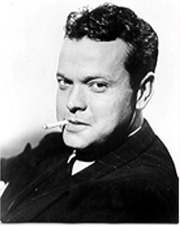
This is Orson Welles speaking from London. The Black Museum. A repository of death. A repertory of violence. Here in the grim stone structure on the Thames which houses Scotland Yard is a warehouse of homicide. Where everyday objects, a teacup and its saucer, a ladies parasol, a surveyor's chain, all are touched by murder. You take this mallet. It's a familiar object, a wooden mallet, worn, got a wooden head, marked, necked with all its uses. Maybe you have one in the cellar, in the forgotten tool chest at the bottom of your closet in the toolbox of your car. But I doubt if you would care to own this one. Hello, here's something constable. Just an old mallet, sergeant. Yes, notice the grease on it. And these, they look a bit like hair, don't they? Human hair. Well anyway, today the mallet can be seen in a very special place of honor. In the Black Museum. From the annals of the Criminal Investigation Department of the London Police, we bring you the dramatic stories of the crimes recorded by the objects in Scotland Yard's gallery of death. The Black Museum. The Black Museum Well here we are, the Black Museum. Scotland Yard's very special, very particular museum of murder. Here, here lies death, row on row of cabinets. And in the cabinets, each in its place, each with its simple white card detailing victim and killer, time and place. The weapons, many of which you couldn't conceive as weapons, lie in these stone walls. Now here, here for instance, this is a woman's handkerchief, a bit of lace at the edges, crumpled, yellowish with age, yet stuffed as a gag in its owner's throat. Its stifle screams, this handkerchief, and the sound of death. Here, a length of heavy chain. Once this chain enclosed a rich man's driveway. It was wrapped around his legs another time, and weighted his body in his private lake, until the grappling looks too old. And here we are, the mallet. Little white card says, in part, Guy Fawkes Day, bonfire night. Guy Fawkes Day, it's November 5th, it's an old English tradition, you know. The celebration of Mr. Fawkes's attempt to blow up the House of Commons, the English House of Congress, almost 350 years ago. Every November 5th, bonfires of all sizes are to be found on the English countryside as part of this celebration. That's why, you see, no particular attention was paid to a particular bonfire near a highway in Northampton, one November 5th. Although, one fellow did comment, quite a blaze that one, eh, Davey? Yeah, flames of feet 15, 20 feet, to be able to fire that big way out of here. Well, maybe the fellows wanted London to see it, eh? Well, every man to his own idea, I always say. You see, no particular attention for that moment. Now listen to the moment. There's a man running up the road, past the two fellows trudging home. Hey, mister, anyone at bonfire? Didn't look, eh, in a hurry, getting on the tarp. Yeah, I see, he's troubling. Think he's gonna catch a train here about this time of night. Might as well save his breath and walk. Too bad if he'd been walking if Marty and Davey had been on the road just then, if the fire hadn't been quite so spectacular, even for Guy Fawkes bonfire night, if. However, the ifs don't count. Davey was a touch curious about that bonfire now, as he and his friend came almost abreast of the blaze. Mighty big fire. Think we ought to take a look, Marty? Oh, I'm tired. Filler said there wasn't nobody over there. He didn't, see, he didn't look. Well, I'm going to. Those spots get into the trees, we can have trouble, the wind and all. Oh, all right, have it your own way. Yeah, blimey, you can feel the heat right over here. Yeah, that's no bonfire, it's a car burning. Yeah, we gotta get help. This'll make trouble. Come on. The two men dashed for town in the wake of the man who passed them, and there in the village they found the local police constable. Quickly they gathered two of his leftovers from the day's bombing and buckets, stirrup pumps, and raced back to the fire in the constable's old car. They didn't really talk at the scene. In a matter of minutes the blaze was under control. A few minutes more and they could get close enough to see into the car or see into what was left of it. Not too close, men, there's a lot of heat there. Here, constable, point that flashlight over there. Where? To the right, no, more to the right, the front seat. Looks like a bundle of rain. Oh, that's no bundle, that's what's left of a man. Charred, blackened, a twisted heap, but still recognizable as the body of a man. When the first shock was passed the local police constable ordered the men to stand watch while he telephoned. Before dawn the experts were on the job. All right, Sergeant, what have we got so far? Number of the car, sir, MU-2489, some fragments of the clothing, garter buckles, belt buckles, a few pieces of cloth. That's about all, Inspector. Not much to go on. Oh, well, maybe pathology will give us something. Meanwhile, trace the registration, find the owner, search the area around here carefully. Routine, Sergeant, let me know. Yes, sir, the usual. Now then, you two. Yes, sir. Aye, sir. About this fellow who passed you running away from here, what did he look like? Well, he was pretty dark last night, sir. Well, he had no hat on. Yes, sir, not his right. No hat, but a topcoat and a briefcase. Aye, sir. Anything else? Notice his hair? Well, it was dark. Seemed like a lot of it, sort of a round face. You couldn't see his eyes or anything like that. How old do you think he was? He was running pretty fast, though. Well, nobody over 35 could run like that with a coat on and all. Unless he's been an athlete, of course. Oh, well, no matter about that. Anything else you remember about him? Not me, sir. Here, Inspector, do you think he had something to do with this? We're not ready to think yet. First, the facts have to be gathered. We'll get out this fellow's description. He may recognize himself and offer to help. Meanwhile, we'll find the owner of the car. Great deal of... The fellow didn't offer any help. All the newspapers carried his description, but there were no results. A number of the car did bring results, however, and the person of the youngish woman who gave her name is... Nora Williams. It was my husband's car. He works as a salesman for a firm in Northampton. He's on the road a lot. He set out this time on the 4th. There's no use your viewing the remains, Mrs. Williams, but perhaps you can identify these. What are they? Garter buckles, a belt buckle. Oh, that's all... that's all that was left? Are they familiar to you, Mrs. Williams? No, no, not at all. My husband never wears a belt, only braces. I see. Mrs. Williams, was your husband on his way to his firm, the home office, so to speak? I don't know. Oh, he didn't say? No, and I called the firm. They said they didn't expect him until next week. Williams, Robert Williams, owner of the burnt car. He's never worn a belt. His firm didn't expect him for a week. Interesting. Maybe not quite as interesting as the little scene in progress under the wreck of the burnt car. Hello. Here's something, Constable. Just an old mallet, Sergeant. Yes, notice the grease on it. And these, they look a bit like hair, don't they? Human hair. There it is, Inspector. Found it about ten yards from the wreckage. Oh, just an old mallet. No weathering of the paint. Oh, grease, bits of hair. How far was it from the petrol, Jim? Just a few feet. Another few steps away, that scorched area began. Oh, the main area, or that sort of trail we found burned through the weeds? The trail, sir. Oh. You're reconstructing something, Sergeant. Let's have it. Well, sir, suppose that someone hit Williams with the mallet and drove the car off the road. Then threw some petrol from the tin on the car and laid a kind of trail of it until the tin was empty. Yes. This party might have tossed away the mallet, dropped the tin, and thrown a lighted match onto the gasoline. It's possible, Inspector. You may be closer than you think. Pathology reports that the man who died had been drinking heavily, and that the bits of cloth we found had been soaked in petrol. Soaked in it, sir? And not burned? The cloth came from the armpits of the dead man's jacket. Soaked to the armpits in petrol. Whoever wanted Williams out of the way was thorough, to say the least. Yes, but we don't know yet, Sergeant, if the corpus delicti is Williams. All we know is that Williams is missing, and his burning motor car contained a corpse. Yes, sir. But if the body isn't Williams, then our missing man... May be Williams, and may be a murderer. Well, we'll see. There wasn't much to see. No Williams, no identity for the corpse, just a few bits of blackened metal, funny-looking mallets, a petrol tin, a bit of scorched earth, a pathologist report, but no Williams. That was all. And then, quite suddenly, there was a plethora of Williams. My name is May Williams. I haven't heard from my husband for three days. It's not like Robert. We were married in May. He wanted it then because my first name is May. I'm Dorothy Williams. I married Robert Williams two years ago. Our home's in Brixton. I have a little boy, Robert Junior, of course. I left the hospital to come here, Sergeant. Our son was born just two weeks ago. He's our second child. Robert and I have been married three years. He was at the hospital on Guy Fawkes Day just before he left on his trip. I can hear him saying, Elizabeth, don't you worry. I'll be back in five days. I interviewed Mrs. Williams myself, Sergeant. Her first name is Nora. I know it seems incredible, Inspector, so I checked the records first. Every one of these women is married to a Robert Williams, and every one of them says the license number of his car was MU-2489. Four of them. London, Brixton, Greenwich and Bournemouth. And three children. What have we here, Sergeant? Motive for murder or suicide? And that mallet can be found today in an honored position in the Black Museum. The Black Museum. Inspector Lortz and Sergeant Broughton found themselves of a common, if curious, state of mind. There was the very human and male tendency towards some small admiration for a man who could keep four wives reasonably happy. And most men have their difficulties with one. And there was the very stern necessity of finding this Robert Williams who disappeared apparently into thin air, or who'd been burned to death on bonfire night in a blazing automobile. However, Inspector Lortz and Sergeant Broughton had something to work with now. They had three wives. The first one to be questioned was Dorther. Dorther Brixton. What can you tell me of his usual route in his business, Mrs. Williams? Nothing in that, Inspector. Robert never talked business about it at home. Oh, what then, Mrs. Williams? What then? Oh, what did he talk about? That's right. Oh, pleasant things. The cinema, football matches. He was a great one on sports. And after a while he liked to talk about the baby. Bob is only six months old, you see. Yes. Was there any regular time he was at home, like the first and third weeks of the month, for instance? No, sir. He'd be at home when he could. It was a bit difficult at first getting used to that, but I managed. And he's so regular with the household money. Every Monday morning in the mail if he isn't at home. By check, Mrs. Williams? No, sir. By money order. Or in cash, sir. Have you cashed in the last money order? Would you know where it was drawn? No, I can't say, sir. I never took notice of that. Oh, Inspector? Nothing much there. Nothing much except a picture of a quiet, rather shallow fellow interested in sports. It was Sergeant Braddon who took on May Williams. May Williams. She's young and quite pretty and very frightened. For you, Mrs. Williams, three days is a long time. Like three years almost. He wrote me every night he was away. Now... Oh, Sergeant, that wasn't my Robert in that car, was it? We don't know. Not yet, anyway. Suppose it wasn't. Suppose your husband has just disappeared. Oh, he'd never do that. Robert's a wonderful man. Athletic, thick, dark hair and a round face, almost like a boy's. That much tellies with the man on the road at any rate. We hope we can help you find your husband, Mrs. Williams. Elizabeth Williams is no fool, and a newborn baby can be quite a problem, and your only means of economic support has disappeared. You see, Inspector, he told me this trip was taking him to Kent, and now the cast turned up in Northampton. Well, you can see why I'm so worried. And under those circumstances, of course. I never questioned Robert very much about his trips. I guess I was too glad to see him home, and he never stayed long enough to wear out his welcome. Ours wasn't a slippers-and-puck kind of existence. And do you have many friends in your neighbourhood there in Bournemouth? I do. Robert never cared to go out much. I see. Well, for a man of about 35, that doesn't seem, well, too normal. We liked each other's company, and there isn't very much money. So when Evelyn was born, we let ourselves get tied down. Now that Gerald's here, well, even more so. And you say he was at the hospital on Guy Fawkes Day? Yes. He brought flowers. Oh, I told him he shouldn't spend money on frippery like that, but it was sweet, and yes, he did say something about tomorrow will have to take care of itself. Of course, not one word to any of the four women about the others. This was a matter for the Inspector and the Sergeant to give strictly to themselves for a while, at least. But beyond this, nothing, no sign of Robert Williams. Routine if thorough checks were made of the four areas where the four women lived. Inspector Lord here. Call for you, sir. A Mr. Thomas Brickwell from Farringham. Oh, I don't know any Brickwell. He says he wants the Inspector in charge of the Williams case. Oh, does he? All right, put him through, Sergeant, and I'll speak to Mr. Brickwell. Yes, sir. Inspector Lord speaking. My name is Brickwell. I own a dry wood shop in Farringham, 215 Harley Road. Go on, Mr. Brickwell. I'm fed up with this Williams fellow. I think it's high time you police did something about it. Oh, well, we hope to, sir, quite soon. Then why don't you pick him up today? Have you any idea where he may be? He's on the 1030 bus for Bournemouth. Left my house just a while ago. As far as my daughter Mary is concerned, I'd be just as pleased if she never saw him again. Oh, is he your son-in-law, Mr. Brickwell? Not yet, and never, if Mary will listen to me. I don't like the whole thing, Inspector. Turns up without his car, then the car's reported burned up, and Williams won't go to the police. Mumbles something about not wanting to be involved. It's a funny business, and I'm interested in protecting my daughter. Well, you've been most helpful, Mr. Brickwell. We'll be in touch with you shortly. Good day, sir. Good day, Inspector. Yes, sir? Sergeant, our man is on the bus that left Faddingham for Bournemouth at 1030. Check his first stop and pick him up. It looks as if he left his latest conquest to visit his latest offspring. I beg your pardon, sir. Is your name Williams? Robert Williams? Yes, it is. What can I do for you? I'm from the CID, sir. I hope you don't mind coming along. Inspector Lortch would appreciate a word with you. May I see your identification? Of course. Here you are. Why, I see you. Very well, Sergeant. You know, it's a little strange, actually. I was on my way to see you. Well, that was his story, and he stayed with it all the way. He was on his way to the yard to tell his story, and it was quite historic. Let's say that again, Mr. Williams. I picked up this hitchhiker, you see, just below Northampton. He had a bottle and began to drink rather steadily. You see? I was just about on the verge of asking him to leave the car when the engine began to cough. I was getting out of petrol, so I pulled over to the side of the road and off. My passenger seemed to be asleep. I took the petrol tin from the back, the one I keep for such emergencies, you see, and just as I started for the road, the man called out. Oh, he wasn't asleep then? Apparently not. Did I have a smoke on me, he wanted to know. I tossed him a cigar. Never smoked myself, but just keep them for the customers. You know how that is? Yes, yes, of course. Go on, Mr. Williams. Well, I started for the road again. Suddenly I had a kind of push behind me. I looked, and my car was a sheet of flame. My passenger was in the middle of it. I must have panicked. The next thing I knew, I was running up the road. And that's all you remember? That's all. Anything you want to ask him, Sergeant? Yes, sir. Mr. Williams, you took your briefcase with you when you went for petrol? I was afraid my passenger might steal it. He had his hand on it several times earlier. You don't wear hats, Mr. Williams. I must have lost it. When I realized I was running away, I realized too that I had no hat. I bought a new one. How about trouser belts? No, only braces. That's all. Thank you, Inspector. Now, tell us, if you will, Mr. Williams, why you never came forward until we found you. Oh, that. Well, I guess you'd better know. You'll find out anyway. Women, too many of them. You are married, aren't you? Too one of them. Nor a loyal girl. No questions asked. Wonderful woman. Yes, she is. We've talked to her. In fact, she's on her way here now. You won't mention what I told you, gentlemen, about the others. Between us men, that is. Yes, we'll respect your confidence, Mr. Williams, as far as the law allows. Mr. Williams, did you have a mallet in the toolbox of your car? Yes. Yes, I did. I used it for pounding dents out offenders. Did you take it out when you stopped along the road on bonfire night? Come to think of it, I did. The cap of the petrol tin seemed stuck, and I think I used it to loosen the cap. And then? Well, I must have dropped it near the car. Yes, you must have. Well, that'll do for now. If you'd care to wait for your wife, Nora, you can wait in the next room. Well, thank you, gentlemen. I'll do just that. This way, Mr. Williams. Thank you, Sergeant. Thank you very much. Well, sir? Four women. Not too much money. You pick up a tramp, no one will ever miss. Get him drunk, burn your car and the tramp, let the world think you died in your own car, and start over. Seems so simple, but really quite complicated. And where there are complications, there are always discrepancies. Aren't there, Sergeant? Discrepancy. Yes, several. Did you notice them? When you take the business, the mallet, the three extra wives, the disposal of the petrol tin, holes, big ones, and of all people, it was Nora Williams who supplied the next one. If I may, Inspector, I'd like to have my husband's wallet returned now. Oh, is there something in it he particularly wants? Yes, some of the money. He's out of tobacco and wants to buy some cigars. Oh. I never saw such a man for smoking. Pipes, cigars, cigarettes. He certainly loves tobacco. Next one. And if Robert Williams lied on that score, in how many other instances? We found the petrol tin 15 yards from the wreck. How did it get there, Mr. Williams? I must have carried it there and dropped it or something. Our pathologist states positively that the hairs caught on the mallet are human hairs. How do you account for that, Mr. Williams? How should I know? Maybe somebody got hit with it somewhere, sometime. How should I know? You said you don't smoke, and then your wife asked for your money to buy tobacco. Why did you lie, Williams? What's she trying to do, frame me? I suggest, Williams, that you had petrol in that tin all the time, that you poured it over that vagrant after you knocked him unconscious with the mallet, that you laid a trail to the car and set fire to it yourself. Ridiculous. Absolutely ridiculous. What for? Why should I do a thing like that? We have that answer, Williams. All four answers. In London, Brixton, Greenwich, and Bournemouth, and a possible fifth in Taddingham. Your story doesn't wash, Williams. We're charging you with willful murder, and I warn you that anything you say will be taken down in writing and may be used in evidence. Now, about this mallet. And that mallet can be found today, if you look for it, in an honored place in the Black Museum. No one actually saw the crime committed by Robert Williams, did they? But the circumstances were clear, and certainly Williams' life was the life of a rascal, to say the least. However, it may interest you to know that the day following Williams' execution, a London newspaper published a last-minute interview with a prisoner in which he confessed the crime, admitted the details, as Inspector Lorch had deduced them, and revealed for the first time that the man he killed was entirely unknown to him, a vagrant whom he'd picked up in his car once or twice before. To the extent that Williams' pay with his life just as was served, of the four women who'd been his dupes, nothing is known except that they picked up the pieces of their lives as well as they could. And the mallet, our exhibit, can be found in its customary place in Scotland Yard, in the Black Museum. And now, until next time, till we meet again in the same place, and I tell you another story of the Black Museum, I remain as always obedient for yours. .