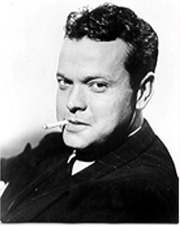
The Black Museum, the repository of death. Here in the brimstone structure on the Thames, which houses Scotland Yard, is a warehouse of homicide. Where everyday objects, a goldfish ball, an automatic gas range, a child's perambulator, all are touched by murder. Here's a can of weed killer. It's a familiar object. Every suburbanite with a patch of garden has used this, something very much like it. After a while, one tires a pulling up the weeds and buys weed killer. Eliminates the backache. Do you know offhand, Superintendent, whether the poison in weed killer deteriorates or becomes stronger with the passage of time? Well, I'm not certain, Inspector. Any chemist could answer that, I imagine. In this situation, some chemists will have to answer that. Well, today, that can of weed killer can be seen in the Black Museum. From the annals of the Criminal Investigation Department of the London Police, we bring you the dramatic stories of the crimes recorded by the objects in Scotland Yard's gallery of death, the Black Museum. Here we are, the Black Museum, Scotland Yard's mausoleum of murder. Yes, here lies death. Here it is, presumed in objects which seem to reflect the horrors of the crimes in which they once played their part. Here's an arrow, full-feathered, tapered, cleanly steel tipped. It's a graceful object made for flight and skill in an ancient art, even in the act which brought it here, this weapon was thwarted. No arching bow was ended on its way. A powerful hand thrust sharply in the dark. This arrow turned dagger and stabbed a life away. Here's a chalice, jeweled, lovely. It's a work of art, I'd define it here. And yet this achievement of the goldsmith's skill carried murder within its curving bow. Yes. Now here we are, as the tin of weed killer has dried up now, its contents are forever useless for any purpose. Still, was the poison it once contained any more probable for evil than the hidden poison which flowed through the place where this tale took place? It was in fact a lovely place, an English village. Its single street strung like a hammer between two hills, on one of which stand the remains of an ancient Norman castle. An ideal place to live, one would say, as John Ashley very often said to his wife Helen and his daughter Joy. Remember Helen, how we used to wish for a life like this when we were struggling in London? Before you came to us, Joy, my dear. I remember. You've accomplished it for us, John. You may clear the table, Sarah. Very well, man. From all the stories you've told, Ed, I'll never marry a young lawyer. Oh, you might do worse. You might do worse at that. Oh! What's the matter, Helen? Oh, that pain again, John. Oh, it'll pass. As soon as I've had some tea. I wish you'd see Dr. Gordon about this, Helen. It worries me. Oh yes, a very nice place to live. And a nice family in the house on the slope of the hill. An occasional complaint, of course. Even an occasional disagreement. But everything quite normal. Except to certain people in the village below. Why, he won't let his wife join our garden club. I never understand, never. And she does exactly as he tells her. The way she's under his thumb. No woman would permit it unless she was deaf. Do you think it's something? That was Mrs. Brooks. Very interested in gardening, Mrs. Brooks. Her husband sells the gardening tools and materials locally. Very interested in better trees and flowers. I was her first friend in the village. I watched her just waste away. It must be his fault. You know, sometimes I believe he beats her. It's good seeing that she was a worthy soul. If she read more books, perhaps she'd have less time on her hands. As it is, she has a bit too much time on her hands. Do you know, I heard just the other day that John H. Day... Don't doubt it. Not for a minute. ...wait till Martha Gordon hears this. Well, I'd like not to believe it. But if you tell me, dear... No, Chris Madden. No, Chris Madden. ...on the first authority by all nice. I think there's something to be done. That was, well, the climate of public opinion, at least on the distressed side at the time of the Sunday luncheon in the Ashley House. Ah, an excellent luncheon, Helen, my dear. You must compliment Cook. Oh, John, I think I'm going to faint. Helen. Mother. Oh, it's staking in the side. I can't believe it. Oh, the pain. Helen, the wine. Mother, let me get you some. Helen, Helen, no. Try quickly. Get up with Gordon here. At once. If you have to, take the car and fetch him. Oh, my dear, of course. Helen, I'm getting you to bed. Sarah, please help me. Mrs. Ashley has taken ill. Oh, it was a poor woman. Take her arm, Sarah. Gently now. Carefully, gently, they took Helen Ashley up to her bedroom. The doctor came at joy's urge and even tearful call. Please, Dr. Gordon. My mother's taken terribly ill. Please, please hurry. But the doctor wasn't half as alarmed as the family. So I don't believe there's really anything to worry about. Gastric disturbances can be painful, but my prescription for the disease is a little bit more than that. I'm sorry, I'm sorry. I'm sorry. I'm sorry. I'm sorry. I'm sorry. I'm sorry. I'm sorry. I'm sorry. I'm sorry. I'm sorry. I'm sorry. I'm sorry. I'm sorry. I'm sorry. I'm sorry. I'm sorry. I'm sorry. I'm sorry. I'm sorry. I'm sorry. I'm sorry. I'm sorry. I'm sorry. I was under the impression you would stay overnight at least. I can't. I have my children. They'll have had no dinner until I get home and my mother, past eight, you know. Is my wife resting well? Quite easily. She complained that Dr. Gordon's medicine caught at the back of her throat, but... Oh, that means nothing. I'm sorry, but I'll have to leave. I'll be back first thing tomorrow. The Ashley household retired for the night. John left the nightlight burning in the bedroom. At two a.m., John awoke and looked at his wife. Then he stumbled at the door of Joy's room and knocked. Dad! What is it? Joy, I... Your mother is dead. Helen Ashley passed away in her sleep. I was mourning in the house on the slope of the hill, in the village below. I knew it. I told him she was desperately ill. I told him. It's too bad. Such a nice little person. So sweet. How could she have married that man? I hope they find him out. Never even a civil good day to a person. I don't know, really suppose there is something suspicious. I wouldn't put it past him. Why, Nurse Thomas says. I felt something strange the moment I walked in the door. If I had any influence with my brother, I'd have made him refuse to sign a death certificate. Heart disease. It was talk. Idol talk. At least it seems so at first. But it had its effect. It accumulated, as some poisons do. And it had a result, as some poisons do. Here's another of these letters, Superintendent. Oh, any signature this time? Yes, sir. That's a change. Who's it from? It's signed by Nurse Thomas. It's a bit vague, sir, but on the same lines as the other anonymous letters which we've already received. Oh, all right. Well, let me have a look at it. Dear sir, I have come to the conclusion that it is my duty to draw your attention to the rumors which are common knowledge throughout the neighborhood concerning Mr. Ashley and the recent death of his wife Helen. I can claim to have a personal knowledge of the case as I was the nurse in charge. What do you make of that, Sergeant? There's certainly nothing anonymous about this letter, sir. I feel that you should know my suspicions are shared by friends and neighbors of the Ashley's and that all of us consider our duty that justice should be done. Yours truly, et cetera. That justice should be done. Oh, well, we shall see. Sergeant. Yes, sir. I think we'd better have a little talk with Nurse Thomas. So you believe, Nurse, that the police ought to look into this? I certainly do. There must be some reason back of all this talk where there's smoke, you know, Superintendent. Nurse Thomas, may I remind you that I didn't get to the rank of Superintendent of this district by listening to rumors. Have you any facts? Well, I'm not a detective. Well, tell me what you know, Nurse. Sarah Freeman, she's the Ashley housemaid, swears that he didn't drink any of the wine at lunch. That was hardly his custom. Go on. I've been on a good many cases. This one was really peculiar. The doctor wasn't disturbed any more than her husband was, but she died at two in the morning. The whole thing is highly suspicious, and Sarah thinks... Now, never mind the rumors, Nurse. However, I may make a few inquiries. The superintendent knew his duty. He took the liberty of asking John Ashley to stop in and chat with him. You realize, of course, Mr. Ashley, that this is strictly on an informal basis. I can think of no reason why it should be formal. Well, there have been reports, rumors. I dare say you've heard a few. I've heard all of them. In fact, to spare my daughter, I've sent her up to London to stay with her cousin for a while. Yes, it is most distressing. I assume, Mr. Ashley, you would like to set all his gossip at rest, put an end to it once and for all. Nothing would be of greater relief to me. Have you any suggestions, Superintendent? Yes, I have. It's drastic. But, well, if all is well, as I have every reason to believe, it may be unpleasant, but it would certainly be effective. What is it, sir? Exhumation of your wife's body and the post-mortem, with your express approval. As you wish, sir. I shall be glad to cooperate in every way possible. The vital step had been taken. From now on, John Ashley was engaged in a fight for his life. Much was against him, and not the least was a tin of weed killer, which can be seen today in the Black Museum. And now we continue with the Black Museum, starring Orson Welles. They did not permit Helen Ashley to rest for long. The exhumation order was signed, and the post-mortem proceeded. Shortly thereafter, a coroner's inquest was held. The jury were all natives of the district, of course. All of them with some contact with the rumors, which seemed to go wilder and more frequent as the secrecy continued. There were three witnesses at the inquest. First, Dr. David Gordon himself. Yes, I performed the post-mortem in the subsequent analyses. What did he find? My findings were confirmed by the analyst for the Home Office, to whom I transmitted them through the superintendent of police, together with the necessary items for his own tests. And the report, doctor? Helen Ashley's body contained 18 milligrams of arsenic, sufficient indeed to cause death. Mr. Brooks, purveyor of gardening tools and materials being away on a business trip, Mrs. Brooks took the witness stand. Yes, when my husband is away, I run the business. I'm completely familiar with all his records. Oh, you are, are you? What about it? Well, less than two years ago, we sold a tin of weed killer to Mr. Ashley. The brand was that type which contains arsenic. The third and last witness was housemaid Sarah Freeman. Mr. Ashley was in the pantry where the wine was kept for ten minutes at least that Sunday. I know because he held me up setting the table and all. Did she serve any particular item that day? There was the wine. It was Mrs. Ashley's favorite brand. She always took a glass with a big meal of the day. The bottle was open in the pantry. And of course Mr. Ashley did not drink any that Sunday. I offered it to him myself. He refused and I caught some for the poor lady. The verdict to the coroner's jury is obvious, isn't it? Well, here's a pretty kettle of fish. A coroner's court not only finding in favor of murder but naming the murderer. Nobody could say they were slow to come to a decision, sir. On the contrary, Sergeant. I only hope they haven't been a little too fast. Well, we shall see. Meantime, thank goodness our responsibility is going to be a shared one from now on. You mean it's a case for the yard, sir? No doubt about it. Yes, sir? Put me through to London. I want to speak to Inspector Glenn at Scotland Yard. Graham here. This is Superintendent Maxwell. You remember the case I sent you the papers on last week, Inspector? The Ashley case? Oh, yes. Any developments? There certainly are. If possible, I'd like you to come down here straight away. I'm glad Scotland Yard has come into this, Inspector. What with the verdict and all, we're hardly equipped down here to complete the evidence. The verdict, yes. We find that Helen Ashley died of acute arsenic poisoning and that the poison was administered by her husband, John Ashley. I've seen a few cases with more complete evidence in my time. No doubt. So have I. But what can we do? Besides arrest Ashley and have him arraigned? Nothing, I'm afraid. Nothing at all. Well, he hardly thieves the type to obstruct justice by running away. Far from obstructing justice, John Ashley helped the authorities in every way he could. I understand, Inspector. What did you say your name was? Glenn. Inspector William Glenn, CID. Yes, yes, of course. I assume you'll be looking for the weed killer there's been so much talk about. Yes, we will. Yes, well you'll find it in the garage with the gardening things. It's in there somewhere, exactly where. I'm afraid I can't tell you. Thank you, Mr. Ashley. Now, if you're quite ready, shall we go along? Yes, why not? If you'll just precede me. It's quite warm out, I gather. I doubt if I need a top coat. No, and my car's at your door. I'm sorry, I didn't know they'd get it out here. We could have used the back way. Oh, no matter. I can face them. They went to anything but call names. John Ashley was formally charged the next morning and held for the next exercises. The case for the crown was not remarkable for the court. Inspector Glenn was a witness. The defendant admitted possessing the weed killer. In fact, he helped us to find it in his garage. Everyone covered any evidence, Inspector, to indicate that Mike Clant did in fact administer the poison? Poison is almost always given in secret. One rarely has a witness to the fact. Dr. Gordon repeated his testimony. The coroner's inquest was no cross-examination. Sarah Freeman, on the other hand, was the subject of quite intense questioning by the defense. Why did you find it worthy of remark that Mr. Ashley spent some time in your pantry? I'd never known him to be in there before. I say to you that almost every Sunday before luncheon, he did go into the pantry from the garden to wash his hands. No, he didn't. Many, many times. No, he always went up to the kitchen to wash his hands. I submit to you that it was a long way to the bathroom upstairs. Not very. Do you realize that Mr. Ashley is in peril of his life? Yes, sir, I do. And you stand here swearing that it was unusual for him to use the pantry to wash his hands? Yes, sir, I do. Sarah Freeman, are you telling the truth? I swore on a Bible, sir. Are you telling the truth? Yes, sir, I am. No further questions. Next in the parade of witnesses was Nurse Thomas. She told her story, her experience, and her suspicions. Once again, counsel for the defense took over. You are a practical nurse, is that correct? I am. You are not registered. Your training has not been formed. I know my job. Answer the question. I know my job. But you are not a registered nurse. I am a practical nurse. When you left the Ashley house at nine o'clock, were you satisfied that the patient was in no danger? I had to go home. If you felt she was in danger, would you have gone? I had to go home. For personal reasons? My mother is past 80. My children needed their dinner. I suggest to you, Mrs. Thomas, that a registered nurse would not have left. Then you were satisfied that the patient was in no danger. I had to leave. I told Mr. Ashley. Did the patient complain to you about the medicine? She complained to the maid. The maid told me. What did you do about it? I tasted it myself. Did the medicine affect you? Not at all. What was the dose? Two teaspoons full, some little water, three times a day. Did you give the medicine before you left? I did. And you were satisfied there was no danger to the patient? I was. I had to go when I did. Very well, you had to go when you did. That is all. The stubbornness, the slight irregularities in behavior of this nurse seemed to be having an effect on the jury. There was a feeling of impatience, even of doubt, in the courtroom as counsel for the defense called... Miss Joy Ashley, please. The girl, quiet, composed, took the stand in her father's defense. Miss Ashley, I know you realize that your father is on trial here for his life. I do. Can you say without reservation that you're going to tell the absolute truth? Yes, sir, I am. If you had any doubt of his innocence, what would you do? Tell the truth. My mother is dead. If I thought for a moment that my father had done it, even then I would tell the truth. Very well. Now then, the three of you had luncheon together that day. We did. At the same time, from the same main dishes? Yes, sir. There has been some doubt cast on the contents of a certain bottle of wine. Your former housemaid has testified that the bottle was nearly empty at the end of the meal, that she threw the bottle away. Was this common practice, do you know? It was. I see. Now then, what do you recall concerning the serving of that wine that day? Sarah, the maid, offered it to my father first, as she always did. Did he accept it? No, he did not. What did the maid do next? She offered it to my mother. Mother took some. And then? Then Sarah offered it to me. I let her fill my glass. It was excellent. I asked for some more. I remember mother expressing her surprise that I should drink two glasses of wine. Thank you, Miss Ashley. That is all. It was dramatic to say the Crown had no questions for Joy Ashley. The defense rested. After a brief recess, he began his summation. Quickly, he reviewed the evidences presented, never denying the fact that Helen Ashley had died of arsenic poisoning. But he did conclude. We have made no attempt to deny the scientific facts of this case. But I suggest to you, ladies and gentlemen of the jury, that at no time has my Crown's behavior even suggested guilt. More, I suggest that at no point has my honored colleague proved motive, much less the actual administration of the lethal dose. And I go on to suggest that there exists a reasonable doubt concerning my case. A doubt concerning my Crown's guilt in this matter. He has pleaded not guilty. I suggest that not guilty is the only proper verdict in the case of the Crown versus John Ashley. The jury was out for three hours. The verdict was brief. We find the prisoner not guilty. John Ashley was a free man. But one thing he never learned, not to the day of his death, but privately the jury sent this message in writing to the judge who presided at the trial. We are satisfied on the evidence that Helen Ashley received a dangerous dose of arsenic on Sunday, July 16th. But we are not satisfied that it was the immediate cause of her death. Nor does the evidence satisfy us concerning how or by whom this arsenic was administered. We cannot take a man's life when reasonable doubt such as this exists in our minds. We have therefore returned the verdict not guilty. And still today, that tin of weed killer has its place in the Black Museum. Here in person is Orson Welles. Helen Ashley died of arsenic poisoning. There was no question about that. There was grave question as to how the poison was administered. But whether it was in the wine or the food or the medicine, no one knows. John Ashley died some few years after his trial in poverty, a weary, broken man. In his case, the doctor certified his death and no question was raised, save by those who remembered the charges against him and the wagging tongues of the gossips in the kindly seeming English village where he'd made his home. Those who remembered had cause for thought. Could it be said that John Ashley died by gossip? Certainly not by any other poison. Now, until we meet next time, until we meet in the same place, I'll tell you another story about the Black Museum. Everything is always obediently yours. The Black Museum, starring Orson Welles, is presented by arrangement with Metro-Goldwyn-Mare Radio Attractions. The program is written by Ara Marion with original music composed and conducted by Sydney Torch, produced by Harry Allen Towers. There's the Black Museum.