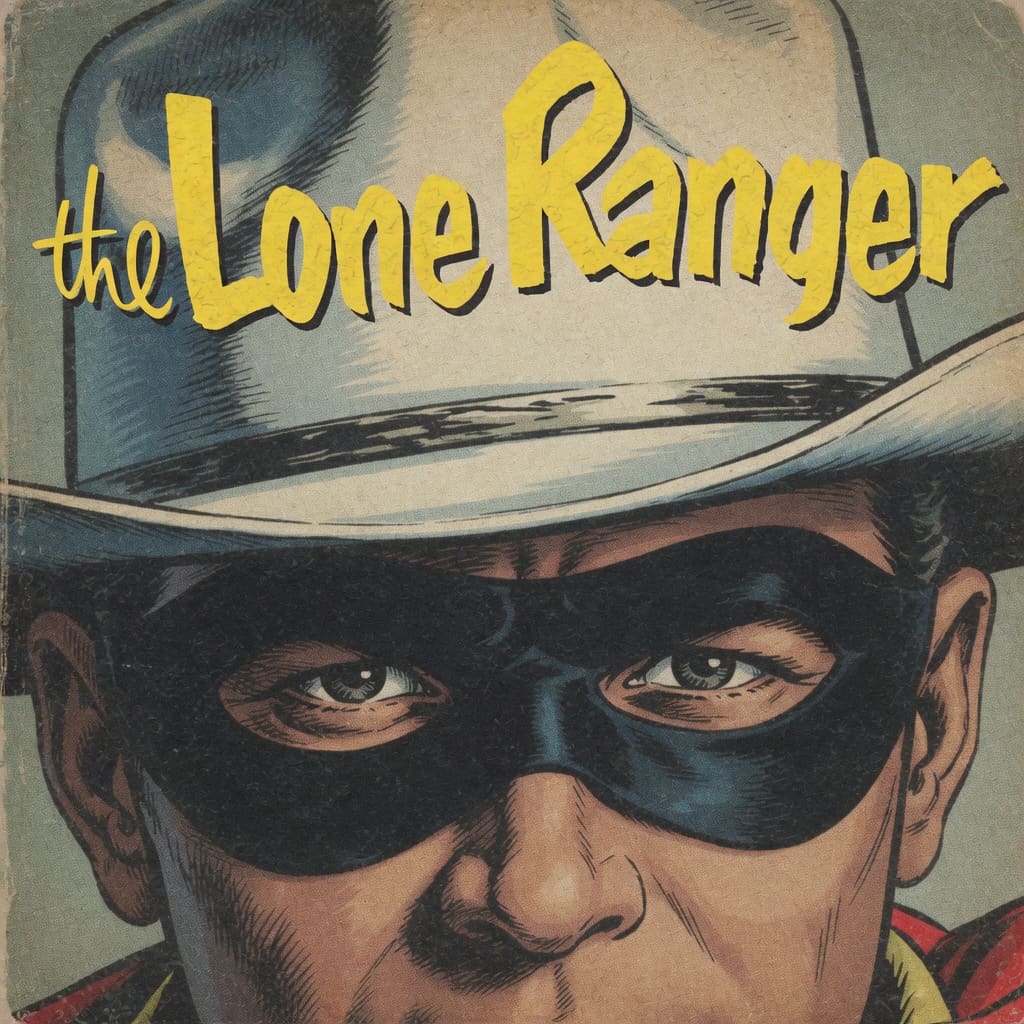
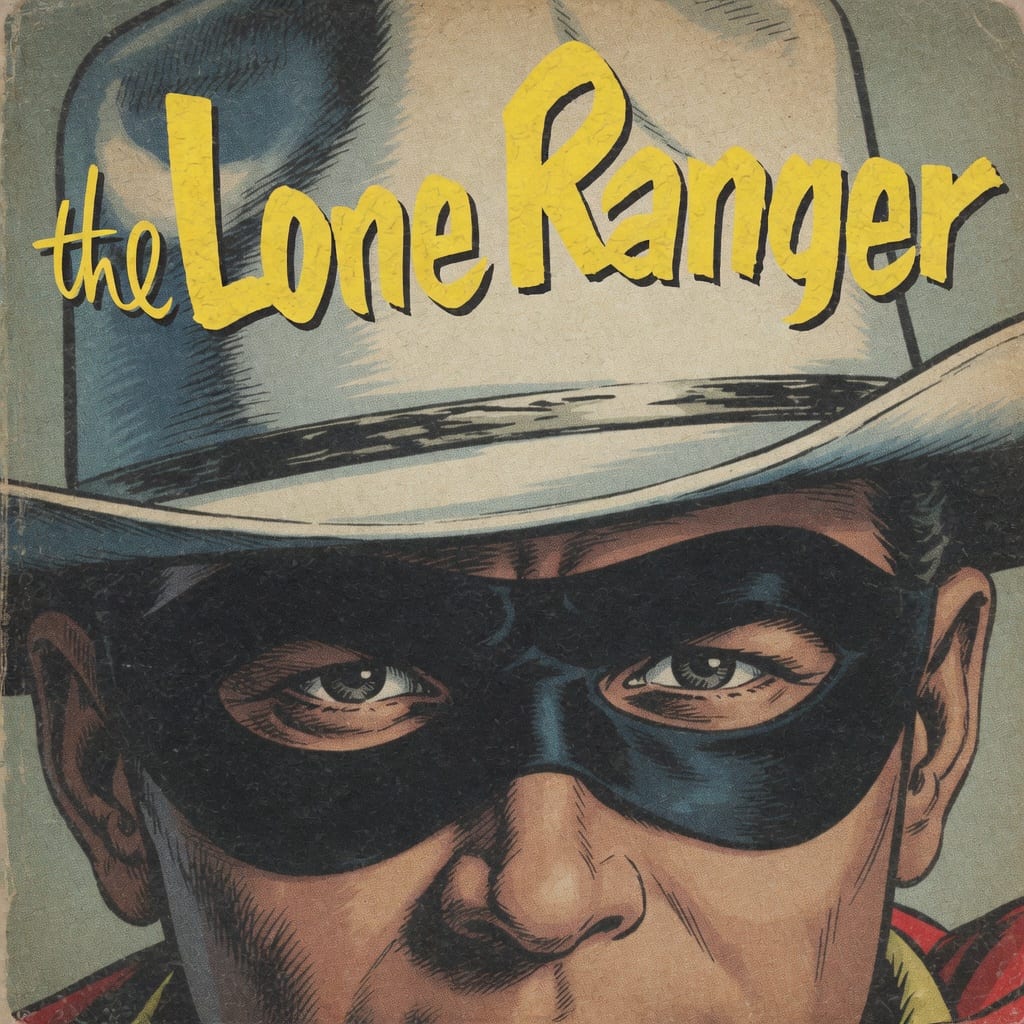
A fiery horse with a speed of light, a cloud of dust, and a hearty hyo silver, the Lone Ranger. With his faithful Indian companion Tonto, the daring and resourceful mask rider of the plains led the fight for law and order in the early western United States. Nowhere in the pages of history can one find a greater champion of justice. Return with us now to those thrilling days of yesteryear. From out of the past come the thundering hoofbeats of the great horse Silver. Silver, the Lone Ranger rides again. Come on, Silver. Let's go, big fellow. I'll still there. When young Jim Wheeler finished college with a degree in engineering, he joined his father's contracting firm. His first task was to draw up a bid for the construction of a road to be cut through a mountain pass leading to the town of Clintonville, a booming community located in the central part of the state. After the bid was submitted, Jim waited anxiously. He had his father's promise of a junior partnership in the firm if the bid was accepted. In due time, a telegram came into the office. What is it, Dan? Word from Clintonville. On the contract? Yes. I'm sorry, son. We didn't get it. No? Here's the wire. Just came in. Who got the contract? A local contractor down there. A fellow named Stan Bowden. Oh. Bowden, huh? I knew he was going to bid on it. I can't understand it, Dan. How do you mean, Jim? I had Bowden investigated when I heard he was going to bid. He's not equipped to handle a big job like that. Well, the contract is as big as this one. He can get all the equipment he needs. How much was his bid? $100,000 less than your figure. $100,000 less? Why, Dan, it's impossible. He can't build that road at such a rate. I agree. It looks impossible. But he's on the ground. We're not. How do you mean? Well, he's familiar with local conditions, labor costs, material costs, and so forth. Maybe you overestimated them, Jim. Then you blame me for losing the contract? Well, Jim, I left the whole business in your hands. Did you go to Clintonville to check local conditions before you drew up your figures and estimates? Did you investigate labor costs? No. No, I didn't, Dad. I figured labor and material at the prevailing scale. That's where you made your mistake, son. You see, prices here in Denver may be a lot different than those in Clintonville. There can't be that much difference. Dad, I'm going to keep my eye on that job. Well? I want to find out how Stan Bowden does it. It was three months later. The Lone Ranger and his Indian companion, Tonto, rode slowly toward the town of Clintonville. For some time, Tonto had been watching small signs chalked on telegraph poles and fence posts. Finally, he spoke. You see many signs, Kimasabi. Yes, Tonto. I've been noticing them for the past mile or so. They're hobo signs. Hobo? You mean tramps make signs? Well, there's a difference between a tramp and a hobo. A tramp is a man who doesn't want to work. But a hobo is a wandering worker. You may not understand that. Well, by that I mean, he moves about the country in search of work. In the grain season, he goes out to the wheat fields. When that work is done, he goes elsewhere. He's a sort of jack-of-all-trades. Will take any kind of work. Well, why do you make sign on posts? Each sign has a meaning. By those signs, a man tells his fellow hobos about conditions along the route, such as work or lack of it. Oh, now me understand. Uh, what that sign means? Rain up and we'll look at the one on the post there. Oh, sir. Oh, sir. Oh, fella. Oh, fella. It's like other signs. Yes, an arrow shot through a circle. You know what sign means? It's a sort of a warning. A circle means a town and the arrow indicates speed. Put them together, it would mean don't stop in town of Clintonville. Maybe no job in Clintonville. Oh, I doubt that, Tonto. Clintonville's a growing community. I understand they're cutting a roadway through the pass north of here. Should be plenty of work at good wages. And then why sign say no stop? I don't know. But you may depend on it, Tonto. There's a good reason. Well, let's turn off the trail here. We go make camp now? Yes. There's that good camping site about a mile from here. And you can ride into town this evening and meet Dan when he comes in on the train. I want to. Get him up the scout. Dan Reed, the nephew of the Lone Ranger, had been visiting friends in Denver. He was to arrive in Clintonville that evening. At about the time the Lone Ranger and Tonto reached their campsite, Stan Bowden, the contractor, was in a stormy conference with Sheriff Matthew Bates in town. Now calm yourself down, Stan. No sense of getting so hot under the collar. When I signed that contract, you promised me you'd get all the labor I wanted at a dollar a day per head. I know. Shut up. I'm talking. I've got 30 days to finish the job. And if it's not done, I forfeit a $100,000 bond. Without labor, I'll never finish. Yes, I realize that, Stan. Well, Bates, what are you going to do about it? I wish I knew what I could do about it. When you started on that job, Stan, I was picking up an average of 20 hobos a day. Kept up steady for a while. And all of a sudden, they just stopped coming through town. I can't understand it. I'm not interested in alibis. I made a deal to give you a dollar a day per man. I kept my end of the bargain. You've let me down. You haven't brought me a man in a week. Well, Stan, as the sheriff... Sheriff. Get out of that swivel chair and get me some men. I don't care how you get them, just get them. But what I do has to look legal. Well, that's your problem, not mine. Well, I'll try. If you don't have some men by morning, you're going to hear plenty from me. Dan Reed had been away for more than a month, and Tonto had been looking forward to seeing the boy. His eagerness brought him to Clintonville fully a half an hour before the train was due. With time on his hands, he left his paint horse, Scout, and Dan's horse, Victor, at the local livery stable. Then he went to the station to wait for the train to arrive. He was engrossed in listening for the first faint sound of the engine's whistle or a glimpse of the headlight in the distance. He didn't notice Sheriff Matthew Bates appraising his sturdy shoulders and bronzed arm muscles that glistened in the dull glow of the platform lantern. Suddenly, he felt a firm hand on his shoulder. What are you loafing around here for, Indian? Huh? Speak up. I said, why are you loafing around here? Me wait for a friend. Him come on train. Who's your friend? Him boy named Dan Reed. Names Dan Reed. Ah. Never heard of an Indian with a name like that. Oh, him not Indian boy. Not an Indian? And what's he mixed up with you for? Well, uh... Speak up, Indian. I ask you a question. You take hand off shoulder. Me not like it. Oh, you don't like it, huh? I have a good mind to blast daylight through you. Why you draw gun on me? I've heard enough out of you. Putting you under arrest. Why you arrest me? You're a vagrant. A bum. Oh, come with me. Me got friend and him make plenty trouble for you. Oh, threatening an officer of the law, eh? Now get a move on. You're under arrest. Meanwhile, on the train from Denver, Dan Reed had made the acquaintance of a young man. With smooth-shaven face and well-manicured hands, contrasted a bit too sharply with the rough workman's clothing he wore. Dan's boyish curiosity finally got the better of him, and he said... What sort of a job are you going to get in Clintonville? I hope to get one with a company that's building the cuts of the mountain pass. You're doing what? Anything, Dan. Why do you ask? You don't look like a laborer, and you don't talk like one. Clintonville. Next stop, Clintonville. Well, Dan, I guess here's where we get off. That's right, Jim. I sure hope Tano's at the station to meet me. Tano? Who's he? Well, Tano's an Indian. An Indian? Well, a moment ago you said I didn't look or talk like a laborer. I might say you don't look like an Indian or talk like one. Oh, well, Tano's a friend of mine. He rides with my uncle and me. All out for Clintonville. I understand. All out for Clintonville. Well, Dan, it's been pleasant talking with you. Same here, Jim. If I stay around Clintonville very long, I may see you again. I hope so. Well, let's get to the platform. If Tano's on the platform, I'll introduce him to you, Jim. I'd like to meet him. I never knew an Indian, personally. Watch your step, Jim. Watch your step. I don't see any Indian on the platform. No, I don't either. Do you know what train you were coming in on? Oh, sure. And I had a letter from my uncle saying Tano would be here to meet me. What? What? Well, he'll show up soon, I'm sure. Yes, of course. But I wanted him to meet you. Perhaps I can some other time. I sure hope so. But I wouldn't want to delay you now. You just wait around. Your friend will be here soon. Just a minute there, you other fellow. Me? Yeah, you. What are you doing loafing around here on the platform? I just got into town. I came in on that train. We don't want vagrants in this town. I'm no vagrant. Can you prove it? Well, the law says if a man's got a dollar in his pocket, he's no vagrant. I've got $50. Here, see? Smart, ain't you? What are you doing in town? Looking for work. Where? With the construction company that's building the road through the cut. Oh, you are, eh? Well, Stan Bowden, the boss of the outfits, over at the Golden Dollar Bar right now. You can go right over there and see him. Thanks for the tip, Tin Star. I will. And you'd better mean business. If you're not on his payroll by the next time I run into you, I'll... You'll what? I'll find some work for you to do. Only you won't get paid for it. I'll shove on. All right, Tin Star. So long, Dan. Bye, Jim. Dan's new acquaintance moved off into the darkness, and so did the sheriff. Dan loitered about the station for a half hour, and when Tato failed to appear, he made a tour of the town's main street. When he reached the livery stable, he found his own horse and Tato's busily eating oats. Dan questioned the man on duty. You say he got here about 30 minutes before train time? Yeah, ball of that. Maybe 35 minutes. Said he was meeting a friend at the train. Yeah, that was me. Yeah, I figured as much. Well, this is my horse, Victor. Yeah, I figured as much. The way he seems to know you. Uh, tell you what I'm gonna do. Hmm? I'll pay you for caring for my horse and take him out. I'll leave Tato's horse here. Well, that's all right by me, Button. Feeds 50 cents and stable care is 50. Making a square dollar, I reckon. Here you are. When Tato shows up, tell him I've gone to meet our friend. I'll tell him when he comes back. It was not until he had reached the street that Dan dared betray the fear that was in his heart, and he confided it to his horse. Something's happened to Tato, Victor. Something pretty serious, or he'd have met the train. Now I've gotta get the Lone Ranger, and I don't know where he's camped. It's all up to you, Victor. You've gotta take me to him. I'm giving you a free reign. It's up to you now. Find the Lone Ranger in silver. Come on, Victor. The curtain falls on the first act of our Lone Ranger story. Before the next exciting scenes, please permit us to pause for just a few moments. Now to continue our story. An hour later, Dan Reed was safely in camp, telling his story to the Lone Ranger. And if Victor hadn't brought me here, I don't know how I'd have found you. Victor's a smart horse, Dan. Dan, you've told me everything that happened? Yes, sir. I guess the part about the sheriff and my friend doesn't mean anything, but I wanted you to know about it. I'm not so sure it doesn't. Talo's disappearance and some hobo sign language we saw near town today may tie in. Hobo sign language? Yes, I'll tell you about it while I disguise my face and change into workman's clothing. What are you going to do, sir? I'm going into town. It'll be necessary for me to wear a disguise. I'm going to find Talo. I'll have to pick up his trail in town. Are you going to leave me here in camp? No, Dan. We ride together to the edge of town. Then you ride on ahead and stop at the livery stable. The man will let you stay there, I think. Yes, sir. I'll be able to get in touch with you the moment I get any information. But we'll have to hurry. I'll get your clothes out of the saddlebags. Meanwhile, Stan Bowden, the contractor, watched suddenly as Sheriff Matthew Bates loomed through the door of the Golden Dollar Bar and came toward him. Oh, there. I hoped I'd find you here, Stan. I've been hoping you'd show up. Well, I rounded up some more men for you. It's time you did. How many? Eight vagrants, including an Indian. An Indian? Yeah, but he's strong and healthy. Took me and two deputies to get him into the hooligan wagon with the others. And you've taken him out to the job already? Sure, sure. I don't want to keep him around the jail. Old Judge Stoneyman might happen to see them and start asking questions. Uh, did you send a young fellow around here to see me shortly after train time tonight? Yeah, I told him where he'd find you, Stan. You see, he was smarter than most of them. Started quoting vagrant law to me. Matthew, that young fellow's a spitting image of John Wheeler. You mean the Denver contractor? The one who bid in on the road work? Yeah, yeah. Well, Stan, he's along in years. Must be all of 55. But this could be his son, young Jim. His son? Yeah. But why'd he be asking you for a job? Don't be dumb. If he could find out how we're getting labor, he could cause us plenty of trouble. Oh, yeah. Yeah, of course. Well, then you didn't hire him. Yes, I did. What? Send him right out to the job with a ticket for grub and a bed. I don't get it. If I didn't hire him, he'd snoop around and find it out anyway. Now that he's at my road camp, something's going to happen to him, see? Well, something will happen to him? Yeah. Like a stick of dynamite going off accidental and real close to him. You savvy? Yeah, I get you, Stan. We can't take no chances on somebody like that making trouble for us. We've had enough trouble with some of them tough hobos as it is. Hey, who's that fellow walking away from there? Him? Don't know. He was standing right next to you. Stop him. What for? He's big and strong. How many times do I have to tell you I need men? Oh, yeah, yeah. Hey, you! Are you speaking to me? Yeah, come here. You want, Sheriff? When did you hit town? Tonight. Thought so. I saw you loafing on the streets before I come in here. You come along with me. Just a minute. Don't you try resisting an officer in the law? What are you arresting me for? Vigrancy. Now, come on. Get your hands off of me. Hey, why, you hobo. Put that gun away. Put it away! Never draw a gun, Sheriff, unless you intend to use it. I'll use it. Just let me at it. Leave it alone. Shoot him, Stan. Shoot him. Do something, Stan. I'll handle this, Matthew. Hey, you men. Get back to your games. I'll fix this up. Why don't you shoot him, Stan? You saw I knocked my gun out of my hand. Shut up, Sheriff. You, uh, you looking for a job, mister? Depending on what kind of a job it is. Can you shoot? A man who can't doesn't slap a sheriff around. Yeah. Yeah, that's what I figured. I can use a fellow like you. Good wages, too. Doing what? Riding a herd on a gang of tough hobos in a construction camp just north of town. Twenty bucks a day and keep. Interested? Yes. I'm interested. And here's my card. It'll get you past the guards. I'll be there at seven in the morning. You'll be there when I show up. I'll be there. Adios, Sheriff. Oh, Dan. Is that you, sir? Yes. Where's the stable man? He's asleep in the office. He told me I could sleep in the hay. Did you find Tano? Oh, not yet. But I think I know what happened to him. You do? I haven't time to explain, but you've got to help me. Yes, sir. Take the silver bullet. Go to the home of Judge Tonyman. It's the big house on the hill south of the courthouse. I'll find it. Give him the bullet. You'll know who sent it. Then time to get about a dozen of the town's most trusted citizens, but not the sheriff. Yes, sir. Tell him to arm them well and come to the road camp shortly after seven in the morning. Shall I ride, Victor? It's only a short distance from here. After you've given him my message, come back and get your horse and Tano's. And you meet Judge Tonyman and his men when they ride out of town in the morning. Yes, sir. Where are you going? To the road camp. I'll hurry, Dan. Good night, sir. Good night, Dan. A short time later, Stan Bowden was awakened from a sound slumber by excited pounding on the door of his hotel room. And on opening the door, Sheriff Matthew Bates rushed in excitedly. Stan. Stan, there's something going on and I sure don't like the looks of it. Well, sit down, Sheriff. Let's hear what this is all about. Sheriff Bates was not long in unfolding his story, putting events together as if he were matching up the parts of a puzzle. Stan Bowden listened in silence. The Indian said his name was Tano and he was expecting to meet a boy named Reed coming in on the train. Well, tonight, when you hired that big fellow in the Golden Dollar, I followed him out to the street. He got on a big white stallion and he rode to the livery stable, got off and went inside. Then in a few minutes, I saw this kid come out. And you recognized him as the kid you'd seen at the station? Yes. So I stopped him and asked his name. He said it was Reed. Dan Reed. Well, I searched him and found this. A bullet? A silver bullet. Well, what about it? Kids towed around a lot of rubbish like that. Stan, did you ever hear of the Lone Ranger? Of course I have. What's all this got to do with him? He rides with an Indian named Tonto. He also rides a big white stallion. And he's the only man who shoots with silver bullets. Stan, I'm thinking that armor you hired tonight may be the Lone Ranger. Where's the kid now? No, I let him go. Couldn't get nothing out of him. Why, you fool. Don't you know he'll tell the Lone Ranger all about you taking that silver bullet? Why? You and me are riding to that work camp. I'm going to find out if he is the Lone Ranger. Still wearing his disguise and with the cards Stan Bowden had given him, the Lone Ranger had no trouble getting by the armed guards of the road camp. He noticed that campfires were burning around the edge of the camp to prevent workmen from escaping in the dark. When he found Tonto, the latter was in company with a young man. He later learned was Jim Wheeler. This friend may tell you about Jim. Tonto said he had a friend who'd get him out of here before daylight. It's lucky I found him. Were you sharing a hide in here too? No, sir. I hired on for a reason. A reason? I didn't give my right name, of course. I'm Jim Wheeler. I live from Denver. Then you're the man Dan Reed met on the train, huh? Yes, sir. He told me he was meeting an Indian named Tonto, but he wasn't at the station when we arrived. I knew Dan was worried. Then when I got out here, I saw this Indian and asked him his name. He said it was Tonto, and he explained why he didn't meet Dan. I think it's an outrage. Bowdoin's using slave labor furnished by the sheriff. Slave labor? How can he get away with that? The sheriff uses his authority to take strangers into custody. Turns them over to Bowdoin. Bowdoin hires Fast Gummen to watch his prisoners to keep them working. It's worth a man's life to lay down on the job or try to escape. Well, that's how he can outbid us. How did you find out about it? I overheard a conversation between Bowdoin and the sheriff tonight. They know who you are, Jim. They do? Yes. They're going to kill you. Look, Kimasabi. What? Men come this way with guns. Yes, it's Stan Bowdoin, the sheriff, and some of Bowdoin's thugs. They're heading this way. Quick. Both of you get to that tool shed over there. I'll cover you. Come, Jim. We're not armed. Get them, men. They're going to run. But you, you can't stay here. Don't worry about me. I'll cover until you and Tonto get inside the shack. Now run. Right. Gunshots aroused the sleeping camp. Men jumped from their beds on the ground, taxing the capacity of their armed guards to keep them from breaking out of camp. But in the pandemonium, Stan Bowdoin soon realized that his biggest prize had slipped from his grasp. That critter got away sling as a whistle, Sheriff. Yeah, it just disappeared in the dark. Well, we've got those other two bottled up in the tool shed, and they're not armed. Let's go get them, men. We'll round up the Lone Ranger come daylight. Oh, I'm hit! Look out! Take the cover! That critter's still around! Time after time, Stan Bowdoin and his men tried to rush the tool shed. And each time, from out of the darkness and from a new quarter, hot lead built a barrier through which they could not pass. The first streaks of gray dawn broke through the eastern sky. They're getting daylight, Sheriff. Now we can locate that critter and round them up. Then it'll be easy to drag the Indian and the young fella out of the tool shed. We'll act like we're going to rush the shed now. That'll draw us fire. Again, we'll know where he is. Hey, Stan, look yonder. Who in thunder are they? Ain't that old Judge Stoneyman's sorrow mayor in the lead? Yeah, it sure is. And it's him a-riding there, too. Sheriff, I don't like the looks of this. And look at that kid. It's the same one. Yeah, and he's led the judge out here. What'll we do, Stan? I'll answer that. Get your hands up. It's him. He's masked now. And he is the Lone Ranger. Let him have it. No, you don't. I quit. Don't shoot. All right, Judge. You and your men can take charge now. As a young man named Wheeler barricaded in the tool shed with my Indian friend Toto, he'll explain things to you. Judge Stoneyman, take a look at these workmen. Did you sentence them for vagrancy? Young man, I never saw any one of them before. And I'll ask you to arrest Stan Bowden and the sheriff for peonage. You mean that they've been working these men for nothing? That's right, sir. They were all arrested as vagrants and put to work in this road camp. Bowden's never paid them a dime. But he is paying the sheriff. That's right. How long has this been going on? Ever since Bowden got the contract, sir. They had it planned when he submitted his bid. That's how he could underbid my father's firm. Your father submitted a bid? Yes, he did, sir. And it was a fair bid. Judge, your honor, let me speak. Bowden, you'll have your chance in court. So will you, Bates. But, Judge, I posted a bond. If I don't fulfill the contract, I'll forfeit $100,000. I'll be broke. You should be broke. What, the road? Work will have to be discontinued until a new contract can be arranged. A new contract? Judge Stoneyman, my father's firm. I'm remodeling of your father, Jim. He's the only other qualified contractor to take over on a job like this. You'd better go and tell him to follow up his bid. And I might add, my boy, he can thank you for exposing a shameful state of affairs. Oh, gosh, Judge, I'm not the one who did it. It was the Lone Ranger. This is a feature of the Lone Ranger, Incorporated, created and produced by George W. Trendle, directed by Charles D. Livingston, and edited by Fran Stryker. The part of the Lone Ranger is played by Brace Beamer. Brace Beamer. Brace Beamer. Brace Beamer. Brace Beamer. Brace Beamer. Brace Beamer. Brace Beamer. Brace Beamer. Brace Beamer. Brace Beamer. Brace Beamer. Brace Beamer. Brace Beamer. Brace Beamer. Brace Beamer. Brace Beamer. Brace Beamer. Brace Beamer. Brace Beamer. Brace Beamer. Brace Beamer. Brace Beamer. Brace Beamer. Brace Beamer. Brace Beamer. Brace Beamer. Brace Beamer. Brace Beamer. Brace Beamer. Brace Beamer. Brace Beamer.