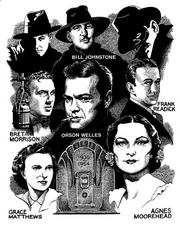
Ladies and gentlemen, tonight you are invited to listen to a new radio program. It's a program conceived by the people who furnish the wires that take this program and every other program to all parts of America and to all of you listeners overseas. We are the people, there are 275,000 of us, of your telephone company and the associated companies covering the rest of the country in the Bell System. It is our job to transmit the human voice clearly, faithfully and quickly. Let you talk in person to anybody, anywhere, at any time. Would you like to hear somebody pick up the telephone here in New York, see how quickly and clearly he gets his number and listen into the conversation? You know, every night there are a lot of interesting people from all parts of the country in New York. A number of them are in the studio now to hear our first broadcast. Let's ask one of them to make a telephone call. There's a gentleman from Indiana here. His name is Paul V. McNutt and he's the first gentleman of Indiana because he's the governor of that state. Governor McNutt, is there anyone you would like to call? I'd like to call Indianapolis, see how my family is. Well, go right ahead, Governor. Just pick up this phone here and give the operator your number. Operator. I want to call Indianapolis. Riley 7441. Riley 7441, what is your number, please? El Dorado 5, 5800. Hold the line, please. Indianapolis. Indianapolis, Riley 7441. Hello? Hello, is that you, Kathleen? Hello, Paul. I knew you were going to call up. Well, how on earth did you know that? I tuned in on the start of the telephone company's program and heard them say you were there in the studio. In fact, I can hear our conversation right now on the radio in the living room. Isn't it odd? It is rather unusual. I just wanted to tell you, things went very well here today and I think I'll be home tomorrow. Then we'll be able to keep our dinner engagement tomorrow night with the Davises? Absolutely. All right, I'll call them up, dear. Goodbye. Goodbye. That was pretty quick work. What would a call like that cost? Well, what do you think, Governor? Oh, I don't know. Right away, I'd say between two or three dollars. No, sir. It costs only a dollar and 40 cents to telephone from New York to Indianapolis after 8.30, station to station rate. And if Mrs. McNutt had been in San Francisco, the same call would have cost only five dollars and 50 cents. Mighty few people realize how little it does cost to phone out of town, especially after 8.30 at night. Across country, across town, the telephone keeps abreast of the faster pace of life today. Take its social use, for example. We have another visitor here in the studio, Emily Post, author of the Book of Etiquette and foremost authority on good taste. What about making social engagements, issuing and accepting invitations by telephone? Is that good form, Mrs. Post? Most decidedly, it is. It's courteous to be prompt, and there isn't anything more direct than the telephone. Well, isn't it rather unusual to acknowledge an invitation to a formal dinner by telephone? Not at all. It's quite proper nowadays. You noticed that Mrs. McNutt told the Governor she would confirm their dinner engagement by phone. You see, the telephone is such a personal, intimate means of communication. And what's more, having a telephone has made it possible for many a girl and many a young man to be included, where someone without a telephone is left out. Hmm. Now, if you were giving a dinner, Mrs. Post, just how would you extend the invitation over the telephone? I'd call up one of my friends, whether in the city or the suburbs, and after exchanging greetings, I'd say, Helen, I'm having a few friends in for dinner at 7.30 next Friday night, and I'd like to have you and John join us. I do hope you can come. You see, an invitation by telephone is more than just intimate and direct. You get your acceptances or regrets then and there, instead of waiting for them to come straggling in. Well, I'm sure that a great many people all over the country will be interested to hear these things from you, Mrs. Post. Thank you for coming down this evening. It has been a pleasure. The radio was born of the telephone, and the telephone was born of the American pioneering spirit, the American spirit of impatience with the barriers of time and distance. Ladies and gentlemen, tonight we are sending to you a radio program which we hope will mark a new milestone in American broadcasting. It's based upon the sense of pride and honest patriotism which each of us feels for the achievements of our country from the earliest times to the present day. As the world moves, 300 short years represent a small span in the history of civilization. But in these years, everything that we think of as American has been created, fought for, achieved. We call our program the Cavalcade of America, and in the simplest fashion at our command, we plan to tell you a group of stories each time that you honor us with your attention at this time. Stories which illustrate the stamina, courage, the vital, solid attributes of the American people. Stories that are American through and through. Stories which we feel will reach the minds and hearts and pride of all Americans, young and old. A group of distinguished educators, officials of the American Historical Association are sponsoring these programs in the sense that they have worked with us to achieve complete accuracy in every episode. They are men and women whose names attest the historical truth and value of all these high adventures in the making of a country. The Cavalcade of America. Music As you watch the American Cavalcade pass in review, you find much that does not pomp and circumstance, bugle call, or cannon roar. A certain doggedness and perseverance, a willingness to fight it out at all costs, is the most distinguished attribute of the American. Let us go to the vanguard of the American Cavalcade and turn the pages of history to the spring of 1621, to the pilgrim settlement of Plymouth, Massachusetts. The little group of men and women who have survived that first winter assemble in their rude meeting house by special order of the leader, Master Bradford. In one corner, a young woman and a young man have drawn a little apart from the rest. It is like the Sabbath, is it not, Master Winslow? All gathering here at the meeting house? Except that Master Bradford will address us instead of Elder Brewster. Let's peregrine. Quiet. Quiet. Why has he called us together, do you suppose, Master Winslow? In the very midst of a busy working day? For some good reason, you may be sure, Mr. Swythe. When first I heard the sound of the drum, I thought of Indians. My heart went cold. I hurried to get Peregrine from her cradle. If there were any danger from attack, from Indians, you'd not see Captain Standish resting on his musket as he is now. In truth, the Indians soon as tend to narrow through your back as you work in the field and sally in the open. No, it is other business that Master Bradford wants with us. Master Bradford looks stern and sad. There's little to make him smile these days. He grieves for his wife. Poor Mistress Dorothy. It was tragic, her drowning, two weeks after we landed on these shores. They're about to close the doors. Everybody who's able is here, all but those who lie sick of bed. So many empty benches. There remain but half as many of us now as there were when first those benches were placed there. Look, Bradford is standing. He motions to us to be quiet. Oh, they're closing the doors. We'll soon know now. My friend. Master Bradford's about to speak. My friend, I have called you away from your task this morning in order to speak a message of importance. A message which will shape the future of every one of you and the future of Plymouth Settlement. Oh, my star, you're quiet there. For four months, the good ship Mayflower has lain at anchor in this harbor, unable to return to England by reason of the fearful storms and the mortal plague that took off many of its crew. But this morning, her master came to be and informed me that, God willing, he will put off the voyage no longer. He is preparing to sail on the fifth day of April, just four days hence. Any of you who wish to return to England on the Mayflower has that privilege. You came to the New World in good faith and with high hopes. Your faith has been sorely tested these winter months. Of the 102 of us who came here, only 51 remain. Many of you have lost those who were nearest and dearest to you. If you desire to leave, to return to soft ease of old England, we who are in command here will not try to hold you. You men who are still blessed with wives and children may wish at least to send them back, even though you remain here yourselves. We would not blame you, for God alone knows what awaits us here. In four days, you must make your choice. Weigh it well. For once the Mayflower sails, there is no turning back for anybody. Now let us go again to our fields and consider well what we should do. I have spoken my message. Well, Master Winslow. Well, Mistress White. Good Master Bradford's news seems to have pleased you. Yes, and yet I am sad at the thought of losing some of my good friends. You are sailing then? Perhaps. Why not? What is there for me here? I am not a delver in the ground. I do not want to till the soil and then suffer death from scurvy. I've tried to do my best, but I don't like it. I covered a more adventurous life. Is this not a mighty venture? Are we not periled every moment by the savages? The Indians, a narrow in the back, forms lurking in the forest. They don't fight us in the open. They do not meet us like an honorable foe. No, this is not adventure. This is merely hardship in a rude wilderness. True, a wilderness. It is free, though. Free and honest and God-fearing. And one can pray here in the New World as one chooses. One has time to pray here in the long, dreary winters. Why do you stay here, Mr. Swyter? What is there here for you? You have suffered much and buried your husband here. And borne my child here, remember. The first child to be born after landing on these shores. Then for the sake of the child, you should return to England. This is no country in which to bring up a child, particularly a girl child. And why should you be so interested in me and my child, Master Winslow? Mistress White, I hate to leave you here in this wilderness. For many months now, I've thought of you. I've... You have been very kind, Master Winslow. But do not talk of this before these folk. The meeting house is not yet empty. I've thought of you in holy love, Susanna. These many months, I've longed to take you from this bleak place back to the lovely... That will do, Master Winslow. Please remember that I admire and respect you. And once I thought I almost loved you. But Peregrine and I stay here and leave you the wandering ventures. We will face our hazards here as stoutly as we may. But Susanna, if you only knew how long I've loved you, I... Good day, Master Winslow. But Susanna... I play not with wandering dreams. And I'm holding to this place in purpose. Susanna! Susanna! On the fifth day of April 1621, the colonists of Plymouth again assemble. This time not in the rude little meeting house, but on the rocky shore of Plymouth harbor. All eyes are turned eastward to where the Mayflower rides at anchor ready to set sail. On the shore, the captain, Thomas Jones, is bidding a last farewell to Governor Bradford. Well, sir, the tide will be turning straight away. I must be pushing off. We'll miss you, Captain Jones. I hate to go and leave you all stranded here, sir, in this God-forsaken country. The only countries that God forsakes, Captain, are those where people have forsaken him. The fellow I'd turn to for protection against that Satan's brood of savages is Captain Standish. Mean to know your reverence, sir. I wish you had more real soldiers with you like him. As yet, the Indians have made no open sally, but truly Captain Standish is doing much for us. Already many of us have mastered the use of arms. Well, Bradford, it's all right for you, I suppose, but me, I'd rather be in a hurricane, a good tight ship, than live the bleak and barren life you'll have here. When I reach London, I'll have some peace from worry and a chance for merriment. But you, you must fret with trouble all the time. The like is true, Master. If not these serpent Indians, there'll be puny crops of violent cold, starvation, or the scurvy. Master, it falls on the crew how well the ship behaves, does it not? That it does. Well, I have an apt and loyal crew working here for me on the shore, uncomplaining, sharing what they have, and facing each new hardship with godly courage. That you have, Bradford. My four months here have taught me that. Do you think any of them will leave with me? That young fellow in slow standing over there by the cliff, he might go. He has no stomach for rubbing earth. He'd rather be a sailor like yourself. Mary, with only half a crew and some of them not fit to stand, I could straightway put some more hands to the ropes. We need more hands ourselves. A spring, planting to behead, a new building, woods to be cleared. I only hope most of the younger men decide to stay. I think they will. It shall be a grievous thing to lose one man. We may need every fighter we can get. That you may. For sooth, I, I still dare hope that none of them will leave. They have to folly, but already I'm proud of our little settlement in the new world, and I'd mislike to see, to see anyone turn back. Yes, I know your heart. Sort of like dessert in a ship. Well, if you have any to take the passage, I hope they'll hasten. The tide's turning. I told them to come here to the boat, and I see none yet. Winslow seems to be undecided. He and God must choose his path. I must take leave, row out the ship, and be quick to sail at a moment's notice. But before I weigh anchor, I'll watch sharp for your signal. I'll wave a white cloth. But if any of our people change their minds, I'll fire a shot. I must give them every chance to read their own purpose. I shall wait the signal. Good hope, sir. I hope the next few months will be easier. We'll be praying for you. Good hope, Captain, and Godspeed. Oh, Master Jones, oh, Master Jones. Huh? Why? Just a moment, if you please. Why, surely, Mr. Swite, have you and your little baby decided to be our passengers? Oh, no, Master Jones, I would not leave here. But I have a little packet for my dearest friend in London. Would it be too much to ask you to take it for me? Why, surely not, Mr. Swite. It's all superscribed. Here it is. I will bear it safely, Mr. Swite, never fear. I must hasten and weigh anchor while the tide is right. Godspeed. Godspeed. Godspeed, good master. Push her off one. Goodbye. Oh, yes, Master Winslow, I thought you were leaving us. I saw you standing near us and I waited for you to step forward. I do not go, sir. Oh, Peregrine, hush. It is not yet too late. I shall signal the boat if you wish to leave. Master Bradford, I yearn to go. Then as I came down to the shore, a word you spoke turned my heart to a better purpose. I would be wrong to cousin you, Master Winslow, and mock you. There is yet time to change your mind. I am going now to the others. Master Bradford looks blathered that I have seen him in many a month. Ah, Mr. Swite, you have speech with me once more. Since that day at the meeting house when Master Bradford broke the news of the Mayflower leaving, you've scarcely bade me good morning. Be seated, Master Winslow. I was angry because, because you were leaving. But what made you change your purpose? You angered toward me when I set my heart for England? Susanna, that Miss Speaker... Meet my question first, Master Winslow. Why did you not leave? It was a brave word I heard Master Bradford speak to the master of the ship. He said, I'd miss like to see anyone turn back. That's what I was doing, turning back. I see it now. Edward, I too, I want not to turn back. I want to press on and make a new life here. Susanna, might we not press on together here in Plymouth? Master Winslow, take care. There are many people here. All the folk will hear you. They give no heed to us. Their eyes are fixed on the Mayflower. Oh, here comes Master Bradford. He seems bent upon a word with us. Men and women of Plymouth. What, what, what? Our good friend the master is at this moment boarding the ship. All sails are set. A sign from me and the Mayflower will hoist anchor and turn her course for England. Oh, I'm... Before I give that sign, let me ask you all once more. For the last time, do any of you wish to return? It is not too late to change your minds. One word. Your last chance, Edward. I have made my choice. Then I give the Mayflower a sign to sail. Oh, they're pulling up the anchor. I can see them. You're a gay sailor. You are, Master Jeremy Fuller. They're way an anchor. They are not. They're hoisting it. I can see them. A whole line of men hauling on it. Children, the ship is veering round now. The sails are filling. How white they gleam in the sun. Glad I am the sun is shining so fair today. The earth feels warm and rich at last. Look, the Mayflower gains its headway. Look, Peregrine. Look, baby. I wish she might stamp this morning on her memory. She's looking landward. She's right too. Why, look back, when there's so much ahead. Would I could see what is ahead. All that we dreamed of when we came here. All that anyone could ask for. Work, good friends, the worship of God. And love? Yes, I think so. Now. Elder Brewster has read the burial service over many of our number, but the marriage service never. We'll be the first. Look, the Mayflower's flag is dipping. And there goes the last salute. I'm glad there's no turning back now. That fateful day the pilgrims made their choice and flung defiance at the dark forests of New England. Their will to persevere became a cornerstone of American character. And from such people came the power to conquer a continent. Nearly two centuries later, settlers were still battling for their homes and their freedom. This time it was a brave band of settlers who had penetrated the forests of Kentucky and directed a crude settlement called Brian's Station, not far from what is now the city of Lexington. With crude implements, they had built a palisade with a block house at each corner. On the evening of August 15th, 1782, a messenger brings word that another party of settlers only a few miles away had been defeated in a fight with the Indians. Prouding about the messenger, the men of Brian's Station hear the story of the encounter. They vote to avenge the defeat, although they know savages lurk in the forest just outside the stockade walls. William Reynolds, a young pioneer who has been scouting, reports to Captain John Craig, commander of Brian's Station. What I tell you, Captain Craig, there ain't a doubt of it. I saw Indians everywhere. And if the men leave for hoist now, every woman in this station will be scalped clean. You think it's a trap, Reynolds? I reckon they're just waiting for you to march out of here to blow you all the kingdom come. Where do you think most of their force is? I reckon most of them are hiding around that there spring down the hill, the one where we got our water. Yeah, what are we going to do for water? We can't hold out without water. Well, there's just one thing in our favor, men. The Indians don't know we've discovered him. We've got to act like we don't know they're out there. Reynolds, gather all the women of the station here at once. Have them bring all their noggins and tails. Sure, Captain. I'll get them. O'Bell. Yes, sir. Tomlinson. I'm coming, Captain. Yes, sir. What can we do, sir? Well, now, you think you could pick yourselves two good horses to get from here to Lexington? Yeah, sure. We could try. Well, get a move on. And when you get outside, don't run unless you're shot at. Yes. Act like you was going hunting. I don't think you'll be stopped. The Indians won't risk shooting until they find out how strong we are. Right on, sir. We'll get through it. Say, Captain Craig, my loose and the baby there at my cabin outside the station. I'd better get them in here. All right, Morgan. I'm going to send the girls down to the spring. Have Lucy join them and bring her water back here. Yes, Captain. I'll send her and bring our baby to the fort myself. Hurry up. And when you get back, take charge of the west blockhouse. Now, hurry. You can count on me, Captain. Here come the gals, Captain. They're not afraid of Indians. Good, good. Is everybody here? Sure, we're here. Now, ladies, I want you to listen carefully. Come on, girls. Quiet down, girls. Well, what is it? Outside the stockade, there's a large force of Indians. Well, hush, hush, girls. For some reason, they're lying low. I think they're waiting for us men to march on to hoist. Then they can get us from ambush. Now, we don't want them to know our strength, so we've got to stay here and pretend we don't know there's an Indian in the country. The longer we fool them, the better chance we have of being reinforced from Lexington. I've sent Thomas and Bill, and they may get through. If you're figuring on playing possum in this hole, you'd better hike down to the spring and draw some water. My husband didn't leave enough whiskey to last for all of us. All right, Jemima Johnson, I'm going to ask you to lead the women down to that spring, and you'd better draw all the water you can. Lord Captain, we ain't Indian fighters. Why don't you lead the men down there? Sure, that's the idea. Because that would be playing into the Indians' hands. If you women go down there just as you do every morning and pretend that nothing is wrong, I don't think you'll be touched. The Indians want to capture the station and kill the men in it. They'd gain nothing by killing you, only give themselves away. Come on, gals, show some spirit. You're cocking up around here. That'll do for me, child. You ain't proved your mettle yet yourself. That's more like it. Will you go, Jemima? I can fill two noggin, but I can't haul water for the whole station. Who's going with me? You and I. Now listen to me, you girls. We have to have water, don't we? We can't live without it, so we may as well chance death getting it. Sitting around here letting our men die of thirst is no way for us to act. Let the men do the shooting. We'll keep them in food and drink. Now, who's going with me? I've got a child. I don't want to leave my child. I won't go. I've got six children, and my husband is clear over to Richmond in the House of Burgesses. But I know what he'd say, and when he's here, he's boss of this station. He'd say, Jemima, life ain't no joke in the wilderness. But an American settler never turns back. That's what he'd say. I went for water yesterday, and I'm going today. And I'm going with Reverend Jones' blessing. Yes, Jemima Johnson. God's blessing will go with you. All right. Open that gate. And those who want to follow, pick up your pails. Oh, God. Who's going? Well, all going. Well, come on. They're all going, thank the Lord. We're going to need every drop we can get. Open the gate, Reynolds. Now, don't look frightened to death, you girls. We get water every morning. And the blessing of God Almighty, the Father, the Son, the Holy Ghost. Amen. Amen. You usually sing, girls, when you're going for water. Now act just the way you always do, so the Indians won't suspect we know they're out in the bushes. Come on now, sing. Our God, our help, needily bless us. Here comes Lucy Morgan. Oh, my, she's pale. James told me to come and help you carry water into the stockade. Lucy, ain't you scared? Yes, we got to make believe we ain't. Let's talk loud. It's nice living outside the palace, ain't it, on a lovely morning like this? Oh, my baby, I hated to leave him even for a minute. Yes, must be fine to see the sunrise and everything. How could you do it? You may never see him again. I left James packing up. He strapped the baby to his back. All right, girls, you bring your pickings and I'll dip for you. Come on now, we haven't got all day. Well, another one for us tomorrow. Come on, let's go get it. I thought I saw something maybe over there. Where? Over there, in the brush on the other side of the spring. I had not to know. We must pretend we're fine. Come on along, Lucy Morgan. Fill up them pickings. Don't look over there. It's all right. Well, that's a mighty pretty white hanky you're wearing, Lucy. Mighty pretty. Yes, it came all the way from Richmond. Likely enough, I won't get another for a long time. Well, lovely hankies don't mean much. James Morgan can't be mollycoddling you much in this country. He gave me this kerchief when we were married. Well, now, ain't that nice. Come on, folks, let's be getting back. Watch out now, no spilling. Let's go. Lucy, Lucy, I saw something move. I think it was a gun barrel. Why? Oh, I wish we'd hurry. If your mama would stop singing, she'd be able to walk faster. Hurry, hurry. Quit pushing me. Oh, I'm spilling the water. Hurry. Oh, look, they're opening the gate. Hurry. I'm turning off here, my Kevin. No, my baby. I must be sure he's safe. Oh, don't leave us, Lucy. You'll be killed. Let James bring the baby. No, I must be sure. Goodbye. Don't leave us. Hey, Lucy, come back here. Don't go back to your cabin. Come back. Oh, Jemima, stop Lucy from going. It's too late now. If she do what James tells her, instead of worrying about that baby, she'd be better off. Well, here we are. Good work, girls. Oh, my, I was so scared. I'm trembling all over. Thank God you got back safely. See any Indians, Jemima? I didn't see any, but I could sort of feel them out there. The birds were quiet, and there was quite a bit of movement in the cornfield. Reynolds, you better close that gate. Jemima, you and the girls take that water to the central cabin. Then it's canned behind the men in the loopholes. Help them reload. All right, Captain. Don't stand there shaking, girls. Come on, let's get to work. Well, Jemima, do you see anything in the Morgans? They aren't in from their cabin yet. Lucy Morgan went to the spring with us. James told her to draw water and come back here, but she got scared about a baby and went back to her cabin. Oh, that's bad. I wish they'd hurry. We need everybody here. The Indians will attack those outside cabins first. I tried to stop her. Captain Craig, Indians! Hold your fire, Reynolds. They're too far away. Don't waste time in the ship. They're down there by Morgan's cabin, I saw them. Every man to his station. And don't shoot unless you have a real target. Look, look, they're creeping up on Morgan's cabin. Where's Morgan? He's making a run for it. He's running. He'll never make it. Look, he's got the baby strapped to his back. Where's Lucy? All right, boys. We'll cover as a treat for the molly. Let them have it. Come on, Morgan! Open the gate, Reynolds, quick! Thank God. Here, take the baby off my back, will you? Good work, Morgan. I thought we'd lost you. Reynolds, take that baby to Jemima. Get back here as fast as you can, yeah? Where's your wife, Morgan? I left her under the cabin in that little cellar. There was no time. I thought she'd be safer there until dark. Won't they find her there? No, I don't think so. We were just about to make a break for it when I saw the Indians coming. I put Lucy in the cellar and moved a big piece of slab rock over it. Then the Indians broke down the door and found me there alone. That shocked one of them. Can drop my gun on the ramp, boys. Good work. Now get a gun and take charge of the northwest blockhouse. Yes, sir. Indians! Indians! The Indians! They fired your cabin, Morgan! Look, the trains are coming through the roof! Quick! Quick, let me out, Captain Craig. I've got to get back. Lucy, she'll suffocate in that cellar. It's too late, Morgan. You can't go back now. The whole thing's a-blade. Shoot, burn to death, I tell you. Get out of my way, Captain. I'm going back. Drive them ramps. Hold it. Get away from that gate. Let me go. I've got to go back. Oh, steady, Morgan. It's too late now. And we need you here alive. All right. But I'll have my revenge, I tell you. I'll kill every filthy rat skinned inside a blue lick. Give me a gun! Give me a gun! And so the battle raged. The Indians attacking from the woods by the spring were fought back with desperate courage. Some of them even reached the stockade and threw burning torches out of the rough clapboard roofs of the cabins on the western side. For a while as the blaze raged, the pioneers lost hope. Then a breeze blew across the settlement, blowing the sparks away from the walls, and the fire finding no more fuel gradually died out. Now and then a flaming arrow fell on a roof of the settlement, but the boys of the garrison lying on the inward sloping roofs plucked the arrows and threw them away before damage was done. At sunset, all firing stopped. A figure came out of the forest, bearing a white flag. It stood on a stump and hailed the station. Hey there, this station! Listen to me! It's Curtin! You know me? I'm Simon Curtin. I've fought this army, and we represent the British government. I'm giving you one chance to surrender in the name of the British. If you don't, we'll blow you to pieces. We'll have four cannons here in the morning. You hear? We'll blow you to kingdom come. Yeah, we know you, Simon Curtin, you skunk of a white engine. Sure we know you. I got a curved dog I've named after you. Go ahead, bring up your cannon. We ain't wasting ammunition on you. We've switches and we'll whip you out of here. You think white engines? We're real white. And when we settle, we stick. See? And while young Reynolds flung his desperate defiance at the enemy, Morgan crept from the stockade. He could wait no longer. He must see for himself what lay under the ashes of his cabin. Whether there was any hope that Lucy might still be alive. The lurid light of Indian campfires shone against the forest, but no shots disturbed the silence. In the station, the pioneers waited for the attack, waited for the cannon that would blow the stockade to pieces and put them at the mercy of the scalping knife. In the early dawn, Reynolds stood by the stockade gate and tried to keep awake. Who's there? It's Morgan. Come in quick. Hold on, I'll be... What you doing outside the stockade? Are you crazy? No, I had to see. I had to make sure. Your wife? Was she... Did you find her or anything? Lucy's dead. I found bones, charred bones. But, Paul... There was an Indian sneaking around the ruins with her handkerchief. He's dead too, now. If we get out of here alive, we'll get every man in the territory and we'll wipe them Indians off the face of the earth. If we get out of here alive... The water's most gone too. Captain says if help doesn't come pretty soon... Who's there? Captain Craig, it's the messenger! Open the gate! It's Tomlinson! This way, Tomlinson! Here's Captain Craig! Tomlinson... They've gone, Captain. The Indians have gone. How do you know they've gone? Tomlinson? And he looked in the woods? Are you sure it's not a trap? Plenty, sure, Captain. I rode all around over Yonder and they've all gone down the track toward Blue Lake. I picked up their tracks and followed them a mile or more. No sign of cannon? No, sir. So that cannon threat was just a trick. Well, folks, I guess we've outgassed them once again. But the trouble isn't over, don't you believe that? We've got to join forces with Hoyes and the other stations and run the Redskins clean out of the country. And they'll strike again, and this time we must strike first! Aye! Aye! Aye! Captain Craig, I'm believing right now before we're cut off again. Oh, that's the spirit, Morgan. You've shown a lot of courage. Courage? No, it isn't that. What have I to live for without Lucy? Well, let's get started. Look! Look! Look down by the spring as something's moving. The Indians! The Indians! Close the gates! To the loopholes! August! Reynolds! Take four men and man the west blockhouse. Ellis! Cover the eastern wall! Wait a minute! Wait a minute! That's not an Indian! It's a white man! He's staggering! It's... it's a woman! Open the gate! Help her! What? It's Lucy! Dave! Dave! It's Lucy! Or a ghost! Lucy! Lucy! I'm all right! I'm all right! The baby! Oh, there, there, Lucy. Darling, rest easy. The baby's snug and happy with old Juman. But Lucy, I went to the cabin. There were charred bones. I thought... Paul had a rest to spare, James. She's been through enough. I'm all right, Juman. When you left, James, two Indians came in and fought over those two bright dresses of mine and those English knives. Oh, darling. I could hear them fighting and rolling on the slab above me. It scared me, James, and I shrieked. One Indian killed Arthur. I heard him fall. And when I shrieked, the other one lifted the slab and took me with him. He fired the cabin. Then what I saw were the bones of the dead Indian? Yes, James. I was tied to a tree till this morning when the Indians retreated. They moved fast and left me. I got the song suits. And now I'm very tired. And I want my baby. Captain Craig, I ask your permission, sir, to take my wife and boy back to Lexington as soon as possible. All right, Sidney Morgan. Take two good horses. And there may be others who care to go back. I'll send an escort. Take six wild children back to Lexington because of a few Indians, not me. No, James, I don't want to go back. Me neither. Nor me. Nor will there be no turning back. The courage of the pioneers of Bryan Station and other forts along the frontier did much to win the Revolution and American freedom. Then slowly but surely, the cavalcade moved westward, winning a continent, battling doggedly against nature and the Red Man. After the pioneers came the farmers, and they too rank high in our history. A century and a half had passed. It is the summer of 1931. The scene is the kitchen of a small South Dakota farmhouse. Sarah Winslow is busily preparing supper. Well, I'll give the biscuits just about five minutes more. By that time, your father ought to be here again. Mom, I... Yes, Ned? This is July. Anybody who's been counting tomatoes over a hot stove all day don't have to be told that. College opens in September. September 24th, the catalog says. What's the chances, do you think? Am I getting to go? Oh, it's too early to say yet, son. The summer's started out good. Crops are pretty promising. Nothing happens. I guess your father will be in a position to spare you in the fall. Take on a hired man, you please. I won't ask a cent from Dad. With what I've saved and what I can earn, I'll get along fine. Well, we'll see. I don't want to make any promises like we did last summer and then have to break them. Gosh, what a summer that was. Not a drop of rain for 17 long weeks. Can't even bear to think about it. Waking up morning after morning to see that sun like a great ball of copper, and the crops drying up, shriveling, shrieking for water. That's the worst of farming. You work and you worry and you break your back for months. Then along comes a drought or a freeze or a flood or some kind of a blight. And where are you? Worse off than when you started. I know. And yet we keep on farming just the same. I'm not so sure that I will. When I finish college, I might get myself a job in a... Now, your family been farmers for generations, Ned Winslow. And I guess you're not going to give it up for any white collar city job. Your great-great-great... Well, I don't know quite how many greats it was, but your grandfather was one of the first white men to plant corn in this country. The Indians showed him how. Yeah, and his full descendants have been planting corn ever since. To be burned up by the sun or rotted by rain or eaten up by pests. What is your saying about pests? Your son was just getting in practice for the college debating team, that's all. Oh, and meanwhile, like as not my biscuits are burned to a crisp. Well, as a matter of fact... Now you two get your hands and faces washed. Now have things dished up and a jiffy. All right. Oh, oh, hold on. Wait a minute, father. What's the matter? You got a couple of grasshoppers on your coat, see? Oh, don't brush them off in here. Go outside. I don't want them nasty things to start hopping around my kitchen. There's an awful lot of grasshoppers around lately, just in the last few days. Have you noticed? Yeah, I picked half a dozen of them off my cucumber vines this morning. They were eating the leaves as greedy as anything. Now, if they don't eat anything more valuable than your cucumber vines, we'll be lucky. You talk so if my cucumber vines didn't matter. Well, we don't depend on cucumbers for our living. My cucumber pickles has taken second prize at the state fair for three years now. And if it don't take first prize this year, I... Oh, there's one of those pesky creatures under the sink. What of it, Mom? They're harmless. No, no, not this variety. What do you mean, Dad? Well, these ain't the regular, ordinary variety of grasshoppers that you get every summer. They're... they're special breeds. Yeah, they got a couple of stripes down their backs. Notice that. They're an appetite that's never satisfied. An appetite for what? Anything, everything. Why, Chad Sunderland was telling me today they had the same thing in Colorado one summer, about ten years ago. When they got through to varn the crops, they even made the binder twine. Oh, Father, I can't believe it. If you don't mind holding supper a few minutes, Mother, I'd like to put in a phone call. Everything will get cold. Couldn't it wait until after supper? No, no, I want to get hold of the county agent and ask him what to do about these grasshoppers. Well, is there anything you can do? Chad tells me they used poison for them in Colorado. Poison? Made some kind of a mash, mixed arsenic with it, spread around their fields. Nice job for a hot July day. You do things up and get started. I'll be right back. All right. Come on, son. See, you got cucumber pickle on the table, Mom. We always have cucumber pickles with cold hand. You may not next season, according to Dad. What do these grasshoppers mean? Oh, I'll protect my cucumber vines, don't you worry. I'll cover them over so the grasshoppers don't see them. It's the green color that attracts them. Yeah, the grasshoppers will probably all be gone in a little while, though. You know, Dad's an awful alarmist, always expecting the worst. Worst has happened so many times, that's why. The drought last year just about ruined it. Oh, here he comes now. Ned, don't say anything to him this evening about college. He's not in the mood to talk about it. I can see. All right, Mom. Well, Father, what do you say? It seems just about every farmer in the county is calling him all of a sudden to find out how we're going to fight this grasshopper plague. Weeks pass. A cloud of grasshoppers darkens the sun, and it settles over the fields, leaving them barren of crops and the farmers in desperate poverty. Finally, one hot August afternoon, we find Sarah in her kitchen. Hello, Jane. Hello, Sarah. I just dropped in for a second. We're on our way to the prayer meeting up in Jones Field. Are you going? Yes, just since Edward and Ned get in. They've been working day and night, scattering poison mash. But there's so much ground to cover, and only the two of them to do it. How about your cucumber vines? Were you able to save them? My cucumber vines? Goodness me, didn't they tell you what happened to them? No. Last I heard, you were keeping them covered with dish towels. You won't believe it, but those grasshoppers ate the vines, dish towels, and all. Well, I can believe it. You heard about the experience the Lindstroms had, didn't you? What? You know, the Swedish families at least, the old Fuller farm. Yeah, yeah. What happened? They decided the best way to get rid of the grasshoppers was to send their turkeys out into the fields to eat them up. Yes. They figured they'd do two things at the same time, clean out the grasshoppers and cotton up the turkeys. Oh. I must say, the idea of eating a Thanksgiving turkey that's been stuffed with grasshoppers kind of takes my appetite away. Hmm, I should say so. Well, when the turkeys came back home to roost that night, them grasshoppers had stripped them as bears if they'd been plucked in your own kitchen. How can you laugh, Jean? I think it's dreadful. Well, if I didn't laugh at some of the things that's happening these days, Sarah, I'd go crazy. John's so worried sick he can't eat in your sleep. If something don't happen pretty soon, I don't know what we'll do. There's nothing we can do but go on. We can't quit. How does young Ned feel about it? I hear he ain't so crazy about farming. Oh, he's all right, but... Well, Ned don't set much store by praying, I'm afraid. He says the only thing that'll bring relief is spraying, spraying poison in big enough quantities to really kill the pests. Well, folks pray for rain and for relief from famine and war and pestilence. If the Lord can send relief for them things, I guess he can send relief for a plague of grasshoppers. Well, folks are waiting out in the car. I better be going. You see, it's service. Only a step for us. Walking's better than driving, anyway. Why, just come in the short distance we did, our car got stall twice. Grasshoppers clogging up the radiator. Goodness. Well, goodbye. Goodbye, Jane. Hello, Edward. Going to the service? Hello, Jane. Yes, yes, we're going as soon as Mother's ready. See you there. Goodbye. Goodbye. I'll be ready in a minute, Edward. Just let me get my hat. My, but it's hot. Must be 110, the shade. The weather report over the radio said it was the hottest August 14th in I don't know how many years. Seems hotter when there's no green in sight. Well, I'm ready now. All right. Coming to the service, Ned? Oh, well, I suppose so. Won't hurt you any. Well, let's start. Yeah, come on. Whew. My, it's even hotter out here. Yeah. By the way, Mother, I saw Miss Granister in town this morning. Told me to tell you goodbye. They're leaving? They've left. She said she's driven over here to see you before they went, but it was all decided so sudden. Where are they going? Some place, she says, where there's no grasshoppers or droughts or floods. Then they're giving up farming for good? Looks that way. Well, they show good sense. The rest of us ought to do the same thing. You don't really mean that, son. Sure I do, Dad. What's the use of breaking your back and breaking your heart farming? Now, somebody's got to do it. Somebody's got to plant and cultivate and harvest crops, feed the rest of the world. Your cities are all right and fine, but where would they be without the farmer? Where would they get their bread and their butter and their milk and their other foodstuff? A lot of food they'll get from us this year. Look, Dad, look at that field we're passing now. Just stubble. Not a thing left. There's always another year ahead of us, though. That's the great thing about farming. No matter how bad one season may be, there's always the hope and the chance that the next year will be a good one. If you can live till the next year on nothing but hope. We've still got our cows and chickens, a few acres of corn. We're fighting a losing battle, Dad. What can you and I do, scattering poison by hand against billions of grasshoppers? The government may provide aid, Dad. The government. They promised help, but where is it? When does college open, son? College? Why, 24th of September? Better write. Send in your application. Why, I, I... Dad! I know how you feel about farming, boy. I know how bad you want to get away. I'd be the last person on earth to try and keep you here. But Dad, I, I couldn't go and leave you in a jam like this. We can get along. Would, would you and Mother leave, too? How about it, Mother? Leave the farm? Our lease expires this fall. But why should we leave? Because times are bad. Oh, that's no reason. Others are quitting. Not this family. Our folks have been farmers for generations, Father. Yours and mine, both. The Winslow's and the Morgan's. They fought all the things that we've been fighting. And they won out. Well, looks like the service is about to start. Oh, my, look at Jones Field. Just a lot of stubble. Last year it was waving corn. And now everybody in the county must be there. Seems funny, don't it, to be gathering for prayer in a field? There's no church in the county big enough to hold this congregation. Anyhow, it's more fitting to pray out here. It's our fields that have been laid waste, after all. Farmers do have courage. Look, the minister's standing in front of that great wooden cross. Let's stop here where we can see him. All right, yes, we, we can hear just as well here. Sure, yes. Oh, there's poor Mrs. Nardquist. She's crying. Well, you can't blame her. She lost her whole crop. She's only been out here two years. I must speak to her after the service. Maybe there's a little something we could do for her. Yes, yes. I hear she's almost starving. Gee, there must be over a thousand people here. And every one dog-tired from fighting grasshoppers. You know, it's funny. A lot of them are worse off than we are. But somehow they don't look as if they were licked. Look, the minister's holding up his hand for quiet. Let us bow our heads and pray. You know, Dad, there's something about these farmers all out here praying. It gets me. There is something in farming. I guess that's why your mother and I are staying. I'm staying, too. No, no, no, don't you do it. You go to college like you planned. You've already put it off one year. It won't hurt me to wait a little longer. Dad, I've got some money saved. It's yours. I want you to have it. Why, why, son? We'll see this thing through together, you and mother and I. Boy, I can't tell you how I feel you're saying you'll stick with us. Listen, what's that? Oh, it's a plane, Mom, a mail plane. Why, the mail plane ain't due here for three hours. Father, Ned, look. What? The plane, look. Oh, gosh, but it's flying low. That cloud that's following it, what is it? Why, poison bait. It's a government plane, scattering poison. It's manna from heaven, that's what it is. Our prayers have been answered. Our fields are already white with it. He's flying towards Brennus, this farm, now. Farm day left. Yes. I'm glad I stayed. I'm glad we stayed. Today, as it has been in all our country's history, we are called to face new and even greater problems with the courage and fearlessness of those who went before us in the cavalcade of America. The pioneer spirit of today faces new fronts with the old courage, and within the organizations of such companies as your telephone company, men strive toward making life fuller and better. This urge to go forward, the determination to stick it out in the face of overwhelming odds, is the attribute which describes perhaps better than any other, the life of one of America's great industrial pioneers, Theodore N. Vail, a man whose whole life was dedicated to making a dream come true, a dream that someday American men and women would talk clearly to each other across this continent. Mr. Vail pushed the long-distance telephone in every direction, in spite of opposition and the most appalling difficulties. With his great friend, General Carty, who solved his engineering difficulties, he welded the entire nation into a closer communion than had ever been thought possible. But still he was unsatisfied. He had been unable to get a really clear connection between San Francisco and New York, that is to say, clear enough to satisfy Mr. Vail. There are many legends about the actual opening of the transcontinental line. All telephone history is a little clouded in myths, but the version we like best is this. Time and again Mr. Vail said, Carty, your connection with the coast is still not good enough for the American people. And then one January 9, 1915, while Mr. Vail, at that time president of the American Telephone and Telegraph Company, was at Jekyll Island off the Georgia coast, the telephone rang. Mr. Vail picked up the receiver. Hello, this is Vail speaking. Hello Mr. Vail, this is Carty. Hello Carty, where are you? I'm talking from New York. Why, it sounds as if you were in the next room. You think the quality is good? Yes, but how are you getting along, Carty, in linking New York with San Francisco? We're coming along fine. Well, when you get as clear a connection between New York and San Francisco as you and I have now between New York and Georgia, I'll accept it. Well then, Mr. Vail, it's already accepted. What do you mean, Carty? I mean that this conversation we're holding is not going direct from New York to Jekyll Island. It's going by way of Buffalo, Chicago, and Denver to San Francisco, and back through Kansas City, St. Louis, Cincinnati, and Atlanta to Jekyll Island. That was a great achievement. And the 20 years since that first coast-to-coast telephone connection have brought forth even greater achievements. Nations have been linked with nations, continents with continents. In 1921, radio broadcasting came into being, and the telephone company had a new set of problems to conquer in another field of communications. Indeed, this very program to which you are listening is made possible by telephone equipment and thousands of miles of lines which link together the widely scattered stations in this coast-to-coast network. Today's president of the American Telephone and Telegraph Company is Mr. Walter S. Gifford. He is here tonight, and he would like to say a few words. Mr. Gifford. Ladies and gentlemen, I hope you have enjoyed this program. We want it to be more, if possible, than just an hour of radio entertainment. We want it to be a real contribution to broadcasting, and we believe the radio public wants an hour of this sort. Particularly do we hope that the younger people will feel an interest in this program. And with that purpose in mind, we will hold a series of nationwide essay contests which we are going to call the Bell Systems Scholarships. Mr. Uthell will tell you about them now. Thank you. Bell Systems Scholarships will be awarded each month to two groups of students, boys and girls from 14 to 19 years of age, and boys and girls from 8 to 13, who write the best essays on the American attributes and the national characteristics dramatized in the cavalcade of America. For the older group, there will be each month a first prize of $500, a second prize of $200, a third prize of $50, and 25 prizes of $10 each. For the younger group, there will be these prizes, $250 first prize, $100 second prize, $25 third prize, and 25 prizes of $5 each. For full information about these Bell Systems Scholarships, apply to your telephone company or to the station to which you are listening. You will receive an entry blank together with a booklet in which you will find printed the episodes presented in the cavalcade of America. We invite you to join us again next Friday evening at the same hour when your telephone company in the Bell System will continue the cavalcade of America. Music .